
Short Answer
Learn how to sharpen a Damascus steel knife with practical steps, angle tips, and common mistakes to avoid for a lasting edge.
Direct Answer: How to Sharpen a Damascus Steel Knife
To sharpen a Damascus steel knife, use a whetstone or diamond stone with a coarse grit first, then progress to finer grits. Maintain a consistent angle—typically between 15 and 20 degrees per side—and use light, even strokes. Finish by stropping to remove any burr and polish the edge.
Damascus steel is a layered material, but the sharpening process is similar to other high-carbon stainless steels. The key is to avoid overheating and to keep the edge geometry consistent. With patience and the right technique, you can achieve a razor-sharp edge without damaging the pattern.
For those new to sharpening, it helps to understand that the layered pattern of Damascus steel is purely decorative and does not affect the cutting edge. The edge is a single piece of steel, so the sharpening method is the same as for any high-carbon stainless steel knife. The main challenge is maintaining a consistent angle and using the right grit progression to achieve a keen edge without overheating the blade.
Understanding Damascus Steel and Its Edge
Damascus steel is made by forging multiple layers of different steels together, creating a distinctive wavy pattern. The pattern is aesthetic, but the performance depends on the specific steels used. Most modern Damascus knives have a core of high-carbon steel, which takes a sharp edge well.
The edge itself is not patterned; it is a solid line of steel. Therefore, sharpening does not require special treatment for the pattern. However, the hardness of the steel may vary, so using quality abrasives is important to avoid damaging the edge.
Choosing the Right Sharpening Tools
You have several options for sharpening: whetstones, diamond stones, ceramic rods, and powered sharpeners. Whetstones are popular because they offer control and produce a fine edge. Diamond stones are faster and work well on harder steels. Ceramic rods are convenient for touch-ups.
Avoid using pull-through sharpeners or electric grinders unless you are experienced, as they can remove too much metal and ruin the edge geometry. For best results, use a set of stones with varying grits, from coarse (around 300-600) to fine (1000-6000).
Step-by-Step Sharpening Process
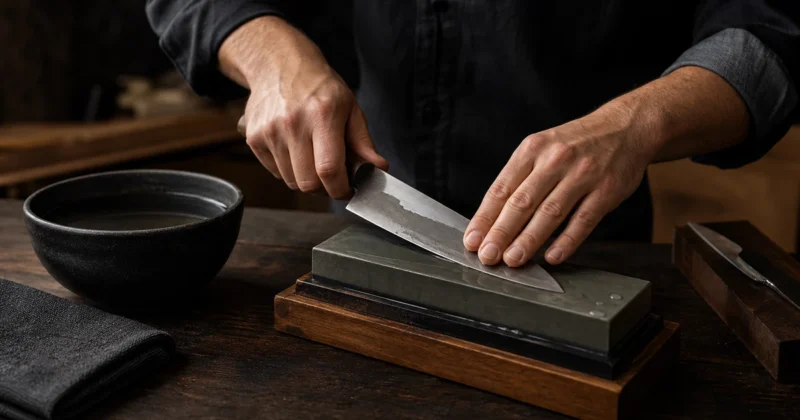
Start by soaking your whetstone in water for about 10-15 minutes if it is a water stone. Place it on a damp cloth to prevent slipping. Hold the knife at the desired angle—usually 15-20 degrees—and place the edge against the stone.
Using light pressure, push the blade away from you along the stone, covering the entire edge. Repeat this motion 5-10 times, then switch to the other side. Maintain the same number of strokes on each side to keep the edge centered.
Progress to finer grits, repeating the process. After the finest stone, use a strop with polishing compound to remove any burr and refine the edge. Test sharpness carefully on paper or a tomato.
When sharpening, always work on a stable surface and ensure the stone is secure. Use a light touch and let the stone do the work. If you are unsure about the angle, you can use a sharpie to mark the edge and check your angle after a few strokes. This helps you see if you are hitting the entire edge evenly. Remember to clean the stone regularly to prevent clogging, which can reduce its effectiveness.
Finding the Correct Angle
The angle you choose affects the edge's sharpness and durability. A lower angle (15 degrees) gives a sharper but more delicate edge, while a higher angle (20 degrees) is more durable but less sharp. Most kitchen knives use a 15-20 degree angle per side.
To maintain consistency, you can use angle guides or simply practice. A common mistake is to vary the angle during sharpening, which results in an uneven edge. Take your time and focus on keeping the blade flat against the stone at the chosen angle.
Common Mistakes to Avoid
One mistake is using too much pressure, which can gouge the stone and damage the edge. Another is sharpening at inconsistent angles, leading to a dull or uneven edge. Skipping grits can also leave a rough edge that dulls quickly.
Avoid sharpening on a dry stone, as this can cause overheating and ruin the temper. Also, do not use a leather strop without compound, as it won't effectively remove the burr. Finally, do not test sharpness on your finger; use paper or a soft vegetable.
Maintaining the Damascus Pattern
Sharpening does not affect the pattern on the blade face, but improper handling can scratch it. Always use a soft cloth and avoid abrasive cleaners. When sharpening, be careful not to let the blade slip and hit the stone's edge, which could chip the blade.
After sharpening, clean the blade with mild soap and water, then dry it thoroughly. Apply a light coat of mineral oil to protect the steel and enhance the pattern. This also helps prevent rust, especially if the knife is used for food.
When to Seek Professional Sharpening
If you are uncomfortable sharpening your Damascus knife or if the edge is severely damaged, consider professional sharpening. Many knife shops offer this service, and they have the expertise to restore the edge without harming the blade.
Professional sharpening is also a good option for high-end Damascus knives, as it ensures the edge geometry is correct. However, for regular maintenance, learning to sharpen at home is a valuable skill that keeps your knife in top condition.
Final Tips for a Lasting Edge
To keep your Damascus knife sharp, use a honing rod regularly to realign the edge. Store the knife in a sheath or on a magnetic strip to prevent dulling. Avoid cutting on hard surfaces like glass or stone, which can dull the edge quickly.
With proper care, your Damascus steel knife will maintain its beauty and performance for years. Remember that sharpening is a skill that improves with practice, so don't be discouraged if your first attempt isn't perfect.
FAQ
Can I use a regular whetstone on Damascus steel?
Yes, a regular whetstone works fine on Damascus steel. The key is to use a quality stone and maintain a consistent angle. Start with a coarse grit and progress to finer grits for a polished edge.
What angle should I use to sharpen a Damascus knife?
A common angle is 15-20 degrees per side. Lower angles give a sharper edge but are more delicate, while higher angles are more durable. Choose based on your cutting needs.
Will sharpening damage the Damascus pattern?
No, sharpening only affects the edge, not the pattern on the blade face. However, be careful not to scratch the blade during sharpening. Use a soft cloth and avoid abrasive materials.
How often should I sharpen my Damascus knife?
It depends on use. For regular kitchen use, honing weekly and sharpening every few months is typical. If you notice dullness, it's time to sharpen.
Can I use an electric sharpener on Damascus steel?
It's not recommended unless you are experienced. Electric sharpeners can remove too much metal and overheat the edge, damaging the temper. Hand sharpening with stones is safer.