
Short answer
Learn what an OTF knife is, how it works, the main types, what buyers should look for, and how to choose quality OTF knives for retail or wholesale.
In this article
- 01 How an OTF Knife Works
- 02 Single-Action vs. Double-Action OTF Knives
- 03 Single-action OTF knives
- 04 Double-action OTF knives
- 05 What Buyers Usually Notice First
- 06 Why OTF Knives Appeal to Retail and Wholesale Buyers
- 07 How to Judge Quality Before You Buy
- 08 Common Mistakes Buyers Make
- 09 Safety and Responsible Ownership
- 10 What Makes a Good OTF Knife for Resale
- 11 Practical FAQ
- 12 Is an OTF knife the same as an automatic knife?
- 13 Are OTF knives good for everyday carry?
- 14 What should I look for in a wholesale OTF knife order?
- 15 Do OTF knives require special maintenance?
- 16 Can I sell OTF knives anywhere?
- 17 The Bottom Line
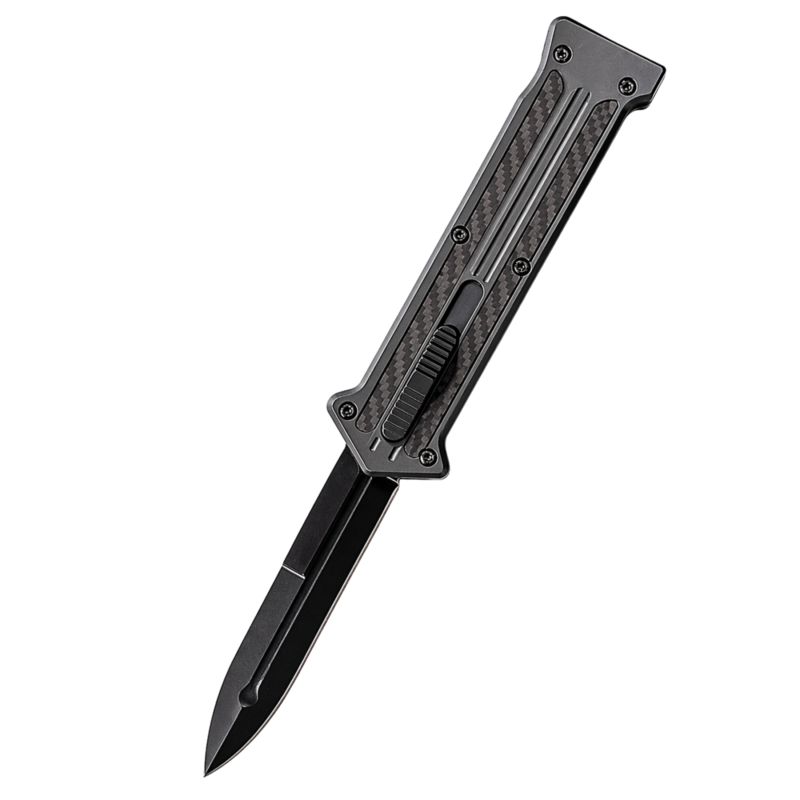
An OTF knife is an “out-the-front” automatic knife with a blade that deploys straight out of the front of the handle instead of folding open from the side. It is designed for quick one-handed opening, compact carry, and convenient access, which is why it gets attention from collectors, retail shoppers, and wholesale buyers alike. If you are comparing models for a store, online listing, or personal purchase, the key is understanding how OTF knives are built, what separates good ones from average ones, and how to match the knife to your market.
How an OTF Knife Works
An OTF knife uses an internal spring-loaded mechanism that sends the blade forward through a front channel in the handle. Depending on the model, it may be either single-action or double-action. In simple terms, that means the blade either deploys only automatically and must be reset manually, or it both deploys and retracts automatically with the same control.
The blade stays hidden inside the handle until the mechanism is activated. That makes the knife compact and easy to store, while also giving it a distinctive look that many buyers associate with premium automatic knives. Because the blade travels on rails or an internal track, the quality of the mechanism matters a great deal. Smooth action, secure lockup, and consistent blade alignment are all signs of a better-built OTF knife.
Single-Action vs. Double-Action OTF Knives
Most shoppers will see both styles, and it helps to know the difference before buying.
Single-action OTF knives
Single-action models deploy automatically, but the blade is usually retracted manually after use. These knives often have a simpler internal design, which can appeal to buyers who want a straightforward mechanism and a lower price point. They can be a good option for display, collection, or entry-level inventory.
Double-action OTF knives
Double-action OTF knives deploy and retract automatically using the same switch or slider. This is the style many people picture when they ask what an OTF knife is. It offers faster operation and a more modern feel, which makes it especially attractive for everyday carry enthusiasts and customers who value convenience. For wholesale buyers, double-action models often move well because they are easy for customers to understand and compare.
What Buyers Usually Notice First
When someone picks up an OTF knife, a few details stand out right away. The handle feel, blade finish, blade shape, and sound of the action all influence whether the knife feels premium. Buyers also tend to check the switch tension, whether the blade wiggles, and how securely the blade locks in place once deployed.
For retailers and distributors, these are the details that can shape customer satisfaction and returns. A knife that looks sharp online but feels loose in hand may create problems later. That is why wholesale sourcing should focus on consistent build quality, not just appearance.
- Handle material: Aluminum is common because it is lightweight and durable.
- Blade steel: Different steels affect edge retention, corrosion resistance, and sharpening ease.
- Blade profile: Common shapes include dagger, tanto, drop point, and tanto-style variations.
- Action quality: Smooth deployment and solid retraction improve the user experience.
- Fit and finish: Clean machining, tight tolerances, and even coating matter to buyers.
Why OTF Knives Appeal to Retail and Wholesale Buyers
OTF knives occupy a strong niche because they combine a compact profile with a distinct automatic mechanism. That makes them easy to merchandise and easy for customers to recognize. In a retail setting, they often attract attention in displays because they look different from standard folding knives. Online, they can be strong performers when product descriptions clearly explain the mechanism, materials, and intended use.
Wholesale buyers often look at OTF knives for a few practical reasons: they are compact for storage, appealing to enthusiasts, and available in a wide range of price tiers. That flexibility makes them useful for stores that want entry-level options as well as premium pieces. If you are building a catalog, you can review current selections in the OTF and automatic knife wholesale category to compare styles and price ranges.
How to Judge Quality Before You Buy
Not every OTF knife is built the same. A good buying decision starts with the parts you cannot always see in photos. Ask how the knife is assembled, what steel is used for the blade, and whether the mechanism has been tested for repeated cycling. For B2B buyers, consistency across a batch is just as important as the features of one sample.
Here are practical things to check when evaluating inventory or choosing a personal knife:
- Blade play: A small amount of movement can happen in many knives, but excessive wobble is a warning sign.
- Switch feel: The action should be firm enough to prevent accidental activation, yet smooth enough to operate comfortably.
- Handle ergonomics: The grip should feel secure without sharp edges or awkward pressure points.
- Finish durability: Coating, anodizing, or polishing should look even and hold up to normal handling.
- Packaging and consistency: For wholesale orders, uniform presentation helps stores sell the product more effectively.
Common Mistakes Buyers Make
One of the biggest mistakes is focusing only on the blade size or the dramatic opening action. An OTF knife can look impressive and still have weak construction, poor tolerances, or unreliable operation. Another common issue is buying without checking local rules. Knife laws can vary widely by country, state, and city, so shoppers and resellers should always verify applicable regulations before purchasing or listing these products.
Other mistakes include ignoring steel quality, assuming all OTF knives are the same, and overlooking after-sale support. For retailers, it is also a mistake to stock only one style. Different customers may want a compact everyday carry profile, a more tactical look, or a collectible design. A balanced selection usually performs better than a narrow one.
Safety and Responsible Ownership
OTF knives are mechanical tools and should be handled responsibly. Keep them stored securely, away from children, and use them only for lawful purposes. Buyers should understand how the mechanism works before carrying or operating the knife, and they should confirm that the product is legal in their area. For stores and online sellers, clear product descriptions and responsible packaging help set the right expectations.
It is also smart to remind customers that automatic knives may be restricted in some places. General information can be helpful, but it is not a substitute for local legal guidance. When in doubt, verify current rules before sale, shipment, or carry.
What Makes a Good OTF Knife for Resale
For resellers and distributors, a good OTF knife is one that balances visual appeal, dependable mechanism performance, and a price point that leaves room for margin. Customers often respond well to models that have clear specifications, attractive finish options, and a reputation for consistent action. If you are buying for a store, consider how the knife will be displayed, how easy it is to explain, and whether it fits your customer base.
Some buyers prefer rugged everyday-carry styles, while others want a more collectible look with aggressive lines or premium finishes. A strong wholesale lineup usually includes a mix of both. That gives your business more flexibility and makes it easier to serve different customer segments without overstocking one type.
Practical FAQ
Is an OTF knife the same as an automatic knife?
An OTF knife is a type of automatic knife, but not all automatic knives are OTF. The blade on an OTF knife deploys straight out of the front of the handle.
Are OTF knives good for everyday carry?
They can be, depending on local laws, the size of the knife, and the buyer’s preferences. Many people like them for compact carry and fast one-handed operation.
What should I look for in a wholesale OTF knife order?
Look for consistent build quality, reliable action, clear product specifications, and a range of styles that match your customers. Good packaging and dependable supply are also important.
Do OTF knives require special maintenance?
They benefit from regular cleaning and careful attention to the mechanism. Dust, lint, and debris can affect performance, so owners should keep the knife clean and follow the maker’s care guidance.
Can I sell OTF knives anywhere?
No. Laws and marketplace rules can vary. Sellers should verify local and shipping restrictions before listing or shipping automatic knives.
The Bottom Line
An OTF knife is an out-the-front automatic knife with a blade that deploys from the front of the handle, often in a compact and visually distinctive design. For shoppers, the most important factors are mechanism quality, blade steel, handle comfort, and lawful ownership. For wholesale buyers and resellers, the best choices are models that combine reliable action, consistent quality, and strong customer appeal. If you understand those basics, it becomes much easier to choose OTF knives that fit your market and deliver a better experience for your customers.