
Short answer
Handle coating on OTF knives can wear off over time, especially at edges, switch tracks, pocket-contact points, and screw holes. Learn what causes coating wear,
Key Takeaways
- Knife rules can vary by state, city, blade style, opening mechanism, carry method, and intended use.
- Do not treat a product nickname as a legal category; check the actual features and local rule.
- Retailers should keep legal or safety language factual and avoid promising that one item is allowed everywhere.
Terms Used Here
- OTF
- Out-the-front; a knife design where the blade moves forward from the front of the handle.
In this article
- 01 Where OTF handle coating wears first
- 02 Not all coatings wear the same
- 03 Anodizing
- 04 Painted and powder-coated finishes
- 05 Ceramic-style coatings
- 06 PVD and bare-blasted metal
- 07 What causes fast coating loss on an OTF
- 08 How to judge acceptability before you buy
- 09 When wear is cosmetic and when it signals a problem
- 10 FAQ
- 11 Does anodizing wear off on an OTF knife?
- 12 Which OTF handle finish hides wear best?
- 13 Will handle coating affect OTF function?
- 14 Is coating wear a reason to reject a knife?
Handle coating on OTF knives can wear off, and the honest verdict is that some visible wear is normal with use. The real question is not whether wear happens, but how fast it shows, where it appears first, and whether it is only cosmetic or a sign of weak finishing. On an OTF, the main tradeoff is simple: coatings improve appearance and surface feel, but the more textured or decorative the finish, the more likely it is to show edge wear from carry and switch use.
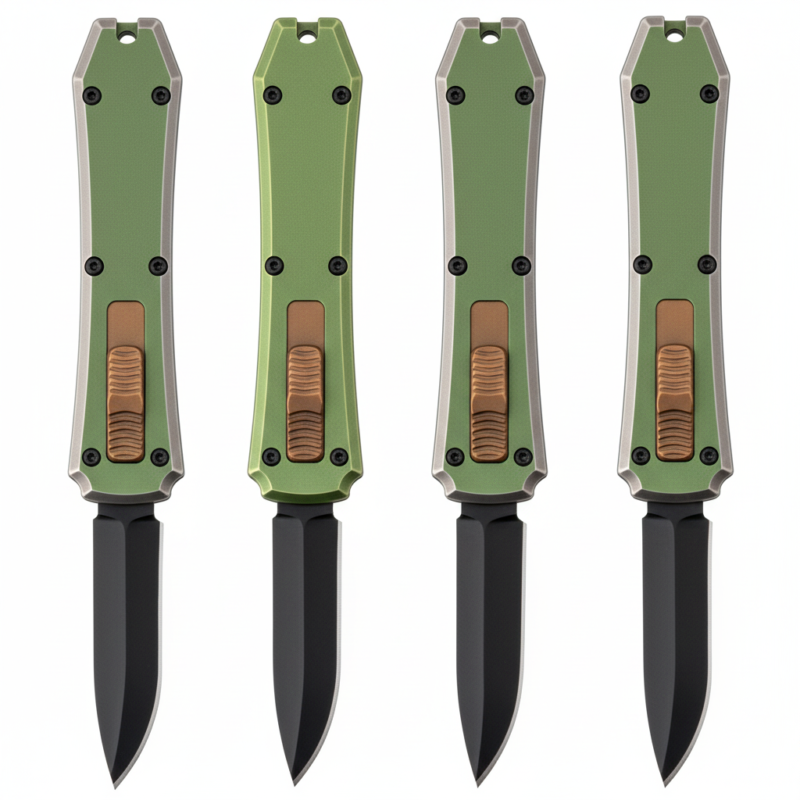
For OTF knives, handle coating means the outer finish applied to the aluminum, zinc alloy, steel, or titanium handle scales or chassis. Common examples include anodizing, painted finishes, Cerakote-style ceramic coatings, powder coating, PVD on metal parts, and rubberized or grippy top layers. These are different from the blade finish. They also wear differently because an OTF handle sees repeated thumb pressure on the firing switch, pocket friction along one side, and occasional impact around the glass breaker, clip screws, and corners.
A simple pass/fail rule helps: light smoothing or edge fading from pocket carry is acceptable; peeling, bubbling, flaking around screws, or rapid loss of finish at the switch after limited use is not. If you are comparing models, start with the handle material and the type of coating, then inspect the high-contact points before worrying about color.
Where OTF handle coating wears first
OTF knives have a few very predictable wear points because their mechanism changes how the handle is used. Unlike a manual folder, an OTF is constantly pressed at the switch and often carried with one flat side rubbing against the pocket seam or clip area.
- Firing switch track: The thumb slider is the first place to inspect. Repeated forward-and-back pressure can polish a matte coating, expose bright metal at the edges, or chip paint where the switch rubs the slot walls.
- Handle corners and chamfers: Sharp edges lose finish faster than broad flat panels. If the coating is thin or the prep work was poor, corners show silvering or color fade early.
- Pocket-contact side and clip area: The side pressed against denim, rivets, keys, or a car seat gets steady abrasion. Clip mounting points also concentrate stress around screw holes.
- Glass breaker end and screw heads: The tail end bumps hard surfaces when the knife is set down. Around screws, weak coating can crack, lift, or chip during assembly and later spread outward.
Those are the common failure modes to watch: polishing at the switch, edge rub-through, chipping around screws, and flaking where the coating bridges a sharp corner.
Not all coatings wear the same
Appearance benefits and performance benefits are not the same thing. A coating can make an OTF look distinctive, reduce glare, or add color contrast without adding much wear resistance. Another finish may look plain but hold up better to carry.
Anodizing
Anodizing is not a paint layer sitting on top of aluminum; it is an electrochemical surface conversion. On aluminum OTF handles, anodizing often wears more gracefully than paint because it tends to fade or brighten at contact points rather than peel in sheets. It can still scratch, especially on edges and around the switch slot, but it is less likely to bubble or flake.
Painted and powder-coated finishes
These can provide strong color options and can hide casting marks on lower-cost handles, but they are more vulnerable to chips if the handle gets knocked or if screws bite through the finish during assembly. On budget OTFs, thick paint can also wear unevenly around the slider track.
Ceramic-style coatings
Cerakote-type finishes can resist abrasion well when the surface prep is correct and the coating thickness is controlled. They are often a good middle ground for colored handles that still need decent carry resistance. Their weak point is edge impact: a hard strike on a corner can chip the coating.
PVD and bare-blasted metal
PVD is more common on clips, breakers, and steel parts than on full aluminum handles, but where it is used correctly, it can hold color and wear resistance well. Bare bead-blasted metal has no coating to wear off, but it can scratch, stain, or become shiny in handling spots. For buyers who dislike visible finish loss, plain blasted metal is sometimes the easiest answer because there is no topcoat to chip.
If someone claims one finish is the most durable, the conditions matter: aluminum versus steel substrate, edge sharpness, pocket carry frequency, and how aggressively the switch rides in its channel all change the result.
What causes fast coating loss on an OTF
Fast wear is often blamed on “use,” but weak implementation is usually the bigger issue. OTF handles are assembled with tight tolerances, multiple fasteners, and moving external controls. That means finishing errors show up quickly.
- Poor surface preparation: Oil, blasting residue, or uneven prep prevents proper adhesion. This often leads to flaking near screws or broad patches lifting after a short time.
- Coating applied too thick at edges: Thick buildup on chamfers and around switch slots chips sooner because those areas flex and get rubbed first.
- Rough slider geometry: If the thumb switch or its slot edges are too sharp, they act like a scraper every time the knife fires.
- Soft handle substrate: Zinc alloy and some lower-cost cast handles can dent more easily. Once the metal deforms, the finish cracks over it.
One common mistake is judging durability by color alone. Black hides dirt but often shows bright edge rub. Light gray may look worn less dramatically even when the same amount of metal is exposed. Another mistake is assuming a textured coating is tougher. Texture improves grip, but raised texture peaks can wear down faster than smooth flats.
How to judge acceptability before you buy
The best buying rule is practical: if the knife will be carried daily and fired often, choose a finish that wears by smoothing or fading, not by peeling. If the knife is for occasional carry, color options and texture matter more because wear rate is lower.
Use this quick checklist when comparing an OTF in person or from detailed photos in an OTF knife catalog:
- Check the switch slot: Look for sharp paint lines, heavy buildup, or visible rubbing marks on a new sample.
- Zoom in on corners: Clean, even edge coverage is a good sign. Thick rounded paint at the edge is a warning sign.
- Inspect screw holes and clip mounts: Spider cracks, chips, or finish lifting around fasteners suggest weak adhesion or rough assembly.
- Ask the handle material: Anodized aluminum and well-coated aluminum generally wear more predictably than heavily painted cast handles.
- Look at the clip contact zone: If the clip sits hard against the coating, expect a wear stripe there.
- Ask how the sample was carried: Pocket carry with keys and rivets creates very different wear than drawer storage.
Best for: users who accept honest carry marks and want color, glare reduction, or extra surface grip.
Worst for: buyers who want the handle to look untouched after months of pocket carry, especially on dark-coated edges and around the switch.
When wear is cosmetic and when it signals a problem
Cosmetic wear is normal when it stays at contact points and does not affect the knife’s operation. A polished thumb path, faint edge fade, or a clip-side rub mark does not mean the OTF is failing. Many users actually prefer this kind of wear because it shows where the knife is handled.
It becomes a real problem when coating loss points to friction, impact, or assembly issues that may spread. Watch for these warning signs:
- Finish debris in the switch track: Flakes can increase drag or make the slider feel gritty.
- Bubbling or lifting patches: This suggests adhesion failure, not normal abrasion.
- Cracks radiating from screws: Often caused by over-tightening, poor prep, or brittle coating.
- Uneven wear on both sides of the slider slot: This may indicate misalignment or rough movement rather than simple thumb contact.
If you are ordering samples or comparing production runs, ask for close photos of the switch, clip side, and tail end after a week of normal carry. That tells you far more than a fresh studio photo. If you need to compare finish options or request details on available handle treatments, the wholesale inquiry form is the right place to ask for material and coating specifics.
FAQ
Does anodizing wear off on an OTF knife?
It can fade or rub through at high-contact points, but it normally wears more gradually than paint and is less likely to peel.
Which OTF handle finish hides wear best?
Mid-tone stonewashed or blasted metal often hides wear best because scratches and bright edge contrast are less obvious than on solid black coatings.
Will handle coating affect OTF function?
Usually no, unless the coating flakes into the switch track, chips around moving parts, or was applied so heavily that it interferes with the slider.
Is coating wear a reason to reject a knife?
Reject it if the finish peels, bubbles, cracks around screws, or wears through extremely fast with light use. Accept it if the wear is limited to normal contact points and the mechanism remains smooth.