
Short Answer
A utility knife is a mid-sized kitchen blade for slicing fruits, vegetables, sandwiches, and small meats. Learn its uses, limits, and how to choose one.
Short Answer: What Is a Utility Knife Used For in the Kitchen?
A utility knife is a mid-sized kitchen blade designed for tasks that are too large for a paring knife but too delicate for a chef's knife. It typically has a straight or slightly serrated edge and a blade length between 4 and 7 inches. In the kitchen, it is used for slicing fruits, vegetables, sandwiches, small cuts of meat, and other foods that require precision without the bulk of a larger knife.
The utility knife is a versatile everyday tool, often considered a bridge between the small paring knife and the larger chef's knife. It excels at jobs like trimming fat from meat, slicing cheese, or cutting through a tomato without crushing it. Its size makes it easy to control, and it is a common choice for quick tasks at the cutting board or even at the table.
While it may not replace a chef's knife for heavy chopping, the utility knife is a practical addition to any kitchen. It is especially useful for cooks who want a lighter, more maneuverable blade for detailed work. Understanding its specific uses helps you decide if it belongs in your knife block.
Where Does the Utility Knife Fit in the Kitchen?
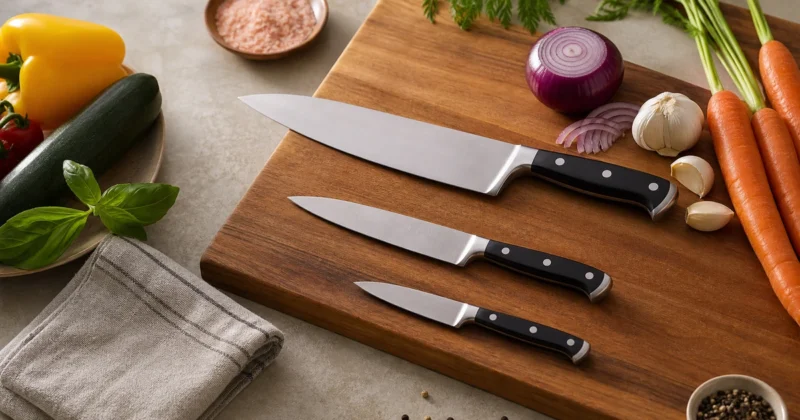
In a typical knife set, the utility knife sits between the paring knife and the chef's knife. The paring knife is small, usually 3 to 4 inches, and is meant for intricate work like peeling and coring. The chef's knife is larger, often 8 to 10 inches, and is designed for heavy chopping, slicing, and mincing. The utility knife fills the gap, offering a blade that is long enough to slice medium-sized items but nimble enough for more controlled cuts.
This positioning makes the utility knife a go-to for tasks that would be awkward with either extreme. For example, slicing a bagel or a sandwich is easier with a utility knife than with a bulky chef's knife, and it can handle larger items than a paring knife. It is also a good choice for cutting poultry or small roasts, where a chef's knife might feel oversized.
Many cooks find that the utility knife becomes their default for quick tasks, especially when they do not want to pull out a larger blade. It is also a popular choice for picnics or outdoor meals because it is compact and versatile. However, it is not designed for heavy-duty jobs like splitting a butternut squash or breaking down a whole chicken, which are better left to a chef's knife or a cleaver.
Common Kitchen Tasks for a Utility Knife
The utility knife is a multitasker, but it shines in specific scenarios. Here are some of the most common uses in a home kitchen:
Slicing fruits and vegetables: From apples and pears to cucumbers and zucchini, the utility knife handles medium-sized produce with ease. Its straight edge makes clean slices, and its size allows for precise control.
Cutting sandwiches and wraps: Whether it is a club sandwich or a burrito, the utility knife can slice through layers without crushing them. A serrated utility knife is especially good for crusty bread.
Trimming meat and poultry: The utility knife is ideal for removing silver skin, trimming fat, or cutting small pieces of meat. Its pointed tip helps with detail work.
Slicing cheese: Hard cheeses like cheddar or gouda slice neatly with a utility knife. For softer cheeses, a thinner blade may be better to avoid sticking.
Preparing small ingredients: Chopping shallots, garlic, or herbs is easier with a utility knife than with a larger blade, especially if you are working with small quantities.
- Slicing fruits and vegetables
- Cutting sandwiches and wraps
- Trimming meat and poultry
- Slicing cheese
- Preparing small ingredients
Utility Knife vs. Paring Knife: What's the Difference?
The main difference between a utility knife and a paring knife is size. A paring knife has a blade of 3 to 4 inches, while a utility knife is longer, typically 4 to 7 inches. This extra length allows the utility knife to slice larger items, such as a tomato or an apple, in one stroke, whereas a paring knife might require multiple passes.
The utility knife also has a broader blade, which gives it more stability when cutting. It can be used for tasks that require a bit more force, like cutting through a small squash or a piece of meat. The paring knife, on the other hand, is better for intricate work like peeling, coring, or deveining shrimp, where a smaller blade offers more control.
In practice, many cooks use both: a paring knife for detail work and a utility knife for slightly larger tasks. If you only want one knife for small to medium jobs, a utility knife is more versatile. However, if you do a lot of peeling and intricate cutting, a paring knife might be the better choice.
Serrated vs. Straight Edge Utility Knives
Utility knives come with either a straight edge or a serrated edge. A straight edge is ideal for clean, precise cuts on foods like vegetables, fruits, and boneless meats. It is also easier to sharpen at home with a whetstone or honing rod.
A serrated edge, often called a bread knife style, is better for cutting through crusty bread, delicate pastries, or foods with a tough exterior and soft interior, like tomatoes. The serrations grip the surface and saw through without crushing. However, serrated knives are harder to sharpen and may require professional service.
Some utility knives have a partially serrated edge, offering a straight section for most tasks and a serrated section for tougher items. This can be a good compromise, but it may not excel at either task. When choosing, consider what you cut most often. If you frequently slice bread or tomatoes, a serrated utility knife is useful; otherwise, a straight edge is more versatile.
How to Choose the Right Utility Knife
When selecting a utility knife, consider the blade length, material, and handle comfort. A blade length of 5 to 6 inches is a good middle ground for most tasks. Stainless steel is common and easy to maintain, while high-carbon steel holds an edge longer but requires more care to prevent rust.
The handle should feel comfortable in your hand and provide a secure grip, even when wet. Look for a full tang, where the blade extends through the handle, for better balance and durability. A bolster, the thick band between the blade and handle, can protect your fingers and add weight.
Think about how you will use the knife. If you need it for heavy use, a sturdier blade with a thicker spine is better. If you want a lightweight option for quick tasks, a thinner blade may suffice. It is also wise to hold the knife before buying to ensure it feels right, as personal preference plays a big role.
Caring for Your Utility Knife
Proper care extends the life of your utility knife and ensures safe use. Always hand wash the knife with mild soap and warm water, then dry it immediately. Avoid putting it in the dishwasher, as the harsh detergents and high heat can damage the blade and handle.
Store the knife in a knife block, on a magnetic strip, or with a blade guard to protect the edge and prevent accidents. Never leave it loose in a drawer, where it can dull or cause injury. Regularly hone the blade with a honing rod to keep it aligned, and sharpen it with a whetstone or professional service when it becomes dull.
Use a cutting board made of wood or plastic, not glass or stone, which can dull the blade quickly. Also, avoid using the knife on hard surfaces like countertops. With proper care, a quality utility knife can last for many years.
Common Mistakes to Avoid
One common mistake is using a utility knife for tasks that require a larger knife, such as chopping a watermelon or cutting through bones. This can damage the blade and increase the risk of injury. Instead, use the appropriate knife for the job.
Another mistake is using a dull knife. A dull blade requires more force and is more likely to slip, causing accidents. Keep your utility knife sharp and honed to ensure clean cuts and safe handling.
Avoid using the utility knife on hard surfaces like glass or stone, which can dull the edge. Also, do not use it as a screwdriver or pry bar, as this can break the tip. Finally, always cut away from your body and keep your fingers curled under to prevent cuts.
FAQ
Can a utility knife replace a chef's knife?
No, a utility knife cannot fully replace a chef's knife. While it is versatile for small to medium tasks, a chef's knife is better for heavy chopping, mincing large quantities, and cutting through larger items. The utility knife is a complement, not a substitute.
What is the best blade length for a utility knife?
The best blade length depends on your needs, but 5 to 6 inches is a common choice. This length offers a good balance between control and cutting capacity. Shorter blades are more maneuverable, while longer blades can slice larger items.
Is a serrated utility knife better than a straight edge?
It depends on what you cut. A serrated edge is better for bread, tomatoes, and other foods with a tough exterior. A straight edge is more versatile for general slicing and easier to sharpen. Consider your primary tasks when choosing.
How do I sharpen a utility knife?
You can sharpen a straight-edge utility knife with a whetstone or a honing rod. For serrated knives, use a sharpening rod designed for serrations or seek professional sharpening. Regular honing helps maintain the edge between sharpenings.
Can I use a utility knife for cutting meat?
Yes, a utility knife is suitable for cutting small cuts of meat, trimming fat, and slicing cooked meats. However, for larger roasts or cutting through bones, a chef's knife or a cleaver is more appropriate.