
Short answer
Build a private-label kitchenware line by choosing a core knife set, confirming artwork and testing the retail pack before the first order.
Key Takeaways
- Steel name alone does not prove quality; heat treatment, geometry, and finish matter too.
- Match materials to the expected use, climate, maintenance level, and price point.
- Good product listings explain tradeoffs instead of treating every steel or handle material as universally best.
Terms Used Here
- Blade style
- The shape and edge design of the blade, which affects cutting tasks and buyer preference.
- Handle material
- The material used for grip, comfort, appearance, and durability.
- Assortment
- A grouped buying selection planned around customer needs, price points, and repeat orders.
In this article
- 01 Choose the first job your brand will own
- 02 Select a supplier around the change you need
- 03 Test if the sample supports the pitch
- 04 Run a channel pilot before adding more profiles
- 05 Make a reorder decision from the first sales
- 06 Sources
- 07 Bring your first channel and two candidate references
- 08 Models in this article
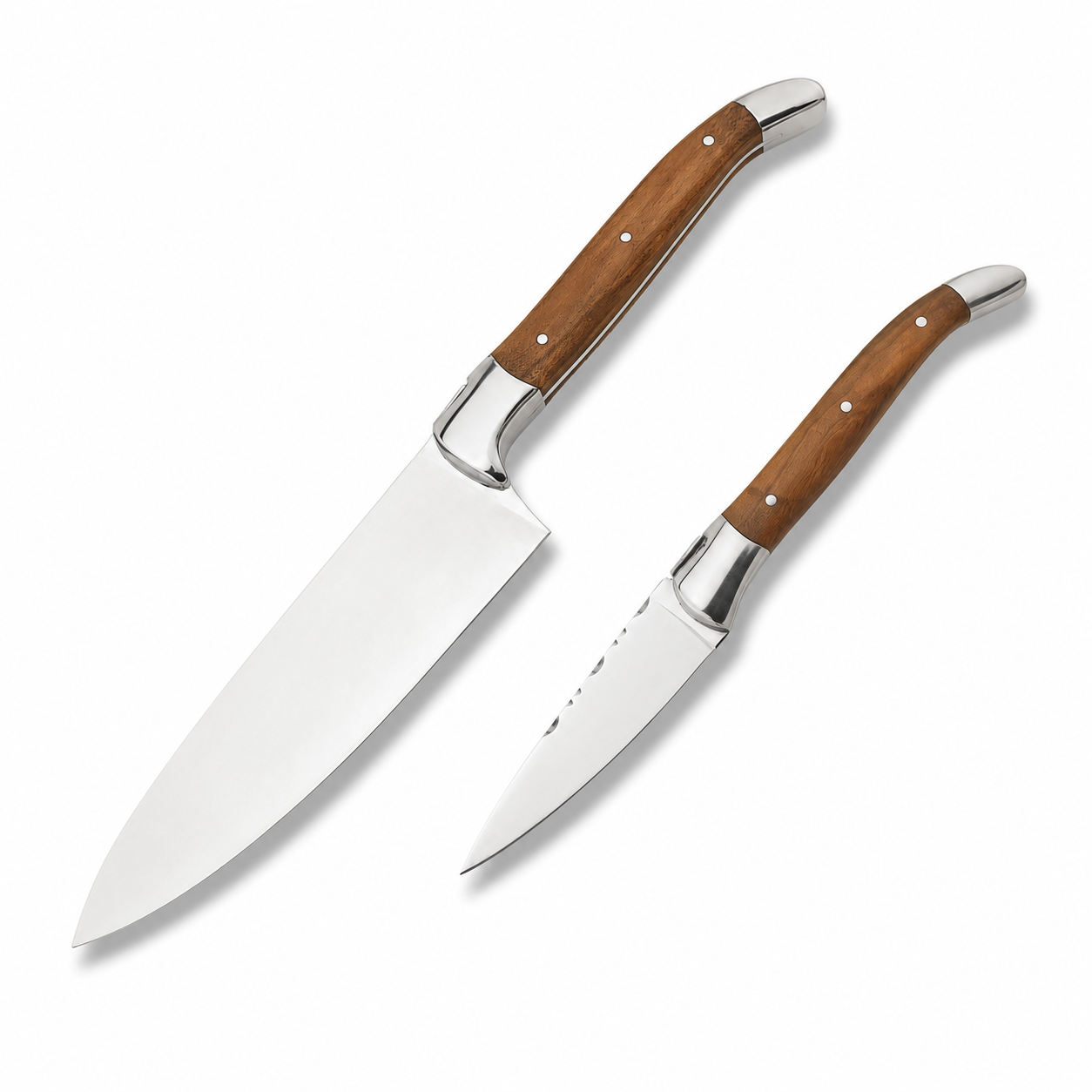
- 09 Two-Piece Chef and Paring Knife Set with Wood Handles
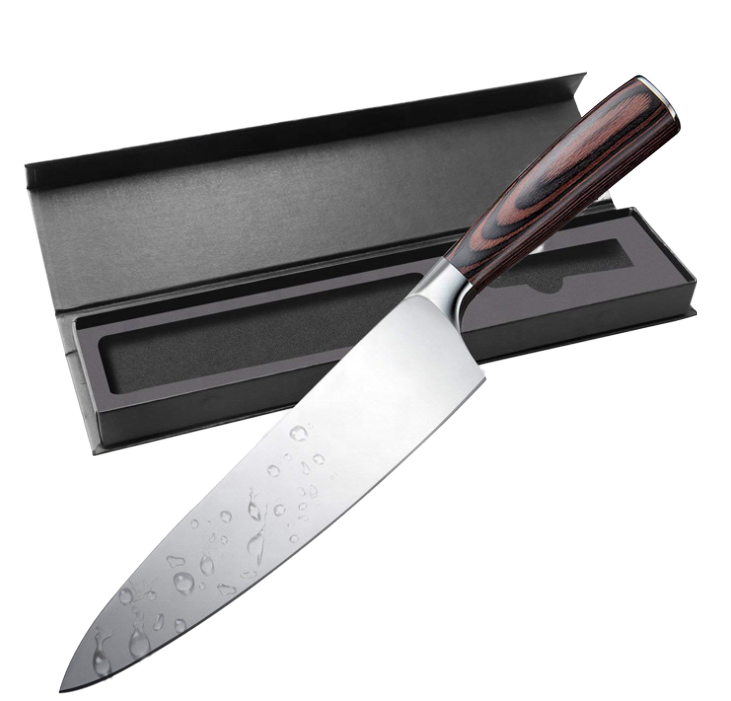
- 10 Stainless Steel Chef Knife with Brown Wood Handle and Gift Box
A first kitchenware range should make one promise the buyer can see on the shelf and check at home. Pick the first sales channel, test an actual set or gift pack, and use what sells and gets returned to decide what to reorder.
Choose the first job your brand will own
Start with a customer and a use. A specialty kitchen shop can sell a small daily-prep set by showing the two different kitchen jobs it covers. A gifting channel may want a single chef knife that looks ready to present. Write one sentence the shop assistant can say without referring to a spec sheet, then list what the pack has to prove.
The TOPKNIVES two-piece wood-handle set contains a chef knife and a paring knife. The wood-handle chef knife offered with a presentation box is a separate candidate for a gift assortment. Keep the two wholesale projects distinct in the cost sheet and display test.
Select a supplier around the change you need
Ask for base-product, logo and presentation options against the same product link. Use a standard pack for the first discussion if brand graphics are the only change, then price the final print separately. Compare the setup fee, packaging run, order minimum and exact pack contents in addition to the unit price.
The reference WCK article gives its own stock and custom order terms. TOPKNIVES checks requirements and commercial terms against the selected model on its official private-label route.
Test if the sample supports the pitch
Give the team each sample alongside its proposed shelf card and online photos. Ask a retailer or chef to explain who the item is for, which features are visible and which care claims need a product document. Test the sample in the kind of routine food preparation that the listing describes, then repeat the unboxing and count the pieces using the proposed insert.
Update the product sheet if the sample changes. Where a packaging proof is pending, keep the exact handle, finish, content and approved mark on the same version record before ordering.
Run a channel pilot before adding more profiles
For one store or one sales page, show the same approved model, pack contents and actual positioning. Record the questions before purchase, units sold, returns, damage, and common requests for a single replacement over the same period. Compare two pack choices on a similar channel or time window so a promotion does not hide the difference.
Do not count showroom units as sellable inventory. Allocate initial artwork, minimum-run packaging, transit and storage to the number of units actually available to sell. Keep those first-run costs distinct from the repeat cost when deciding which model to expand.
Make a reorder decision from the first sales
If customers like the product but ask the same care question, fix the copy before buying another shape. If a gift order is lost to pack size or supply period, identify the exact box version and discuss a standard-pack alternative. If a part goes missing, record which model needs replacement and check whether it can be ordered individually.
Sources
Bring your first channel and two candidate references
Send the model links, customer use, first order quantity, destination and target shelf or gift occasion. Include the display or online product sheet you plan to validate and the exact pack changes you want quoted.
Request a launch and sample quotationModels in this article
Two-Piece Chef and Paring Knife Set with Wood Handles
Test a two-piece daily prep set as an opening shelf offer.
Stainless Steel Chef Knife with Brown Wood Handle and Gift Box
Use for a separate gift channel and verify the actual box configuration in the sample.