
Short answer
A practical OEM buyer guide to the best OTF knife platforms for private label projects, with methodology, platform comparisons, QC checkpoints, MOQ context, and
Key Takeaways
- Knife rules can vary by state, city, blade style, opening mechanism, carry method, and intended use.
- Do not treat a product nickname as a legal category; check the actual features and local rule.
- Retailers should keep legal or safety language factual and avoid promising that one item is allowed everywhere.
Terms Used Here
- OTF
- Out-the-front; a knife design where the blade moves forward from the front of the handle.
- EDC
- Everyday carry; gear intended for regular daily tasks.
In this article
- 01 Methodology and scope
- 02 How we judged this
- 03 Best OTF knife platforms for OEM projects
- 04 1. Mid-size aluminum double-action EDC OTF
- 05 2. Proven-chassis repeat-order platform for distributors
- 06 3. Value-line OTF with low machining complexity
- 07 4. Premium-finish OTF built on an existing core chassis
- 08 5. Slim-profile lifestyle or gift OTF
- 09 What makes one OTF platform better than another for OEM work?
- 10 Three short buying scenarios
- 11 Best for a first private-label run
- 12 Best for distributor replenishment
- 13 Best for value retail under $69
- 14 Tradeoffs buyers should understand
- 15 QC checklist before production approval
- 16 Market and compliance note
- 17 FAQ
- 18 Which OTF knife is best for a first OEM project?
- 19 Is a fully custom OTF better than customizing an existing platform?
- 20 What matters more in OTF OEM: looks or mechanism?
- 21 What is the safest platform for repeat orders?
- 22 Which OTF lane has the highest cosmetic sensitivity?
The best OTF knives for OEM projects are usually mid-size double-action aluminum platforms with a proven internal chassis, especially in the 3.0 to 3.4 inch blade range. For most private-label buyers, that format offers the safest balance of retail demand, manageable customization, and repeat-order consistency.
This recommendation is based on observable retail factors such as price band, size, finish visibility, and likely buyer intent.
Because “best” depends on channel and budget, this guide does not treat every OTF as equal. Instead, it ranks the OEM-ready platform types that are most practical to private label, then explains where each one fits, where it fails, and what to check before you commit.
Methodology and scope
This is an editorial buying guide, not a lab test or a universal market ranking. The recommendations below are based on review of active OTF catalog patterns, recurring OEM inquiry requirements, common factory customization limits, and the failure points buyers most often need to control on double-action OTF projects: switch force variation, misfire risk, blade play tolerance, finish inconsistency, and repeat-order spec drift.
Where MOQ, lead-time, and defect ranges are mentioned, they should be read as typical market-side expectations for existing-platform OEM work, not guaranteed terms for every factory or every season. Final numbers depend on packaging, finish complexity, blade steel, order timing, and whether the chassis is already in current production.
How we judged this
- Retail fit: Does the platform match a clear sales lane such as EDC, value retail, distributor replenishment, or gift/lifestyle?
- OEM practicality: Can you change branding, finish, and packaging without forcing a new mechanism or body redesign?
- Repeat-order stability: Is the platform likely to hold similar action feel, lockup, and cosmetics on later runs?
- QC exposure: Are the main defects easy to define, inspect, and reject before shipment?
- Margin resilience: Can the knife still work after packaging, freight, inspection, and normal replacement allowance are added?
Best OTF knife platforms for OEM projects
1. Mid-size aluminum double-action EDC OTF
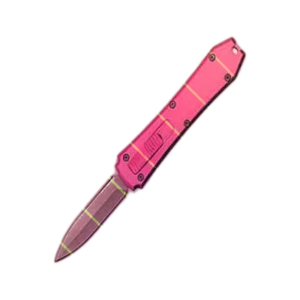
If you need one answer, start here. The most OEM-friendly OTF is a mid-size, double-action, aluminum-handle EDC platform with a clean body shape, practical pocket clip, and standard blade profile. The sweet spot is usually a 3.0 to 3.4 inch blade and about 7.5 to 8.5 inches overall length.
Why this platform wins: it sits in the broadest retail lane, gives enough flat surface for logo placement, and usually avoids the higher complaint rate that comes with oversized or highly stylized bodies. Representative examples are neutral-profile drop-point or dagger models within current OTF models that use an established double-action slider and standard aluminum scales.
Best for: first private-label runs, general EDC retailers, online knife stores, and brands that want a safe starting point.
Typical customization: laser logo, anodized handle color, blade finish, clip color, and branded box.
Typical market expectation: existing-platform private-label runs often begin around 100 to 300 units, with simpler packaging and fewer variants reducing friction.
Main QC tradeoffs: switch force can vary from batch to batch, and cosmetic issues on anodized handles show quickly under bright retail photography.
2. Proven-chassis repeat-order platform for distributors
The second-best OEM route is not the flashiest knife. It is the most repeatable one: a stable chassis with limited variations, fixed hardware, and a locked spec sheet. In practice, this often looks like one mid-size OTF body offered with one or two blade styles, one clip style, and tightly controlled finish codes.
Why it ranks high: distributor programs live or die on reorder confidence. If a dealer’s second shipment feels different from the first, complaints rise fast. A proven-chassis family reduces that risk better than a trend-driven design with frequent body changes.
Best for: regional distributors, dealer networks, catalog sellers, and brands planning replenishment instead of one-off launches.
Representative examples: standard mid-size OTF families already running in volume, especially those with conservative milling and minimal decorative cuts.
Main QC tradeoffs: the knife may look less distinctive, but that is often the right compromise for replenishment business.
3. Value-line OTF with low machining complexity
If your target retail is under about $69, the best OEM knife is usually a simple, low-machining OTF rather than an ambitious design forced into a value price. Look for fewer body steps, fewer finish transitions, and one broad-appeal blade shape.
This platform works because every extra machining pass and every decorative finish stack increases cost and reject risk. For value retail, simpler usually sells better and lands cleaner.
Best for: marketplace sellers, discount retail, promotion-driven programs, and high-turn online listings.
Representative examples: entry-level aluminum-bodied OTFs with basic black, gray, or stonewash presentations.
Main QC tradeoffs: coatings and edge finish can look inconsistent at lower price points, so inspection standards need to be realistic and clearly written.
Avoid overstocking note: if you run a gift or boutique store, avoid overstocking this lane just because the ex-factory price looks attractive; value OTFs often move better in volume channels than in presentation-focused retail.
4. Premium-finish OTF built on an existing core chassis
For brands that want stronger shelf presence without funding a new mechanism, the best route is a premium cosmetic package on a known chassis. That means the internal action stays standard while visible details change: blackwash or two-tone blade, upgraded hardware color, branded clip treatment, and better packaging.
This is a strong OEM choice because customers notice finish and presentation first, while the factory benefits from not having to re-engineer the track, spring setup, or switch geometry.
Best for: tactical lifestyle brands, premium private label, collector-oriented drops, and stores selling above entry-level price bands.
Main QC tradeoffs: premium cosmetics create more visible failure points. Coating rub, mismatched anodizing, and clip finish variation are more likely to trigger returns than on plain working models.
5. Slim-profile lifestyle or gift OTF
A slim OTF can be the right OEM project when the buyer cares more about pocketability, clean presentation, and low visual aggression than about tactical styling. This archetype usually uses a narrower handle, lighter milling, and a less aggressive blade profile.
Best for: lifestyle brands, gift channels, boutique retail, and stores where the knife is merchandised alongside accessories rather than hard-use tools.
Representative examples: narrow-body OTFs with simple aluminum handles and subdued branding zones.
Main QC tradeoffs: cosmetic tolerance is tighter in this lane. A buyer who accepts minor finish wear on a utility knife may reject the same flaw on a gift-oriented model.
What makes one OTF platform better than another for OEM work?
On OTF knives, the real differentiators are not just blade length and color. The better OEM platforms usually have predictable double-action reliability, consistent switch force, acceptable blade play, stable internal track wear, and low spec drift on repeat runs.
- Double-action reliability: A platform with frequent light-spring misfires is a poor private-label candidate, even if it looks good in photos.
- Switch geometry: Very sharp or very shallow slider textures can create inconsistent user feel across batches.
- Blade play tolerance: Some movement is normal on many OTFs, but the acceptable range should be defined before production.
- Track and carrier wear: Rough internal finishing can show up later as gritty action or inconsistent deployment.
- Finish durability: Black coatings, anodizing, and clip treatments need to match the intended retail lane and use case.
- Repeat-order spec drift: Body color, logo placement, hardware tone, and box inserts are common areas where later runs can drift if the spec pack is weak.
Three short buying scenarios
Best for a first private-label run
Choose the mid-size aluminum EDC OTF. Keep the project simple: one body color, one blade finish, one packaging format. This reduces approval steps and gives you a cleaner read on actual market demand.
Best for distributor replenishment
Choose the proven-chassis repeat-order platform. Limit blade options, lock the hardware spec, and document finish codes carefully. The goal is not novelty; it is reorder confidence.
Best for value retail under $69
Choose the low-machining value-line OTF. Skip premium coatings and complex milling. Put budget into acceptable action consistency and clean packaging instead of decorative details.
Tradeoffs buyers should understand
The more unique your OTF project becomes, the more risk you usually add. A custom body shape, unusual switch design, or complicated finish stack may help the knife look exclusive, but it also raises approval time, cosmetic rejects, replacement difficulty, and repeat-order drift. For most OEM buyers, a mechanically standard platform with selective visual customization is the better commercial decision than a ground-up redesign.
QC checklist before production approval
- Deployment and retraction: define an acceptable misfire threshold for pre-shipment inspection.
- Switch feel: compare force consistency across a sample set, not one showroom sample.
- Blade play: agree on acceptable side-to-side and front-to-back tolerance.
- Blade tracking: confirm the blade runs cleanly in the channel without rubbing.
- Finish review: set limits for anodizing variation, coating marks, edge finish, and clip scratches.
- Hardware security: inspect screw seating and clip retention.
- Packaging accuracy: verify insert fit, barcode, outer carton marks, and drop protection.
Many buyers also plan for a modest replacement or defect allowance on OEM runs, but the exact acceptance standard should be written into the order documents before production begins.
Market and compliance note
OTF legality, import treatment, and channel suitability vary by country, state, and sales platform. Before choosing a model family, confirm that the intended size, mechanism type, and blade style fit your market and your retail channel’s policy requirements.
If you want to compare active production options, review the current OTF models. If you already know your target size, finish, packaging, and quantity, you can submit an OEM and private label inquiry to confirm platform fit, customization scope, and current production terms.
FAQ
Which OTF knife is best for a first OEM project?
A mid-size aluminum double-action OTF is usually the best first choice because it balances demand, customization ease, and manageable QC.
Is a fully custom OTF better than customizing an existing platform?
Usually no. For most buyers, an existing platform is faster, lower risk, and easier to reorder consistently.
What matters more in OTF OEM: looks or mechanism?
Mechanism first, then cosmetics. A visually strong knife with inconsistent action creates more long-term problems than a simpler knife with reliable deployment.
What is the safest platform for repeat orders?
A proven mid-size chassis with limited variations is typically the safest repeat-order option.
Which OTF lane has the highest cosmetic sensitivity?
Gift, boutique, and premium-finish OTFs usually face the highest cosmetic scrutiny from end buyers.