
Short answer
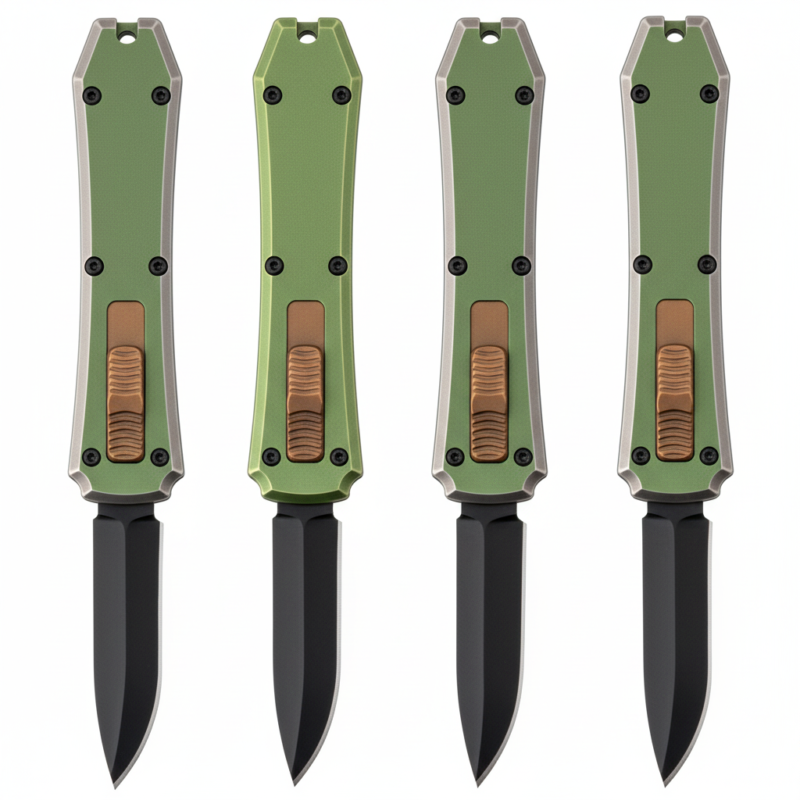
Yes—single-edge OTF knives are usually more useful for everyday cutting because the safe spine improves control, handling, and sharpening. Compare single-edge v
Key Takeaways
- Knife rules can vary by state, city, blade style, opening mechanism, carry method, and intended use.
- Do not treat a product nickname as a legal category; check the actual features and local rule.
- Retailers should keep legal or safety language factual and avoid promising that one item is allowed everywhere.
Terms Used Here
- OTF
- Out-the-front; a knife design where the blade moves forward from the front of the handle.
- Automatic knife
- A knife that opens by a spring-driven mechanism after the user activates a button, switch, or slider.
- EDC
- Everyday carry; gear intended for regular daily tasks.
In this article
- 01 Quick comparison: which style is more useful?
- 02 Why single-edge is usually more useful
- 03 When single-edge is clearly the better choice
- 04 1. Everyday utility
- 05 2. Fine control
- 06 3. Less stressful handling
- 07 4. Easier maintenance
- 08 When double-edge may be preferable
- 09 Legal note: check blade style, not just the OTF mechanism
- 10 Mistakes buyers make
- 11 Short answer for most buyers
- 12 Optional note for retailers and wholesale buyers
- 13 How this was checked
- 14 FAQ
- 15 Are single-edge OTF knives better for EDC?
- 16 Are double-edge OTF knives harder to sharpen?
- 17 Are double-edge OTF knives less legal?
- 18 Which style should a first-time buyer choose?
Yes. Single-edge OTF knives are usually more useful for everyday cutting. For most real tasks—opening boxes, cutting tape, trimming plastic, slicing cord, and making controlled cuts—a single-edge blade is easier to orient, safer to handle, and simpler to maintain than a double-edge dagger. Double-edge OTF models still have a place, but they are usually chosen for symmetry, appearance, or specific tactical preference rather than day-to-day utility.
First, define the terms clearly. A single-edge OTF has one sharpened edge and one unsharpened spine. A double-edge OTF usually has a dagger-style blade with two sharpened edges. That one design difference changes how the knife feels in the hand, how much thumb support you have, how easily you can choke up for detail work, and how careful you need to be during simple tasks.
Quick comparison: which style is more useful?
| Use or preference | Single-edge OTF | Double-edge OTF | Main tradeoff |
|---|---|---|---|
| Opening boxes and packages | Usually better | Usable, but less forgiving | A safe spine helps guide shallow cuts without worrying about the back edge |
| Cutting tape, plastic wrap, zip ties | Usually better | Often fine, but requires more attention | Single-edge blades are easier to orient quickly |
| Controlled detail cuts | Usually better | Usually worse | The unsharpened spine gives thumb support and better pressure control |
| Sharpening at home | Easier | Harder | One edge is simpler to sharpen consistently than two |
| Pocket handling and casual use | Usually easier | Usually less forgiving | You always have one clearly non-cutting side on a single-edge blade |
| Symmetry and dagger look | Less dramatic | Usually preferred | Double-edge models often win on visual appeal |
| Tactical-style preference | Sometimes preferred | Often preferred | This is more about intended style and user preference than utility |
Why single-edge is usually more useful
The strongest reason is simple: an unsharpened spine gives you a safe reference surface. In common cutting jobs, that matters more than many buyers expect.
When you open a carton, score tape, or make a short draw cut, you often rotate the knife slightly in your hand to control depth and angle. With a single-edge blade, you can place a thumb or finger on the spine for extra leverage and direction. With a double-edge dagger, that same movement needs more care because both sides may be sharp.
This is not just theory from product listings. Benchmade’s Shootout OTF is built around a drop-point, single-edge blade, which shows how a major production brand frames OTF utility around a conventional working profile rather than a dagger shape (evidence type: spec sheet; Benchmade Shootout product page, accessed May 28, 2026: https://www.benchmade.com). Microtech’s Ultratech line also includes clear single-edge working formats such as S/E and Tanto Edge variants alongside dagger versions, showing that mainstream OTF platforms are offered in both utility and dagger styles (evidence type: catalog; Microtech Ultratech product pages, accessed May 28, 2026: https://microtechknives.com).
In practical terms, single-edge blades tend to feel more natural for:
- breaking down boxes
- cutting shrink wrap
- opening mailers and padded envelopes
- trimming cord or strap material
- making careful starter cuts in cardboard or plastic
- general EDC tasks where you may regrip the knife during the cut
Another advantage is sharpening. A single-edge blade gives you one working bevel to maintain. A double-edge blade gives you two. That does not make double-edge sharpening impossible, but it usually means more time, more consistency required, and more chances to create uneven edges if the user is inexperienced.
When single-edge is clearly the better choice
1. Everyday utility
If your knife is mostly for routine cutting, single-edge is the safer bet. The blade shape is easier to understand at a glance, especially when you draw the knife quickly and need to orient the edge immediately.
2. Fine control
For careful cuts, the blunt spine is a real advantage. It lets you add thumb pressure without treating the top of the blade like a hazard. That makes short, precise cuts more comfortable and usually more confident.
3. Less stressful handling
A single-edge OTF still deserves respect, but there is less ambiguity about which side should face your hand, your pocket opening, or the item you are cutting around. That matters when you are tired, rushed, or wearing gloves.
4. Easier maintenance
Most users will find one edge simpler to sharpen and touch up. If you want an OTF as a working tool rather than a display piece, that lower maintenance burden is a genuine benefit.
When double-edge may be preferable
Double-edge OTF knives are not useless. They simply answer a different priority.
A dagger-style blade may be preferable if you strongly value:
- symmetrical appearance
- a classic tactical OTF look
- collector interest in dagger profiles
- piercing-focused geometry
Retail assortments show that both styles remain widely available. Blade HQ’s OTF category continues to list substantial numbers of both single-edge and dagger-style models across major brands, which supports the point that the market offers both formats broadly (evidence type: retailer count; Blade HQ OTF category and blade-style filters, accessed May 28, 2026: https://www.bladehq.com). What that evidence can show is availability and assortment depth. What it cannot show by itself is which style makes owners happier in long-term daily use.
So if your priority is visual symmetry or a more aggressive dagger profile, double-edge may still be the right buy. It is just usually not the most practical answer for ordinary cutting chores.
Legal note: check blade style, not just the OTF mechanism
Knife law varies widely by state and locality. Even where automatic knives are legal, double-edged daggers can be treated differently from single-edge utility blades in some jurisdictions. That means a knife can be legal as an automatic but still raise separate issues because of blade style or local definitions.
For that reason, buyers should check current state and local law before carrying or selling any OTF knife. Knife Rights and the American Knife & Tool Institute both track state-by-state knife law developments and summaries that can help you verify current rules (evidence type: law; Knife Rights LegalBlade resources, accessed May 28, 2026: https://kniferights.org/resources/legalblade/ ; evidence type: law; AKTI state knife law summaries, accessed May 28, 2026: https://www.akti.org/state-knife-laws/).
Conservative takeaway: single-edge models are often the lower-complication choice, but you should always verify the law where the knife will be carried, shipped, or sold.
Mistakes buyers make
- Choosing only by looks: A dagger profile may look better in photos, but that does not make it better for cardboard, tape, or plastic.
- Ignoring control: Many first-time buyers focus on deployment style and forget that blade control matters more once the knife is actually cutting.
- Underestimating sharpening: Two edges usually mean more upkeep.
- Skipping legal checks: Mechanism legality and blade-form legality are not always the same question.
Short answer for most buyers
If you want an OTF knife mainly as a cutting tool, start with a single-edge blade. If you want an OTF mainly for dagger styling, symmetry, or collector appeal, consider double-edge.
For buyers comparing models, it helps to browse an OTF knife catalog by blade shape first, then narrow by size, steel, and handle material. Blade style affects daily use more than many shoppers expect.
Optional note for retailers and wholesale buyers
For stores serving general EDC customers, single-edge models are usually the easier starting point because their use case is simpler to explain: one working edge, one safe spine, more natural utility feel. If you want to ask about bulk options, mixed assortments, or model availability, use the wholesale inquiry form.
How this was checked
Method: This review was updated May 28, 2026 by comparing current OTF product pages from Benchmade and Microtech, reviewing Blade HQ’s active OTF category filters for assortment context, and checking legal references from Knife Rights and AKTI. Evidence types used were spec sheet, catalog, retailer count, and law.
What the evidence can prove: it can show how major brands currently specify OTF blade styles, how retailers assort them, and where law may distinguish between blade forms.
What the evidence cannot prove: it cannot by itself prove national user satisfaction, injury rates, or exact sales preference without controlled testing or dealer sales data.
FAQ
Are single-edge OTF knives better for EDC?
Usually yes. For routine cutting, the safe spine improves control and makes the knife easier to handle.
Are double-edge OTF knives harder to sharpen?
Usually yes. You have two edges to maintain instead of one, so the process takes more care.
Are double-edge OTF knives less legal?
Sometimes. In some jurisdictions, dagger or double-edged blades may be treated differently, so always check local law.
Which style should a first-time buyer choose?
Most first-time buyers who want a practical cutter will be happier with a single-edge model.