
Short answer
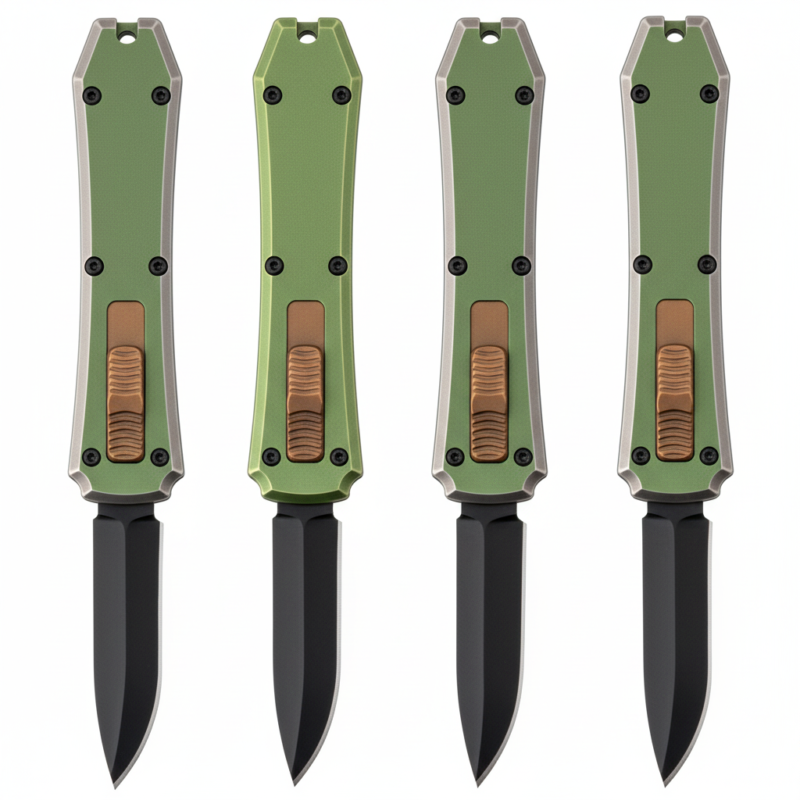
For most OTF knives, hard-anodized aluminum is the best handle material because it balances low weight, precise machining, corrosion resistance, durability, and
Key Takeaways
- Knife rules can vary by state, city, blade style, opening mechanism, carry method, and intended use.
- Do not treat a product nickname as a legal category; check the actual features and local rule.
- Retailers should keep legal or safety language factual and avoid promising that one item is allowed everywhere.
Terms Used Here
- OTF
- Out-the-front; a knife design where the blade moves forward from the front of the handle.
- Automatic knife
- A knife that opens by a spring-driven mechanism after the user activates a button, switch, or slider.
- EDC
- Everyday carry; gear intended for regular daily tasks.
In this article
- 01 Quick comparison: OTF handle materials at a glance
- 02 Why the handle material matters more on an OTF
- 03 The decision criteria before ranking materials
- 04 Best overall: hard-anodized aluminum
- 05 How other materials compare in real OTF use
- 06 G10: best for grip, but usually as an inlay or hybrid
- 07 Steel: better dent resistance, much heavier in pocket
- 08 Titanium: premium feel, premium price
- 09 Best material by use case
- 10 A concrete caveat: maintenance and finish matter
- 11 What would change my recommendation
- 12 See examples and compare designs
- 13 FAQ
- 14 Is aluminum strong enough for an OTF knife handle?
- 15 Is G10 better than aluminum for OTF knives?
- 16 Is steel better because it is stronger?
- 17 Is titanium worth it?
Hard-anodized aluminum is the best handle material for most OTF knives. For most users, it offers the best mix of low weight, precise machining, corrosion resistance, and reasonable cost; G10 hybrids are better when grip is the top priority, steel suits people who want a heavier and more dent-resistant feel, and titanium is mainly for premium builds.
What is known: OTF handles do more than provide grip—they also form the chassis around the switch, rails, spring system, and blade channel, so material choice affects carry comfort, action feel, and cosmetic wear. What depends: your priorities for weight, grip, finish durability, and budget. What is not being claimed: that one material is best for every OTF design, every factory process, or every price tier.
Quick comparison: OTF handle materials at a glance
| Material | Weight | Grip | Dent resistance | Machining precision | Cost | Best use case |
|---|---|---|---|---|---|---|
| 6061-T6 hard-anodized aluminum | Light | Moderate | Moderate | Very good | Moderate | Best overall for EDC OTFs |
| 7075 aluminum | Light | Moderate | Better than 6061 | Very good | Higher | Higher-end lightweight OTFs |
| G10 over liners or inlays | Medium | Excellent | Good surface durability | Usually not ideal as a slim full chassis | Moderate | Best for maximum grip |
| Steel | Heavy | Moderate | Good against dents | Good | Low to moderate | Heavy-duty feel, budget to mid-range |
| Titanium | Medium-light | Moderate | Good | Very good but expensive | High | Premium OTFs |
Why the handle material matters more on an OTF
On a manual folder, handle material mostly affects grip, weight, and appearance. On an OTF, it also affects how well the knife’s internals stay aligned. The two handle halves have to meet cleanly, the internal channel must stay consistent, and the switch path needs to feel smooth without excess drag.
That is why material choice on an OTF is not just about looks. A handle that is too heavy makes pocket carry worse. A handle that dents easily can show wear fast around corners and switch cutouts. A handle that is difficult to machine consistently can affect action quality more than buyers expect.
In practice, the best OTF handle materials are the ones that balance three things well: carry comfort, chassis precision, and finish durability.
The decision criteria before ranking materials
Before saying aluminum, steel, G10, or titanium is “best,” it helps to define what “best” means on an OTF knife.
- Weight in pocket. OTFs already have springs and internal hardware, so extra handle mass is more noticeable than on many side-opening knives.
- Machining accuracy. Cleanly machined handle halves help the action feel more consistent and reduce drag or uneven switch feel.
- Rigidity around the mechanism. The handle acts as the chassis. Flex, poor fit, or rough internal surfaces can affect the firing and retraction feel.
- Grip and texture. Some users want a smooth, slim carry; others want maximum traction with wet or gloved hands.
- Cosmetic wear. Corners, clip contact points, switch tracks, and glass-breaker ends usually show wear first.
- Corrosion resistance. Sweat, humidity, and pocket carry matter, especially for users in hot or coastal climates.
- Price. Material cost and finishing cost still matter, especially because premium materials do not always improve real-world OTF performance in proportion to the price jump.
Best overall: hard-anodized aluminum
For most buyers, the best answer is hard-anodized aluminum, especially 6061-T6 and, in higher-end builds, 7075 aluminum.
Why aluminum works so well on OTF knives:
- It keeps the knife light enough for daily carry. That matters because OTFs are mechanically dense already.
- It machines cleanly and predictably. That helps with screw fit, handle-half alignment, and consistent switch channels.
- It resists corrosion well. A good anodized finish holds up well against sweat and normal pocket use.
- It supports slim profiles. Most OTF buyers want a rectangular body that stays pocket-friendly.
- It offers the best cost-to-performance balance. You get real structural and machining advantages without paying titanium prices.
Between the two common grades, 6061-T6 is the standard practical choice: easy to machine, corrosion resistant, and affordable enough for mainstream OTFs. 7075 aluminum is stronger and a bit more resistant to denting and deformation, but it costs more and is less common in mid-priced models. For most users, the jump from poor aluminum to good 6061 matters more than the jump from 6061 to 7075.
The finish also matters. Hard-anodizing is usually the sweet spot because it improves surface wear resistance and gives aluminum a tougher outer layer than basic decorative anodizing. In everyday use, that means better resistance to scratches and rub marks, though sharp impacts can still ding corners.
One important distinction: aluminum’s weak point is usually cosmetic denting, not structural failure. Drop an aluminum OTF on concrete and you may see edge damage sooner than on steel, but that does not mean the chassis is functionally unsound.
How other materials compare in real OTF use
G10: best for grip, but usually as an inlay or hybrid
G10 is excellent when traction is the top priority. It stays grippy in wet conditions, with gloves, or during hard use. But on OTF knives, G10 is usually best used as an inlay, overlay, or scale over a liner or metal frame, not as the slimmest full structural body.
That is because OTFs benefit from compact, precisely machined internal channels. G10 can absolutely work in a hybrid construction, but many slim OTF designs are easier to execute cleanly in aluminum. If you want the most secure grip possible and do not mind a little extra thickness or texture, G10 hybrids make sense.
Choose G10 when grip matters more than sleek pocket carry.
Steel: better dent resistance, much heavier in pocket
Steel handles appeal to users who want a dense, solid feel. Compared with aluminum, steel is generally less prone to visible corner dents, and that can make it feel more rugged in hand.
But steel brings tradeoffs that are especially noticeable on OTFs:
- Weight: this is the biggest drawback. A steel OTF can feel heavy quickly because the mechanism already adds mass.
- Corrosion: stainless steel handle parts resist rust reasonably well, but finish quality and steel grade still matter.
- Production consistency: steel can machine well, but it is not automatically better for action quality than aluminum; the full handle design and internal finishing still matter more.
- Sharpening and edge retention: these are blade-steel issues, not handle-material advantages, so they should not influence handle choice.
That last point is worth separating clearly: when comparing steel handles, do not confuse them with the performance of steel blades. Edge retention and sharpening ease have nothing to do with whether the handle is steel.
Choose steel if you prefer heft and dent resistance more than lightweight carry.
Titanium: premium feel, premium price
Titanium is attractive because it has strong corrosion resistance, a premium reputation, and lower weight than steel. It also allows high-end finishing, including stonewash and bead-blast looks that many collectors like.
Still, titanium is not automatically the best OTF handle material. It costs much more, usually takes more machining time, and often makes more sense as a premium or enthusiast choice than as the default recommendation. In practical carry, a well-made aluminum OTF often gives similar day-to-day usability for much less money.
Choose titanium if you want a premium build and are willing to pay for the material and finish rather than just functional advantage.
Best material by use case
- Best for most EDC OTFs: hard-anodized 6061-T6 aluminum
- Best for maximum grip: G10 hybrid or G10 inlays over a metal chassis
- Best budget-friendly practical choice: 6061 aluminum over heavier steel, if the price difference is reasonable
- Best for a heavy-duty feel: steel
- Best premium option: titanium
- Best lightweight upgrade over standard aluminum: 7075 aluminum
A concrete caveat: maintenance and finish matter
A rough or heavily textured finish can trap pocket lint and grit more easily around the switch opening than a smoother anodized surface. On an OTF, that matters because debris near the switch path or front opening is more noticeable than on many manual knives. This does not mean textured handles are bad; it means aggressive texturing should be balanced against cleaning needs and pocket comfort.
What would change my recommendation
I would move away from aluminum as the default if one of these applies:
- You want the most traction possible and accept a thicker hybrid handle.
- You strongly prefer a heavy, dense knife in hand and do not mind extra pocket weight.
- You are buying at the premium end and value titanium’s finish and prestige.
- You specifically want the added strength and dent resistance of 7075 over standard 6061 and are willing to pay more for it.
See examples and compare designs
If you want to compare how different handle constructions are used across current designs, browse these OTF knife models. If you need material details for a specific build or finish, you can also use the wholesale inquiry form.
FAQ
Is aluminum strong enough for an OTF knife handle?
Yes. Quality 6061-T6 or 7075 aluminum is strong enough for most OTF handles. The usual issue is cosmetic dings, not failure of the handle body.
Is G10 better than aluminum for OTF knives?
Only if grip is your top priority. For overall balance of weight, machining precision, slimness, and cost, aluminum is usually better.
Is steel better because it is stronger?
Not necessarily. Steel is usually heavier and more dent-resistant, but that does not automatically make the OTF more reliable or better to carry.
Is titanium worth it?
For premium buyers, yes. For most users, aluminum delivers better value and very similar everyday practicality.