
Short answer
Choose a tableware supplier by case contents, price per setting, packaging, sample approval and the ability to reorder loose pieces.
Key Takeaways
- Steel name alone does not prove quality; heat treatment, geometry, and finish matter too.
- Match materials to the expected use, climate, maintenance level, and price point.
- Good product listings explain tradeoffs instead of treating every steel or handle material as universally best.
Terms Used Here
- Blade style
- The shape and edge design of the blade, which affects cutting tasks and buyer preference.
- Handle material
- The material used for grip, comfort, appearance, and durability.
- Assortment
- A grouped buying selection planned around customer needs, price points, and repeat orders.
In this article
- 01 Buy for the tables you actually serve
- 02 Check the supplier with a full table and a full case
- 03 Give retail and hospitality buyers different quotes
- 04 Keep service replacements looking like the first order
- 05 Sources
- 06 Quote your tableware and replacement pieces
- 07 Models in this article
- 08 Black-Handle Gold-Tone Stainless Steel Cutlery Set
- 09 24-Piece Gold-Tone Stainless Steel Flatware Set
- 10 Eight-Piece Stainless Steel Tableware Set with Blue ABS Handles
Start with one fully set table for the type of service you run. It will reveal which pieces get used every sitting, which are presentation accents and which items you need stocked as replacements. Use that same setting to compare tableware suppliers and case prices.

Buy for the tables you actually serve
A café replacing forks and spoons every month is asking a different question from a hotel opening a banquet room. For daily service, write expected place settings and separate counts for the pieces the team replaces most often. For an event range, name the menu and service pieces as their own lines. If the buy is for a shop, price the complete sellable pack and keep its spare service stock separate.
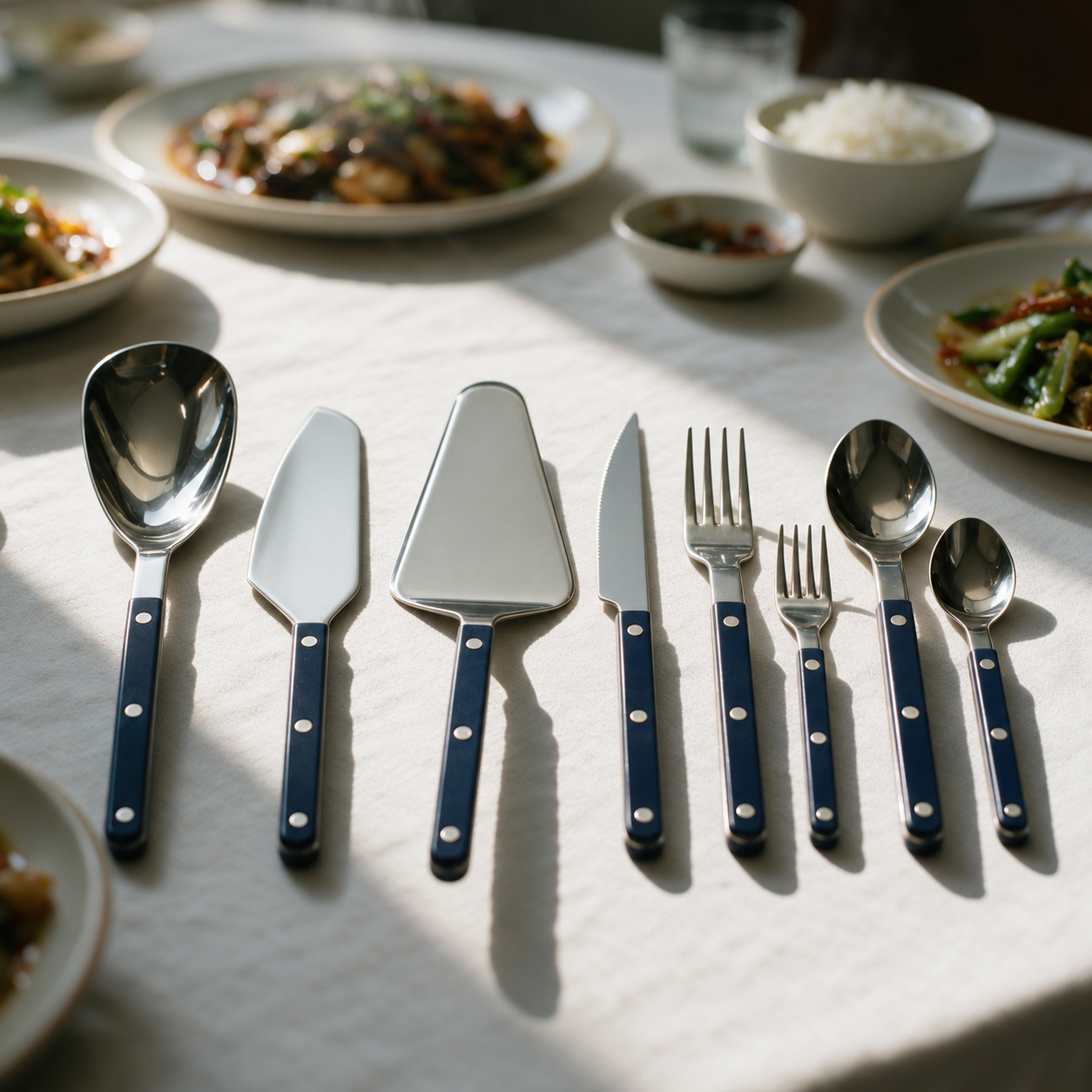
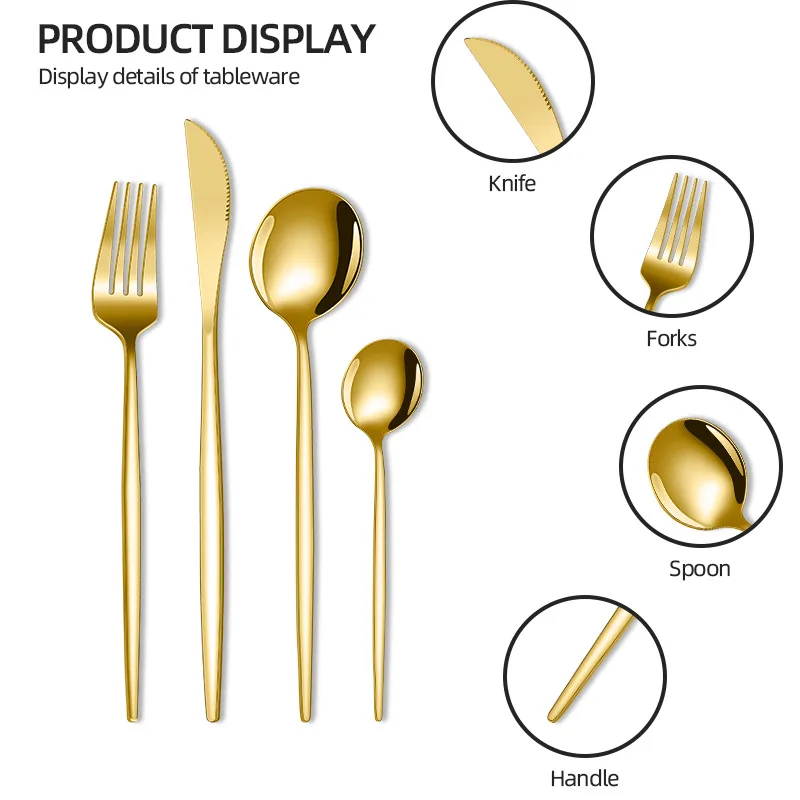
Our black-handle gold-tone range shows four pieces for one setting. The 24-piece gold-tone set is a different configuration, with six of each listed dinner knife, fork, dinner spoon and teaspoon. The blue eight-piece set mixes dining, serving and cake pieces. Read the actual contents before dividing a quote by the number of guests.
Check the supplier with a full table and a full case
Get one complete sample in the actual polish or color and compare it with a representative plate or bowl. See whether the fork and spoons match at the table and whether handles are comfortable in service. For daily operation, ask for material grade and finish guidance. Have the foodservice buyer verify product documentation for the intended use and local requirements.
Ask whether the same finish can be bought by the dozen later. Find out who handles shortage claims, final lead times, transit damage and replacements. If the project also needs dinnerware and glassware, list those separately with the specialist supplying them. Keeping case counts and replacement dates on one receiving schedule makes a mixed buy easier to manage.
Give retail and hospitality buyers different quotes
Hospitality quotes should list settings, loose replacements and selected service pieces. For example, 48 seats using four pieces at a setting need 192 pieces on tables when full. If you plan 12 extra forks and 12 extra dinner spoons, buy those as reserve inventory. Ask for carton sizes and transit cost for both the opening shipment and later small replenishment.
Retail quotes should identify the exact carton contents, barcodes, visible finish and packing by sellable box. Ask for a plain finish sample and branded box proof as separate choices if the program uses private label. Confirm minimums by finish and packaging before ordering one box design across several colors.
Keep service replacements looking like the first order
At receiving, check the line count, packaging, handling marks, finish and configuration against the approved setting. Keep one unused reference place setting and the carton labels. Store the reference alongside the purchase history so a hotel can request twelve forks in the original finish, using the original code, instead of replacing an entire range.
Match open-stock forks by pattern and piece code. In Acopa’s U.S. Lore series, the 8-inch dinner fork 267920805 and 7½-inch salad fork 267920806 each come in packs of 12. If you need 12 dinner forks for an existing venue, quote one case of 267920805, check a sample against the current place setting and record the same code at receiving. Add spoons or salad forks as separate lines so the wholesaler can confirm the unit count and delivery for each.
Sources
Quote your tableware and replacement pieces
Send your seat or retail-pack count, desired finish, service pieces, individual spares, delivery destination and date.
Request a TOPKNIVES quotationModels in this article
Black-Handle Gold-Tone Stainless Steel Cutlery Set
One illustrated setting, suitable for comparing how one assembly fits the table.
24-Piece Gold-Tone Stainless Steel Flatware Set
Six four-piece place settings. Confirm spare ordering and the box version.
Eight-Piece Stainless Steel Tableware Set with Blue ABS Handles
Mixed cake, dining and service pieces. Confirm each line before treating it as a table setting.