
Short answer
Check restaurant chef’s knife recommendations against exact models, evidence, opening delivery, defect terms and one-piece replacement.
Key Takeaways
- Start with the plain meaning of the term, then compare features and use cases.
- Knife categories often overlap, so the details matter more than the label alone.
- For buying decisions, check materials, size, mechanism, safety notes, and maintenance expectations.
Terms Used Here
- Blade style
- The shape and edge design of the blade, which affects cutting tasks and buyer preference.
- Handle material
- The material used for grip, comfort, appearance, and durability.
- Assortment
- A grouped buying selection planned around customer needs, price points, and repeat orders.
In this article
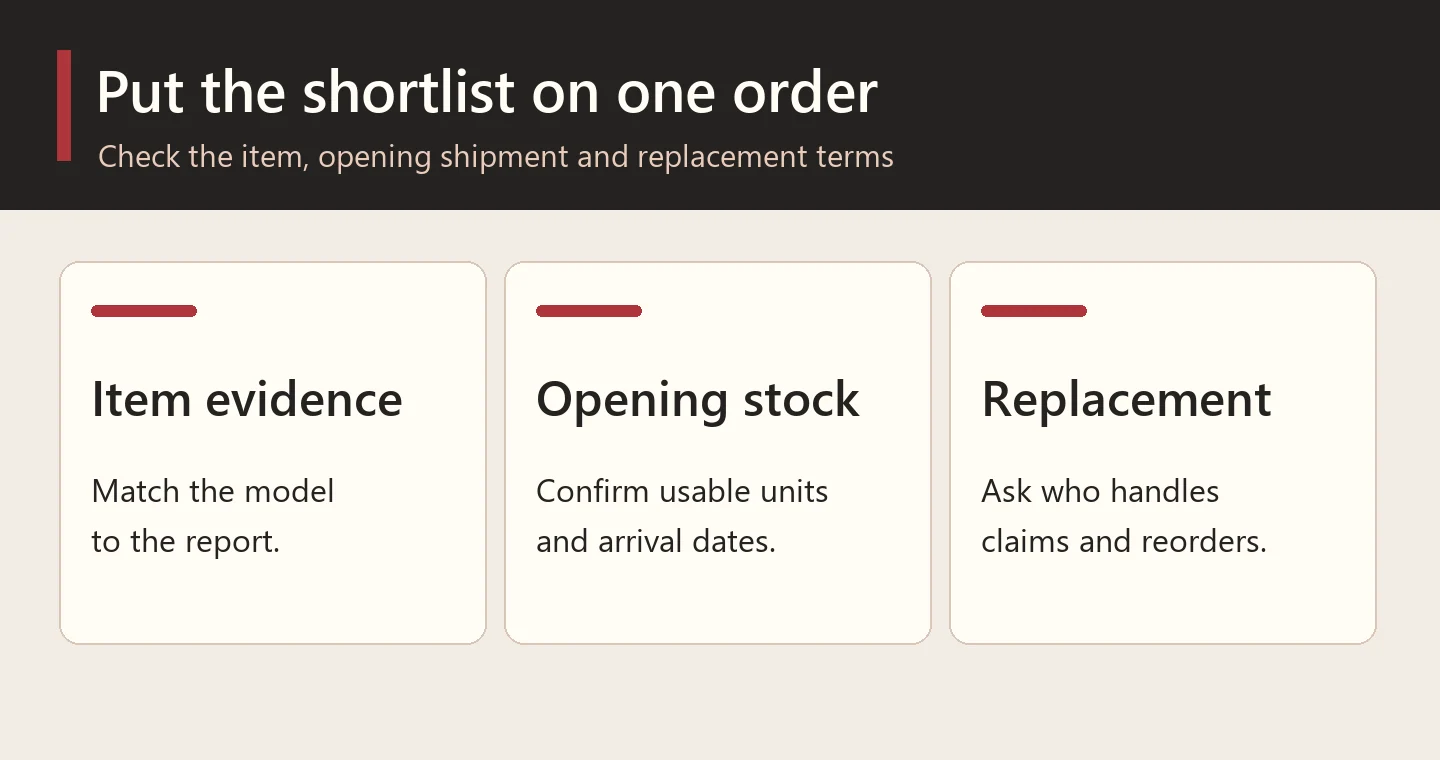
In November 2009, a BladeForums discussion about commercial kitchen knives asked for recommendations, independent comparisons and evidence of testing. Replies mentioned Victorinox, Global and other brands based on what individual cooks had seen or used. Those experiences can help you build a shortlist. To place a restaurant order now, give each candidate a job and ask for three things in writing: the exact item, the evidence your buyer requires, and who can replace it.
Ask for evidence on the exact item you intend to order
If a salesperson cites an independent comparison, ask for the report date, the models tested and the conditions used. The ISO description of its food-preparation cutlery test identifies the performance questions it covers. A sanitation listing answers a different procurement question. If a bid specifies one, check the public listing against the manufacturer’s item and the exact variant on the quote. Keep the report and the listing in separate files and record who checked them.
For example, the Dexter-Russell foodservice catalog identifies its Sani-Safe white-handled 8-inch cook’s knife as 12443 / S145-8PCP. The NSF listing for Dexter-Russell includes S145-8. Ask your seller to identify the listed configuration on the quotation if your requirements depend on it. For a different candidate, the official U.S. Global listing identifies the current classic 8-inch chef’s knife as G-2. The 2009 comments about Global are useful context. They provide no model-specific test report for the item on that page.
Use a small trial before reserving an opening order
Give the kitchen lead one sample of each shortlisted model for a normal lunch prep. Record the item number, which menu task it covered, and whether the lead would sign for the same model on delivery. Ask whether the supplier will apply the sample cost to the opening order. If the kitchen approves only one candidate, price that one and record any approved backup separately. Require buyer approval before a supplier switches the model on the purchase order.
For a restaurant ordering 12 usable knives before opening, request an itemized quote that states the units per case, total delivered cost and first shipment date. If the supplier has eight ready and four on backorder, ask it to quote both shipments and state when the balance can arrive. Agree on how the kitchen will work with the earlier quantity, or choose the approved alternate. A low unit price still needs enough usable pieces on the day you open.
Put defects and replacements on separate lines
Ask who credits an item that arrives damaged or clearly different from the order. Also price an ordinary one-piece replacement so you can see whether your team can get it in time for the next week. Dexter’s published warranty summary covers defects in materials and workmanship for the life of its product. Global’s U.S. FAQ describes coverage for manufacturing defects and lists accidental drops outside that coverage. Have the seller confirm the commercial terms, what evidence to keep, and which party handles a claim on the exact quote.
Ask Dexter about the item number, foodservice supply and warranty contact
Plain Meaning
Best Commercial Kitchen Knives: What to Check is best read as a knife-knowledge topic before it is read as a buying prompt.
Start with the plain definition, then separate category name, blade format, mechanism, material, handling, care, and local-rule questions.
Why It Matters
Knife terms often overlap. A page that explains the details helps readers avoid assuming that one label tells the whole story.
Good educational content should make comparison easier without forcing a sale. The reader should leave with a clearer question and fewer false assumptions.
What To Check Next
- Blade style, size, steel, handle material, and lockup.
- Opening mechanism, carry method, and maintenance needs.
- Safety expectations and local rules where relevant.
- Whether the category fits the reader, customer, or retail program.