
Short answer
Stock a honing rod that suits the blades your customers already buy. Compare ceramic and steel by the maintenance task, compatibility, usable length and care instructions, then order each working surface under its own item code.
Key Takeaways
- Start with a mild method and increase pressure or abrasion only when the blade condition requires it.
- Edge angle, steel type, corrosion level, and handle material all affect the right care method.
- For wholesale assortments, simple care instructions help customers keep knives useful longer.
Terms Used Here
- Blade style
- The shape and edge design of the blade, which affects cutting tasks and buyer preference.
- Handle material
- The material used for grip, comfort, appearance, and durability.
- Assortment
- A grouped buying selection planned around customer needs, price points, and repeat orders.
In this article
- 01 Choose by the knife and the maintenance task
- 02 Compare the two actual SKU formats
- 03 Decide what earns a regular shelf place
- 04 Sources
- 05 Quote a sample of each working surface
- 06 Models in this article
- 07 10-Inch Ceramic Honing Rod with Hanging Handle
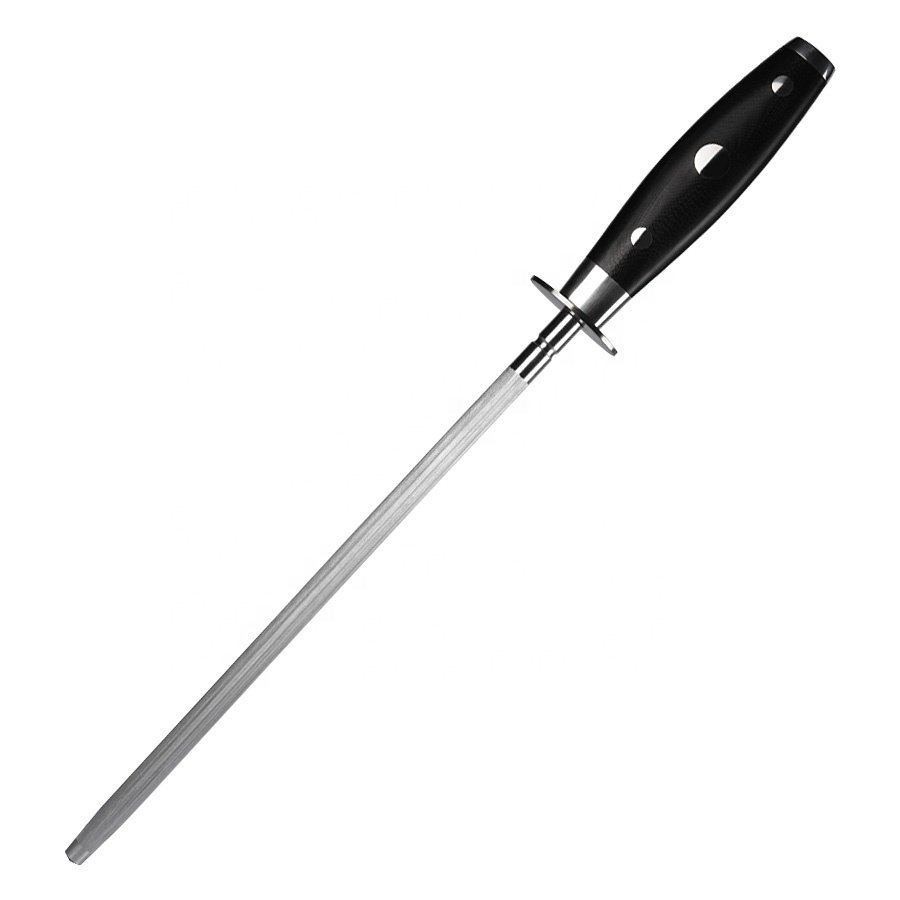
- 08 Steel Honing Rod with Black Riveted Handle
- 09 Plain Meaning
- 10 Why It Matters
- 11 What To Check Next
Stock a honing rod that suits the blades your customers already buy. Compare ceramic and steel by the maintenance task, compatibility, usable length and care instructions, then order each working surface under its own item code.

Choose by the knife and the maintenance task
Have the customer or store staff identify the blade material, edge and previous maintenance instructions. Conventional steel rods are generally offered for regular edge maintenance. A ceramic surface can provide an abrasive touch-up. Ask what the knife manufacturer recommends and obtain the instructions for the exact rod.
Keep a straight-edge maintenance example on the counter and ask staff to explain the intended pairing. Edge damage and a worn blade should be assessed separately before picking a maintenance tool. For an unknown edge or material, start with the maker’s guidance.
Compare the two actual SKU formats
The listed 10-inch ceramic option has a cylindrical working section, molded black handle, flared guard and hanging opening. The ceramic gallery shows different possible lengths. Request the actual working length, overall length and piece count for the configuration you will order.
The selected steel rod has a black, three-rivet handle, metal guard and end cap. Write its working surface and included pieces on its own quote line. Use a shelf card or hanging display that lets staff identify which rod has the ceramic working surface and which has the steel one.
Decide what earns a regular shelf place
Check shelf space and what customers ask about. Start with the rod compatible with the knives your team sells most often. Use the second as a separate option for shoppers who want a different maintenance surface. Keep each model’s compatibility note and care instructions with the display sample.
Before ordering, confirm packaging, spare policy and whether a future length or grip change will have a new code. For shipping a ceramic sample, ask what protects the shaft inside the pack. Approve the model and pack together so the repeat purchase can match.
Sources
Quote a sample of each working surface
Send the blade profiles you stock, the quantity for each rod, destination and display packaging. Ask the supplier to identify what the model includes.
Request a wholesale quoteModels in this article
10-Inch Ceramic Honing Rod with Hanging Handle
A public 10-inch ceramic option with a black handle and hanging opening. Confirm selected length and package.
Steel Honing Rod with Black Riveted Handle
A documented steel working rod with a riveted black handle. Confirm exact blade compatibility.
Plain Meaning
Knife care is best understood as a sequence: inspect, clean, dry, sharpen only if needed, then store safely. Skipping steps can make a simple issue harder to fix.
Rust removal, edge sharpening, handle care, and lubrication are different jobs. The right method depends on the steel, finish, edge condition, and how the knife is used.
Why It Matters
Many knife problems come from using too much force or the wrong tool. A mild method protects the blade and helps the reader understand what actually needs attention.
For product education, maintenance guidance also helps set realistic expectations around stainless steel, carbon steel, coatings, and storage habits.
What To Check Next
- Blade material and finish before using abrasives.
- Edge angle and blade shape before sharpening.
- Moisture, residue, and storage conditions after use.
- Whether the issue is cosmetic, functional, or safety-related.