
Before a hand food saw goes into service, the prep lead should confirm that the unit fits the task, the station is ready and the worker has been trained on that exact model. Make the checks part of shift handover so the next team can tell whether the equipment is clean, ready or out of service.
Choose the right saw for the station
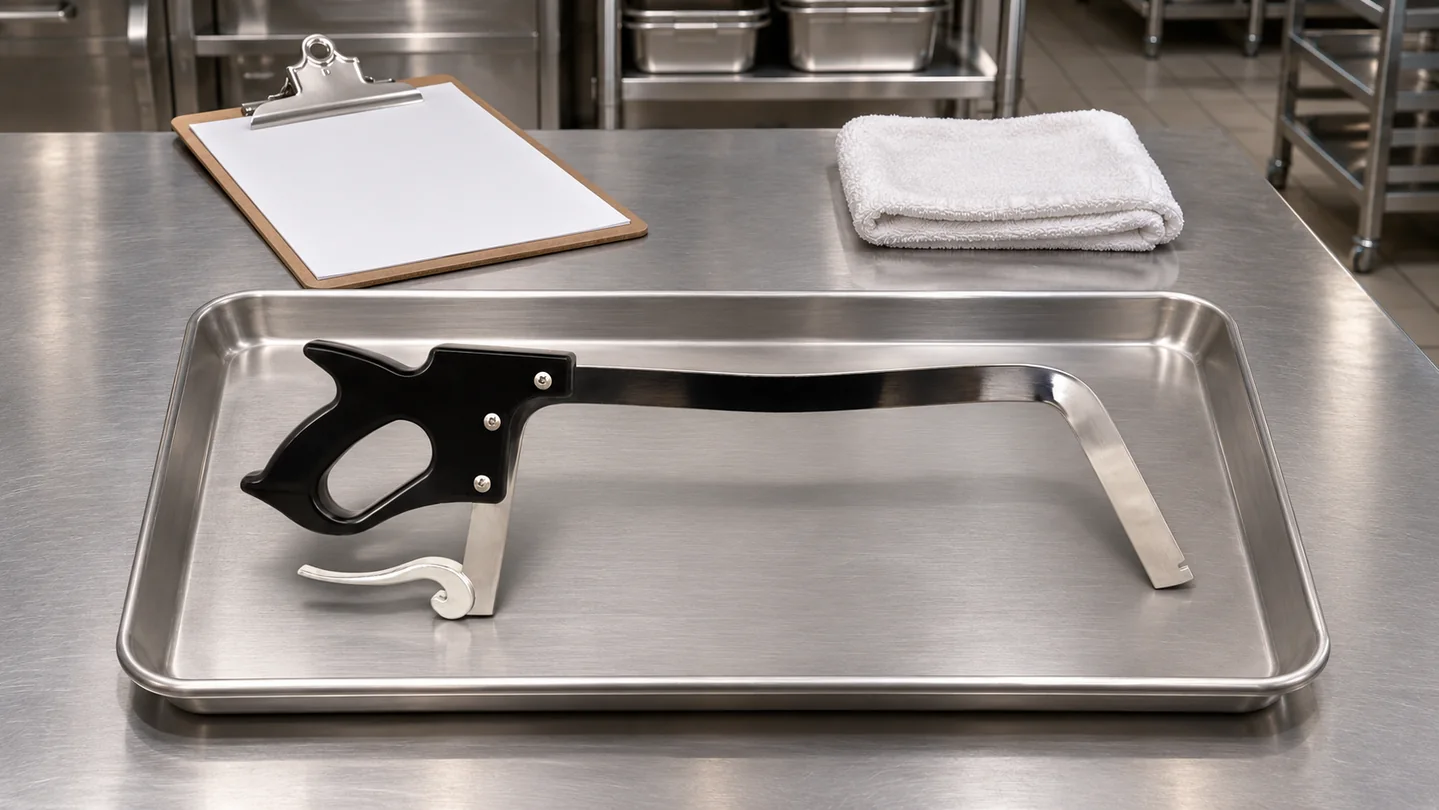
Start with what the station actually prepares. A butcher saw, fish saw and frozen-food saw can serve different commercial tasks. Give the supplier the proposed food and the space available, and ask which model it supports. Order from the written carton contents. Omcan describes its 11435 example as a frame only. Have the supplier identify all components in the quotation and supply the instructions for the complete unit before you plan the first shift.
Write the model beside its designated station, responsible supervisor and cleaning instructions. If two locations order the same frame but have different sanitation stations, agree how each location will clean, dry and store it before equipment goes out to staff.
Run the pre-use check with the prep lead
The lead starts with a visual inspection on the designated work surface. Check the handle and frame for damage, looseness or residue. Confirm that the assembled equipment matches the manufacturer’s instructions. Take a defective or incomplete unit out of service and label it for the person responsible for correction. The Canadian Centre for Occupational Health and Safety recommends inspecting hand tools before use and removing defective tools for repair or replacement.
| Check | Record | When to stop |
|---|---|---|
| Before assigning the station | Correct model, complete equipment, cleaning and inspection status | Model, parts or instructions are missing, or something is loose or damaged. |
| Before starting a task | Trained worker, clear station, task-appropriate protective equipment | The work area is crowded or the trained worker and required protection are unavailable. |
| Before the next shift | Cleaning finished, storage location and any repair hold passed to the next lead | Sanitation is incomplete or an equipment issue remains open. |
Prepare the work area and train on the actual model
Clear unrelated tools from the bench, keep the floor dry, and reserve room for the operator. Stage separate containers for food and the finished task. Move ready-to-eat prep to a separate station as required by your site’s food safety plan. The supervisor should demonstrate the model on that station and confirm where hands, supplies and coworkers can safely be during the work.
Choose protective equipment through the kitchen’s task assessment, manufacturer directions and local workplace requirements. Have trainees show that they can check the unit, keep the work area clear, identify when to stop and follow the cleaning process. Stop and ask the prep lead for help if the workpiece cannot be kept stable or the tool begins to bind.
Clean, sanitize and record the handover
After the work, move the equipment to the designated cleaning area and follow its manufacturer’s care instructions and your site’s food safety procedure. Work through wash, rinse and sanitizing as required for the equipment. Check the corners and joints for retained food residue. Use the site’s approved sanitizer procedure and allow the equipment to dry before putting it into its designated storage.
Put the date, station and operator initials on the record. Note any unit taken out of service and who will review it. If a replacement changes the model or cleaning method, update the training sheet before the replacement is released. Toronto Public Health provides guidance on cleaning and sanitizing food-contact equipment for local businesses.
Get the complete item list before ordering
Tell the supplier the model, planned station, number of units and the destination. Ask for the parts listed separately, the manufacturer’s care and inspection instructions and a contact for warranty or replacements. Ask for the information early enough to set up the station and train the shift leads.
Ask Omcan for model 11435 and its care instructions