
Short answer
Turn eligible dry bakery bread into crumbs for cutlets, pasta toppings and meatball binders. Compare menu results and plan an Omcan 23865 trial.
Key Takeaways
- Start with a mild method and increase pressure or abrasion only when the blade condition requires it.
- Edge angle, steel type, corrosion level, and handle material all affect the right care method.
- For wholesale assortments, simple care instructions help customers keep knives useful longer.
Terms Used Here
- Blade style
- The shape and edge design of the blade, which affects cutting tasks and buyer preference.
- Handle material
- The material used for grip, comfort, appearance, and durability.
- Assortment
- A grouped buying selection planned around customer needs, price points, and repeat orders.
In this article
A bakery that finishes the day with surplus rolls and a restaurant that buys crumbs for three different dishes may be able to solve the same problem. The starting point is the menu. A cutlet station wants a crumb that clings, a pasta station wants a dry finishing crunch, and a meatball batch wants a crumb that disappears into the mix. Start with the bread you can identify and the finished texture your cooks already use.
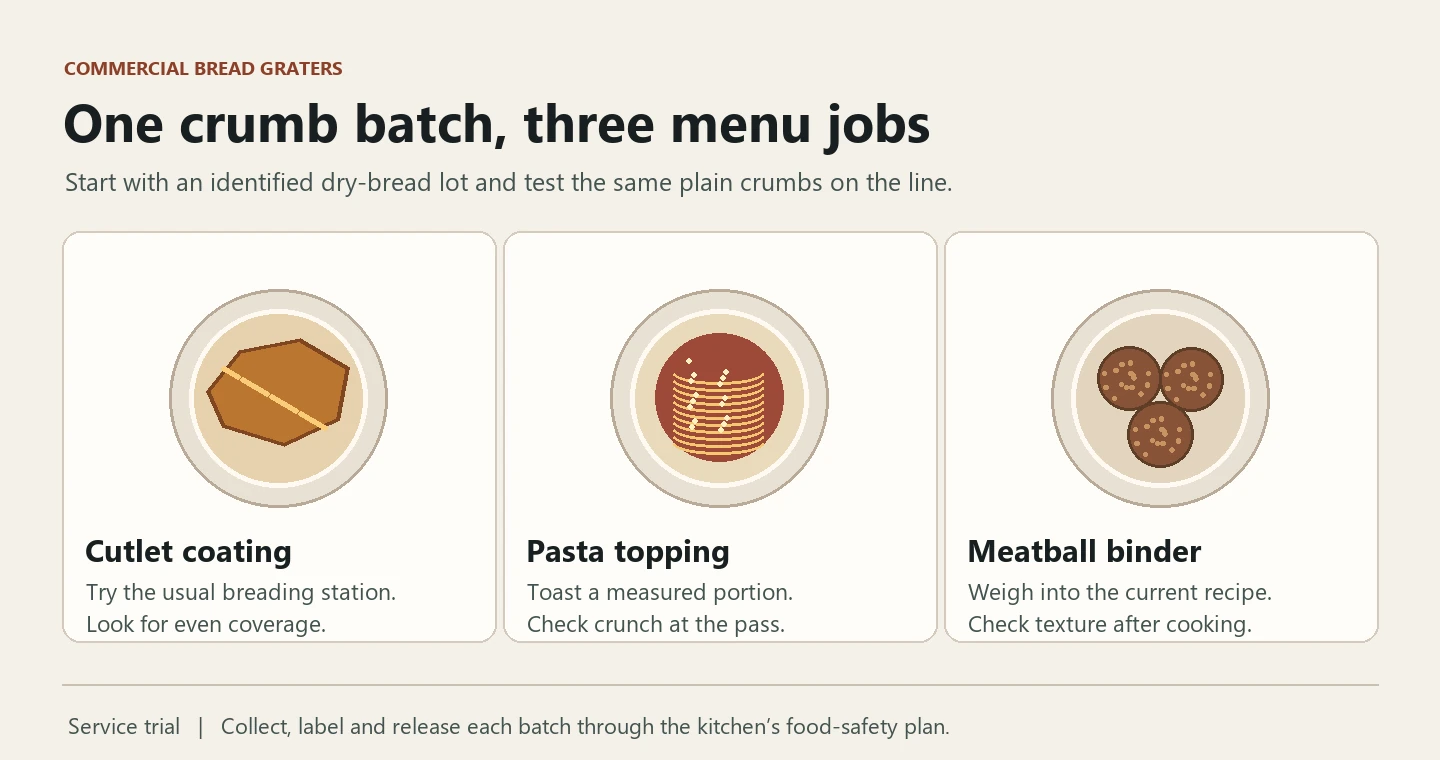
Use the same crumb batch in three dishes
Run one known dry bread lot, keep the base crumbs plain, and set aside portions for the three stations below. This gives the kitchen one output to assess while it changes only the application. For a dessert topping, reserve an identified enriched-bread lot with its own ingredient record so the pastry team can evaluate flavour and allergens separately.
| Menu job | What to try | What to compare at service |
|---|---|---|
| Cutlet coating | Run the usual breading station with a measured portion of plain crumbs. | Look at bare patches, loose crumbs and crust texture when it reaches the pass. |
| Pasta or gratin topping | Toast a portion and test it on the dish your line sells most often. | Check whether the crumb still gives a distinct crunch under the usual sauce and hold time. |
| Meatball or vegetable patty binder | Weigh a portion and use your current recipe’s liquid and mixing procedure. | Check portioning, cracking and consistency after cooking. Record a recipe change if absorption differs. |
Agree on what can go into the grater
Ask the bakery or prep lead to set aside eligible, identifiable dry bread before it mixes with other waste. Keep bread with different ingredient and allergen declarations apart. Follow the kitchen’s existing food safety plan to decide which bread can be reworked and how the resulting crumbs are labelled and held. A separate, marked collection bin makes it easier to identify the lot and avoid mixing it with plate returns.
Start with Omcan item 23865. The current Omcan product page lists model BG80E/N, while its specification sheet for item 23865 lists GR-IT-0080-S. Ask the dealer to put the exact model, a nameplate photo and its corresponding parts list on the quotation. The specification sheet lists 1.5 hp, 110 V single-phase supply, an overload switch and a safety cover. Its manual describes fine, uniform crumbs from dry bread. A kitchen that relies on an open, coarse crumb for its top seller should ask the dealer to run the actual bread and supply an output sample. Judge the texture before pricing a second application into the purchase.
Work out how many usable kilos replace your current order
For one representative week, record eligible bread collected, accepted crumbs after processing, crumbs used on the menu, and leftovers at the end of the week. Log staff minutes from sorting and labelling through the approved cleaning and station reset. Put the trial against the current delivered cost for the amount of commercial crumbs genuinely displaced. A large crumb yield helps only if enough of it goes into dishes customers already order.
For a central kitchen, include transfer containers and a way to send the batch identity to receiving outlets. For a single restaurant, compare the work with a smaller trial behind the normal prep schedule. A stop that loses its prep bench to sorting, bags and clean-down may need a different location or fewer crumb applications.
Put the demonstration and receiving checks on the quote
Send the dealer the Omcan item number, delivery postal code, bread types, expected weekly crumb use, and the texture you buy today. Ask about an exact-model demonstration, confirmed lead time, carton and freight details, and who handles parts and bench service locally. On delivery, match the carton and nameplate to the purchase order, confirm the quoted cover and power arrangement, and arrange a run with the approved customer bread using the manufacturer’s operating and cleaning instructions.
Check the Omcan 23865 bread grater with ChefSupplies Canada.
Sources. ChefStop’s guide to menu uses for commercial bread graters, Omcan 23865 specifications and Omcan operating and cleaning manual.