
Short answer
Compare private label kitchen knife manufacturers by construction, physical samples, model minimums, inspection and reorder controls.
Key Takeaways
- A knife that works well for one use case may be the wrong choice for another.
- Compare size, carry method, lockup, handle grip, maintenance, and local rules before choosing.
- For retail programs, build assortments around real tasks rather than only visual style.
Terms Used Here
- Blade style
- The shape and edge design of the blade, which affects cutting tasks and buyer preference.
- Handle material
- The material used for grip, comfort, appearance, and durability.
- Assortment
- A grouped buying selection planned around customer needs, price points, and repeat orders.
In this article
- 01 Write the range for the channel where people will buy it
- 02 Ask the factory what it can reproduce from the signing sample
- 03 Compare the quantities and release criteria under your brand
- 04 Private-label kitchen knife sets: Which approval starts the lead time?
- 05 Record the packed sample and the ready date separately
- 06 Sources
- 07 Ask us for an approved first kitchen knife range
- 08 Models in this article
- 09 Four-Piece Kitchen Knife Set with Dark Wood Handles
- 10 Plain Chef Knife with Waisted Black Grip
- 11 Patterned Chef Knife with Blue G10 Handle
Find a manufacturer that can repeat your chosen kitchen knife, send the same model to each warehouse, and support the next order. Start by choosing which preparation tasks your first line should cover. Then ask for evidence by exact SKU.


Write the range for the channel where people will buy it
For a first shelf line, compare one everyday chef knife and one complementary size. For kitchen specialists, show how a darker four-piece selection differs by task: chef, angled-tip, rectangular vegetable and short utility profiles. Our dark wood-handle set is a way to compare those distinctly different profile positions and a coordinated grip.
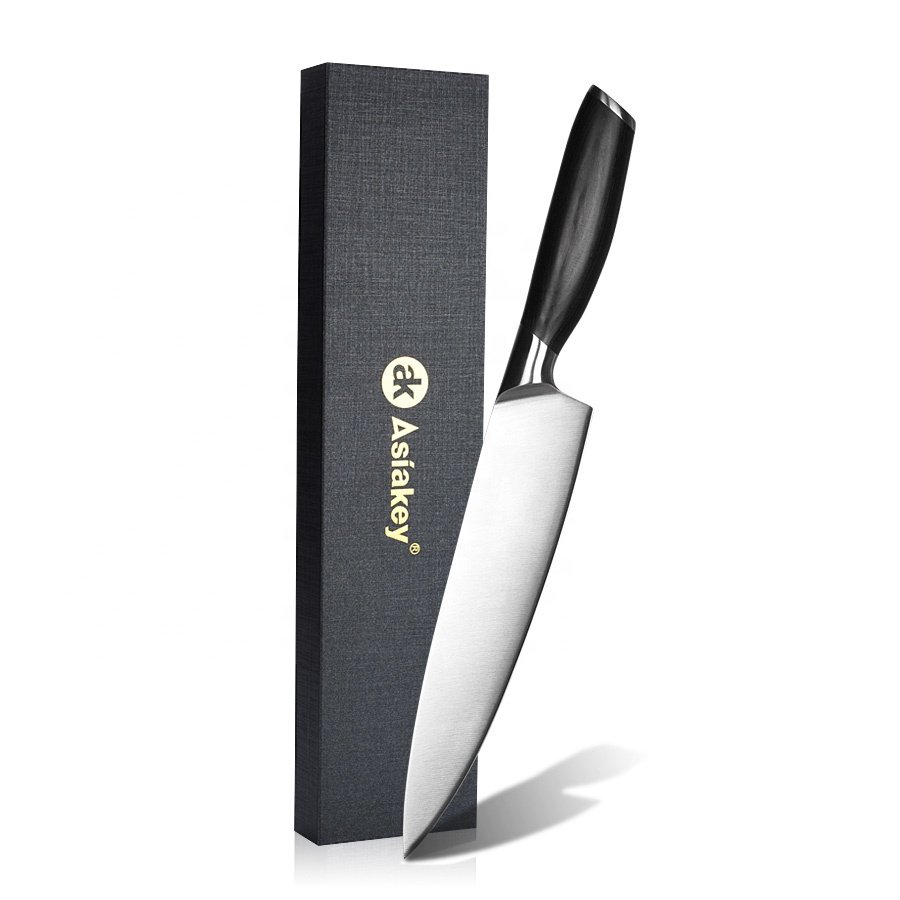
A plain stainless chef knife with a black grip helps compare the everyday price tier. A blue G10 handle and patterned chef blade is a separate look with indicated boxed packaging. Pick the configurations that fit your channel. If the price gap mostly buys a different look, ask whether your channel can demonstrate that difference to customers.
Ask the factory what it can reproduce from the signing sample
Request the actual blade spec, heat-treatment record when needed, grip material and attachment information for the chosen product. Ask the supplier how they confirm these within repeat production. Have a trained kitchen reviewer use the sample for the intended daily prep and write down the changes you need before approving. Ask what can be substituted if a component is temporarily unavailable and require approval before any change.
Prepare a marked sample with photo, material evidence, opening pack, barcode location and confirmed artwork. Sample the same configuration you will receive. If the quote includes an alternative handle add it as a separately priced model and mark which approval sample goes with which item.
Compare the quantities and release criteria under your brand
Ask for separate MOQ figures by exact blade, handle, finished item and packaging. Then compare unit price at the SKU volume, print or tool charges, sample and inspection fees and shipment point. Ask what happens to any remaining printed packs after the first lot. In follow-up orders, find out how the supplier traces the print revision and tagged sample.
On the approved lot schedule, nominate a release owner and agree inspection for model, dimensions, finish, markings, box and count. Keep suspect cartons linked to a lot and specify correction and reinspection. Send each receiving site the same effective pack version and list which spare options are reorderable.
Use one quote sheet for each factory. Have it show the sample fee, artwork or tooling charge, minimum per SKU and per print run, unit price at two quantities, case count and delivery term. Give the approved packed sample an identifier. Agree on the lot size, defect categories and release procedure before inspection. If the parties choose ISO 2859-1:2026, agree the applicable sampling plan and acceptance criteria in writing.
Private-label kitchen knife sets: Which approval starts the lead time?
Jianchu’s private-label kitchen knife programme gives a typical production window of 35–45 days after the deposit and sample confirmation. Its separate page for the JCK-100215 magnetic gift-box set instead describes 40–45 days and names final approval of the packed specification. These are the manufacturer’s published examples. Ask the quoting team to confirm the start event and production-ready date for the actual model.
The same model page lists five kitchen knives, scissors and a peeler in one saleable gift box, packed at ten boxes per outer carton. This separates three figures in an enquiry: pieces inside each set, saleable sets in the order and sets per carton. A buyer’s target of 120 saleable sets would fill 12 cartons at the published arrangement, before any agreed spare or sample units. Confirm whether a change to the insert or artwork changes that count and whether this order size qualifies for the quote.

Record the packed sample and the ready date separately
Ask who approves the physical sample, artwork and packed configuration, and which event starts the production estimate. Add the target ready date, any independent inspection slot and the handover to the freight provider on separate lines. This lets an importer spot the effect of a delayed carton proof without treating the production estimate as a delivery date.
On the quote, have the supplier state whether the requested branding is on a stock assortment, a custom insert or the whole box. Ask for the separate pack and finished-product minimums, any charge for another proof and the version to use if the artwork changes between orders.
Ask for a private-label set quote with a signed pack version.
Sources
Ask us for an approved first kitchen knife range
Bring your channel, destinations, expected volumes, desired sample configurations and brand-pack requirements. Ask for quote assumptions and repeat-order support for the selected item.
Request a TOPKNIVES quotationModels in this article
Four-Piece Kitchen Knife Set with Dark Wood Handles
Coordinated range sample. Fit the chef, angled, vegetable and utility knives to separate customer tasks.
Plain Chef Knife with Waisted Black Grip
Everyday profile reference for a smaller assortment or entry-price channel.
Patterned Chef Knife with Blue G10 Handle
A separate visual and pack sample for a premium retail presentation.