
Short answer
Plan a kitchen knife OEM order for your brand. Compare stock and custom versions, sample approval, colour options, packaging and reorder terms.
Key Takeaways
- Start with a mild method and increase pressure or abrasion only when the blade condition requires it.
- Edge angle, steel type, corrosion level, and handle material all affect the right care method.
- For wholesale assortments, simple care instructions help customers keep knives useful longer.
Terms Used Here
- Damascus
- A patterned steel style often chosen for appearance as well as blade character.
In this article
- 01 Decide what your brand can launch and support
- 02 Review an existing product before changing it
- 03 White-label a finished Damascus chef knife for retail
- 04 Ask for pricing linked to the exact version
- 05 Keep the selling sheet tied to the approval
- 06 Check the first own-brand box at the till
- 07 Approve the gift box for the exact chef knife
- 08 Decide who answers after the sale
- 09 Sources
- 10 Send your kitchenware brand brief
- 11 Models in this article
- 12 8-Inch Stainless Chef Knife with Riveted Grip
- 13 7-Inch All-Stainless Santoku with Sculpted Grip
Plan a kitchen knife range around the people who will buy it, the work they do and the support your brand can give after the sale. Start with an identified model or a drawing. Set the launch plan and sample requirements before requesting production terms.
Decide what your brand can launch and support
Seki Corporation publishes a standard initial OEM minimum of 300 pieces and a 4–6 month lead time for its own programme. Enter that supplier’s number on its quote line. Ask when its clock starts and request a separate TOP KNIVES quote for the exact stock sample or custom configuration you want.
A culinary school may want one recognizable model that students can replace individually. A specialty store might need a different shape or retail presentation. Start with the kitchen task, planned channels, target retail price band and launch window. Write the quantity you can order at launch separately from sales-dependent estimates and expected repeat orders.
Seki’s original OEM page asks prospective buyers to define the customer, price band, channel and timing. Use those inputs to separate an ongoing brand program from a single promotional order.
Review an existing product before changing it
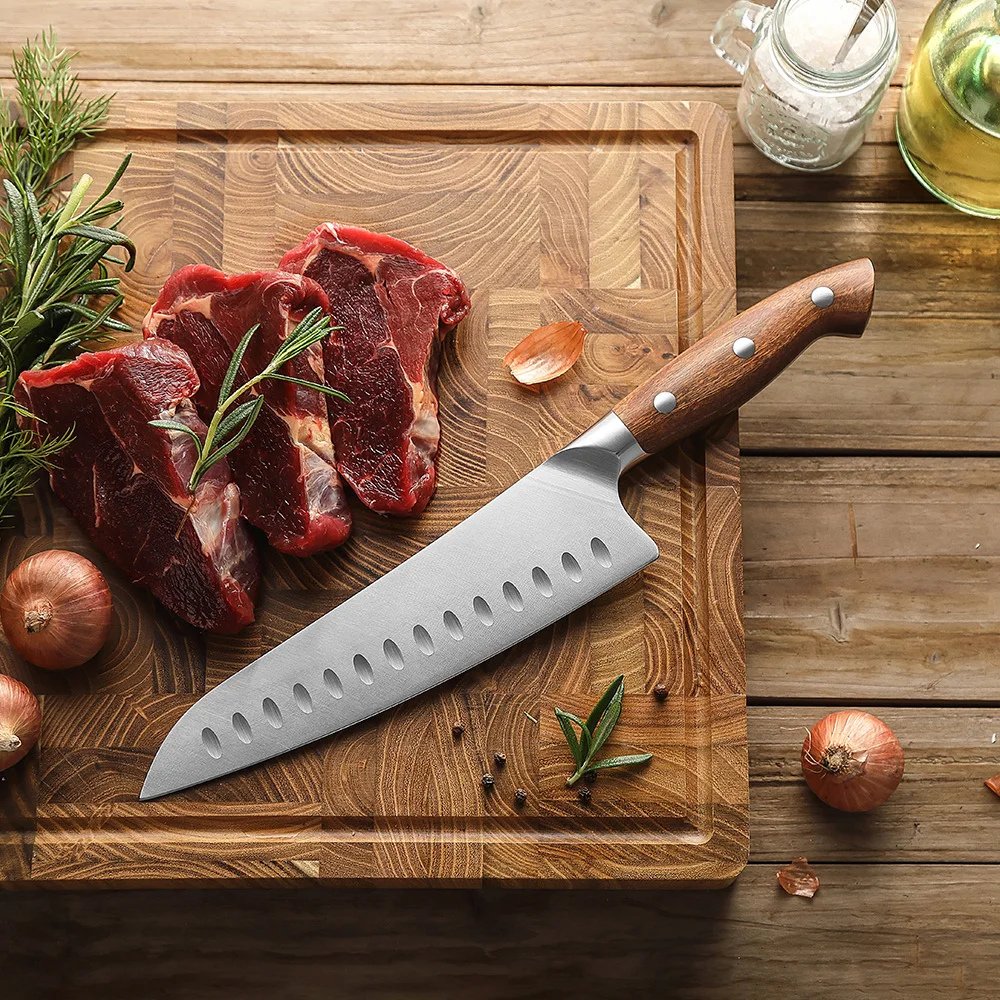
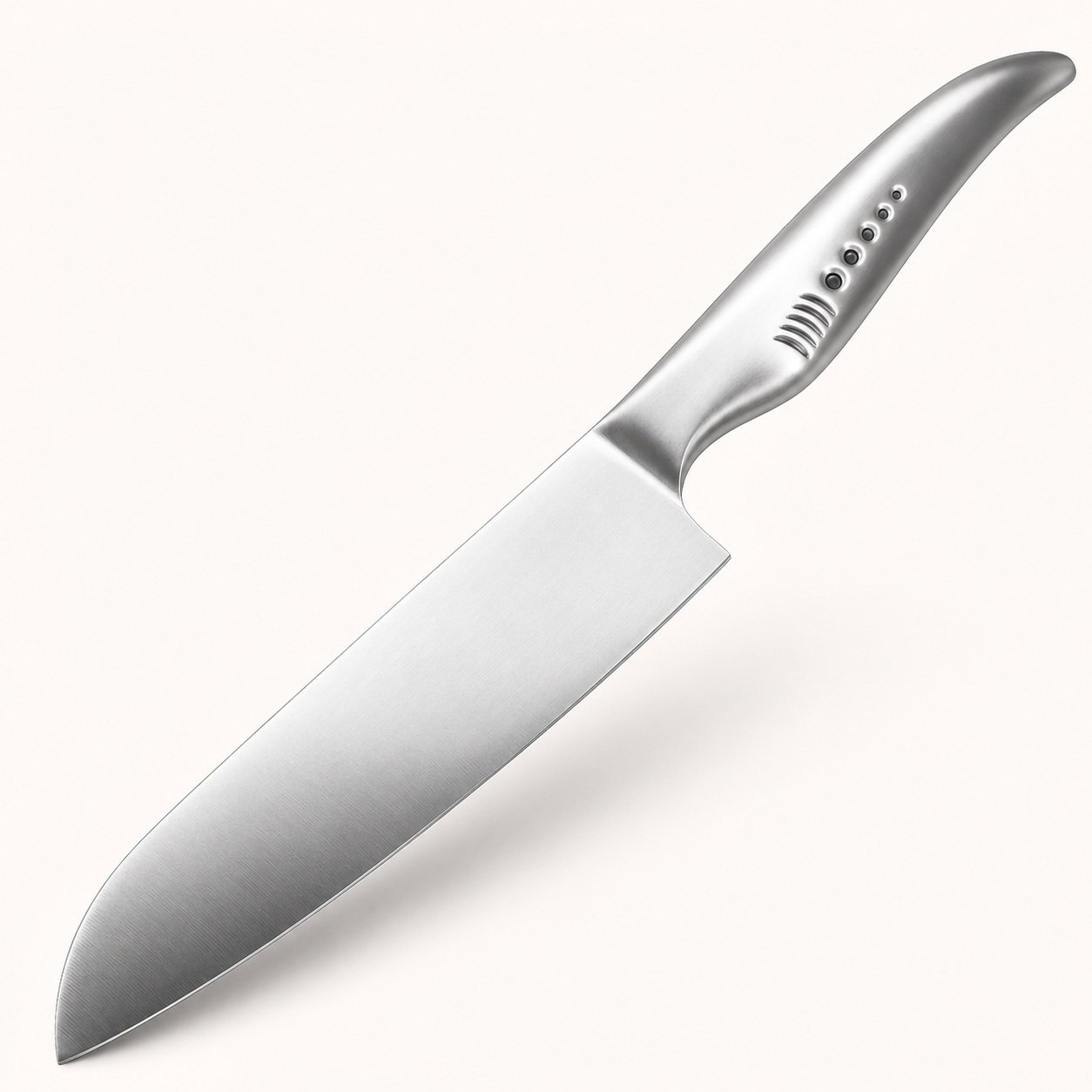
For a general-purpose line, the 8-inch chef knife lists a 1.4116 stainless blade with oval hollows and a riveted wood handle. The 7-inch Santoku lists a 5Cr15MoV blade and sculpted hollow stainless handle. Give each a place in the assortment, then compare the sample profiles during routine prep and agree how each will be cleaned and stored.
If all you need is the brand mark and a different pack, keep the current design in the brief and list those two changes. Submit separate drawings or references for changes to the handle or dimensions. We review which requests can proceed for the selected model.
White-label a finished Damascus chef knife for retail
Wholesale Chef Knife’s white-label guide starts with a finished kitchen product that a reseller wants to sell under its own name. Its current quotation guide also offers a logo-only route on many stock models. Ask which route applies to the exact finished item you choose and have the supplier record its existing marks before agreeing a branded offer.
For example, the blue G10 chef knife TK-S-1601659730216 shows a wave pattern and an illustrated black box. Its product details ask buyers to confirm the blade specification and packaging on the quotation. If your shelf description will say Damascus, have the seller confirm that description in writing for the selected model before creating the listing.
| Record | What the approval should say |
|---|---|
| Finished unit and pack | List the marks that stay visible on the chef knife, packaging and care card. If the supplier offers a plain retail pack for your label, ask to see the actual unit and its pack before selecting it. |
| Channel photos and listings | Ask who may use the supplied photographs and which version to use for your own brand. Have your listing team compare the images to one approved physical unit before publishing. |
| Buyer labels at dispatch | If the same base item is assigned to two retail programmes, have receiving match the supplier SKU and the agreed buyer-specific label. Give the cartons separate references on the packing list. |
If a proof shows your label on the box and a different brand in the product photo, hold the listing and ask for the approved unit’s photograph. Have the retailer and supplier confirm both records before ordering branded stock.
Ask for pricing linked to the exact version
Request a stock comparison sample, a marked sample and a retail pack proof as separate lines. Ask which edits require a new physical sample and whether redesign, courier, printing or tooling charges can be counted toward the order.
List the planned first order and the next reorder tier on the same specification. Set out unit of sale, capacity by order window, proof-fee treatment, exact delivery point and what starts each lead time. If the retailer needs multiple box languages, ask which quantities can share the same production and which require separate print runs.
Keep the selling sheet tied to the approval
Write the approved model ID, appearance mark, pack revision, included contents, care copy and inspection owner on the product sheet. In the final order, use the same revision for sample approval, receiving and listing photographs. If the box changes after approval, record the last lot shipped in the old box and the next lot eligible for the new label.
Check the first own-brand box at the till
A cookware shop moving from resale to its own brand needs the first finished box to work on the shelf and at the register. Wholesale Chef Knife’s retailer example includes packaging and delivery in the move to an own-brand line. Here’s how to check that handoff with one saleable unit before approving the first shipment.

Use a concrete item in the proof. The TOP KNIVES 8-inch stainless chef knife with riveted grip is listed as TK-S-1601206263262. Use that code for the sample and supplier quote. Give the finished own-brand item its own entry for the retail pack, approved contents and retail barcode. GS1 identifies the brand owner as normally responsible for assigning the GTIN. A change to the primary brand on the retail item requires a new GTIN under the GS1 GTIN Management Standard. Keep the former resale item on its original entry while it sells through.
Take one final-pack sample to the receiving desk and the register. Open a separate signed sample to check the contents and retail presentation. Scan the closed sample at the till. Ask the retail lead to match the item name, brand, piece count and price against the approved selling sheet, shelf label and online listing. Keep the supplier SKU, retail GTIN and packaging revision together on the sign-off. Put any outer-case code on the receiving line for the traded case.
If the scan opens the previous brand, a set or a different price, hold that version and compare the printed barcode with the store’s product record. Ask who needs to revise the carton proof, till record or listing and run the check again before the item goes on sale. For an exchange after launch, use the receipt’s item and the packaging record to find the matching unit. Keep the prior version available in your records until service and stock counts are complete.
Approve the gift box for the exact chef knife

Wholesale Chef Knife’s small-retailer guide describes selling a branded chef knife with custom packaging. In our catalogue, the dark G10 Damascus chef knife, TK-S-1601013341748, shows a patterned blade without specifying a gift box. The separate brown wood-handle stainless chef knife, TK-S-1601652937165, lists a magnetic gift box for that model. If you want the patterned model in a gift box, send us its exact SKU. Ask us to confirm the model, box and insert in writing, then approve a packed sample and record its revision. On reorders, use the same SKU and revision and ask us to flag any proposed change before you approve the order.
Ask TOP KNIVES to confirm the sample and retail packaging for this model
Decide who answers after the sale
Before launch, agree who at your brand handles routine questions about size, care and suitability. For a defect report, capture order reference, lot, photos and the reported use before requesting supplier review. Ask how replacement parts or individual tools would be identified in a later order. Agree how early to request a repeat lot against your channel’s actual sales plan.
Sources
Send your kitchenware brand brief
Include your chosen model or reference, near-term order quantity and expected repeat volumes, target market, retail channel, launch week, proposed artwork and pack requirements. Tell us which sample you want reviewed first.
Start a kitchen knife project reviewRequest a quotation for your kitchen knife project
Models in this article
8-Inch Stainless Chef Knife with Riveted Grip
Compare the chef profile and record the intended mark and packaging separately.
7-Inch All-Stainless Santoku with Sculpted Grip
Use an all-stainless candidate to review grip shape, positioning and buyer care copy.