
Short answer
Send a chef-owned knife for maintenance with an intake photo, approved work and due date. Check the same item and condition on return.
Key Takeaways
- Start with a mild method and increase pressure or abrasion only when the blade condition requires it.
- Edge angle, steel type, corrosion level, and handle material all affect the right care method.
- For wholesale assortments, simple care instructions help customers keep knives useful longer.
Terms Used Here
- EDC
- Everyday carry; gear intended for regular daily tasks.
In this article
- 01 Start with the model and what has already changed
- 02 Agree the maintenance work and return procedure in advance
- 03 Verify the return, then clean and store as a specific item
- 04 Sources
- 05 Quote a separate chef knife for backup stock
- 06 Models in this article
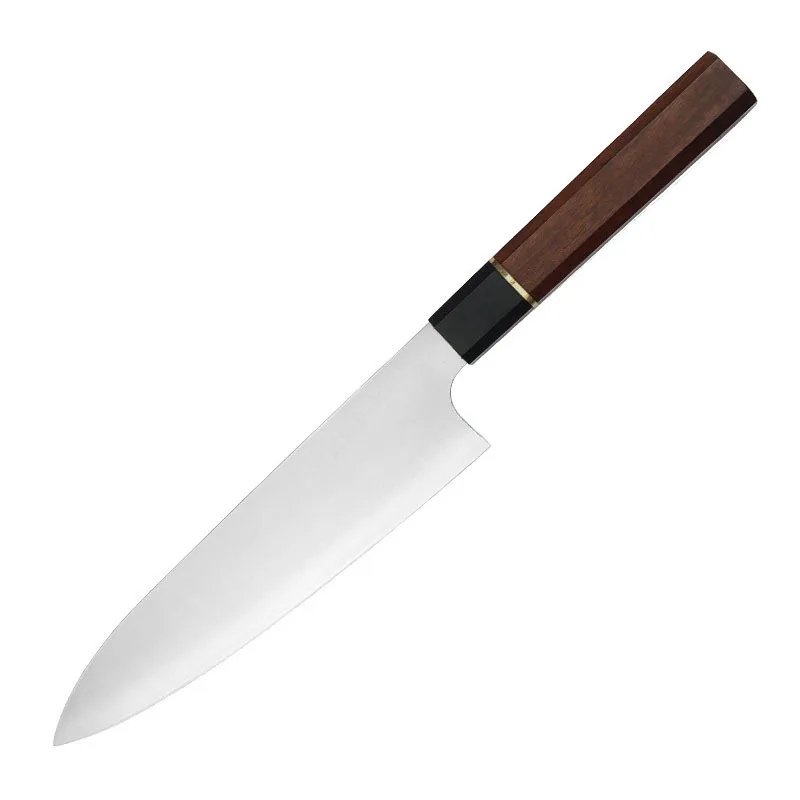
- 07 Stainless Chef Knife with Brown Octagonal Handle
- 08 Plain Meaning
- 09 Why It Matters
- 10 What To Check Next
When a chef owns the knife, getting a sharpened replacement back is no help. Photograph the original, agree which work the owner approves and keep the maker’s care instructions with it. The same practice works when a kitchen loans a specific premium knife to one station.
| Handoff | What to record |
|---|---|
| Identify the item | Record the model, item ID and existing damage. |
| Agree the work | Note the approved work and the edge profile and finish the owner wants to keep. |
| Sign it back | Verify the original item, clean and dry it according to the applicable method, protect it for storage and sign it back to its owner. |
Start with the model and what has already changed
ChefStop’s professional chef-knife guide covers honing, stones, alternative sharpening services and daily care. Turn those categories into a brief for this exact tool. Record the model, length, visible blade and handle condition, and any previous work you know about. A clear outline photograph and the product’s own description help the receiving staff recognise the same item.
Determine what the owner values in its performance on the intended food-prep task. Some owners want the original profile retained throughout the work. Ask the provider to review an unfamiliar edge or finish before approving changes. Avoid assuming two chefs with similar-looking knives want the same treatment.
Agree the maintenance work and return procedure in advance
Obtain the maker’s instructions on routine care and acceptable tools. Victorinox’s published kitchen guide distinguishes routine honing from sharpening. With a specialised chef knife, ask whether the shop can maintain its exact profile and whether the quote permits repairs. Get the owner involved before anything beyond routine care is carried out.
Write down which service can take place at the kitchen bench, which needs a specialist and the latest date the knife is needed back. Package it using the venue’s agreed protected method, and give both ends a way to identify the same item. A chef who has scheduled prep or training needs a known substitute during that window.
Put an item identifier and intake photo with the order. Have the owner or station lead sign which work is permitted and whether a change to the blade profile or finish needs separate approval. On return, check the same identifier and condition before the knife goes back to the board.
Verify the return, then clean and store as a specific item
Check it against the intake notes before putting it back into service. After the applicable cleaning and sanitation, the chef can try the same normal prep task and identify any question for the shop. Note problems in time for the provider to associate them with the original job.
For new chef-knife stock, our separate brown octagonal-handle model is one physical sample to compare for comfortable holding, cleaning requirements and storage fit. Verify the material, exact use and care instructions with the supplier. Attach those notes to that model. Different blades and grips may need different fit, handling and approved care.
Sources
Quote a separate chef knife for backup stock
Send the approved knife or catalogue code, the grip and size that fit your prep station, the quantity and the receiving point.
Request a TOPKNIVES quote for a backup chef knife This is for purchase of a catalogue knife. Arrange maintenance for your own knives directly with your service provider.
Models in this article
Stainless Chef Knife with Brown Octagonal Handle
Separate catalogue sample for checking handle fit and the cleaning and storage instructions attached to a specific model.
Plain Meaning
Knife care is best understood as a sequence: inspect, clean, dry, sharpen only if needed, then store safely. Skipping steps can make a simple issue harder to fix.
Rust removal, edge sharpening, handle care, and lubrication are different jobs. The right method depends on the steel, finish, edge condition, and how the knife is used.
Why It Matters
Many knife problems come from using too much force or the wrong tool. A mild method protects the blade and helps the reader understand what actually needs attention.
For product education, maintenance guidance also helps set realistic expectations around stainless steel, carbon steel, coatings, and storage habits.
What To Check Next
- Blade material and finish before using abrasives.
- Edge angle and blade shape before sharpening.
- Moisture, residue, and storage conditions after use.
- Whether the issue is cosmetic, functional, or safety-related.