
Short answer
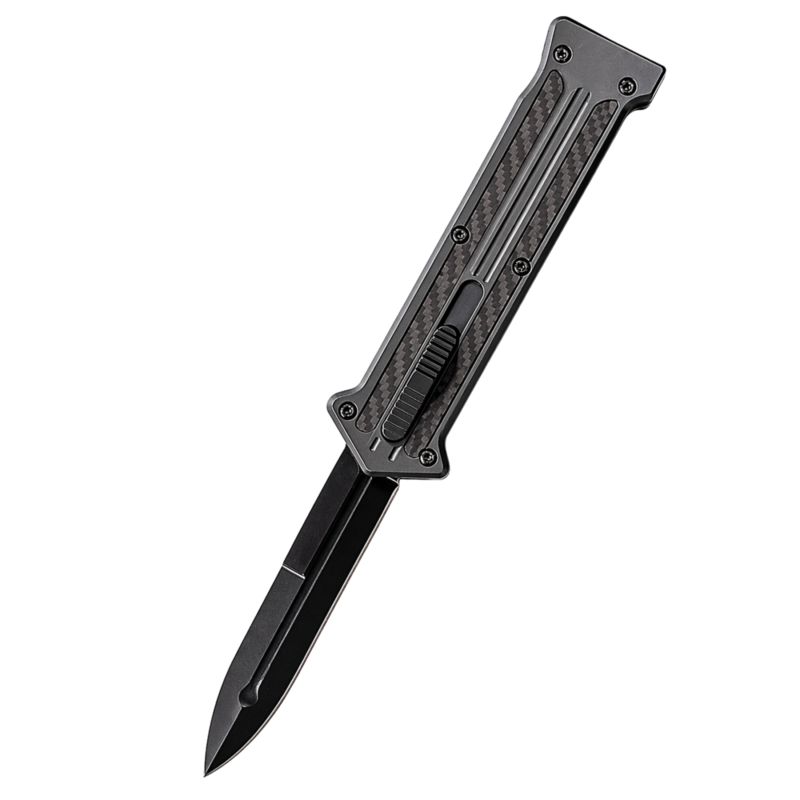
It depends: an OTF knife works well for fast one-handed utility cutting, but it is a poor choice for prying, twisting, impact, or heavy side-load field work.
In this article
- 01 What an OTF is actually good at
- 02 Where an OTF works, struggles, and fails
- 03 Why OTFs have limits in hard use
- 04 Blade play: what is normal and what is not
- 05 Typical failure modes under side load
- 06 Maintenance expectations in dusty or sandy environments
- 07 OTF vs fixed blade vs side-opening automatic
- 08 How to choose an OTF for practical field utility
- 09 Blade shape
- 10 Edge geometry
- 11 What to inspect before buying
- 12 Clear wrong-tool scenarios
- 13 Pass/fail checklist
- 14 Common buying mistakes
- 15 FAQ
- 16 Can an OTF knife be used in field work?
- 17 Is an OTF a good choice for defensive use?
- 18 What is the best blade shape for practical tactical utility?
- 19 Are OTF knives reliable enough for everyday work?
- 20 Bottom line
It depends: an OTF knife can work for tactical use when the job is fast one-handed cutting, but it is a poor choice for leverage-heavy or abuse-heavy work.
To make that answer useful, define tactical use in three separate ways. First, tactical utility means practical cutting around gear, vehicles, packs, and field equipment. Second, hard-use field work means prying, twisting, scraping, digging, or forcing a blade through dense material under side load. Third, defensive context is a separate subject with legal and safety issues beyond ordinary tool selection. For most buyers, the real decision comes down to task type, side-load tolerance, and maintenance environment.
The short version is simple: an OTF fits fast-access utility cutting. It does not fit hard leverage tasks. If you need maximum rigidity, dirt tolerance, and structural strength, choose a fixed blade instead.
What an OTF is actually good at
The strongest case for an OTF is not brute force. It is speed and convenience in controlled cuts. That matters when one hand is occupied, when you are working in a vehicle or tight space, or when you need to deploy and retract the blade without changing your grip much.
A realistic example: you are unloading gear from a vehicle with one hand, holding a pouch with the other, and need to cut tape, cord, zip ties, and food packs in quick succession. That is a good OTF scenario. The cuts are light to medium duty, access matters, and the blade is being used as a cutter rather than a pry bar.
Where an OTF works, struggles, and fails
| Task | Suitability | Why |
|---|---|---|
| Cutting tape on boxes | Suitable | Fast deployment and a thin plain edge work well for repetitive utility cuts. |
| Opening food packs or pouches | Suitable | Good control and easy one-handed access. |
| Trimming cord or paracord | Suitable | Well within the normal cutting role of most OTFs. |
| Cutting zip ties | Suitable | Useful when access is tight and grip changes are inconvenient. |
| Light plastic sheeting or packaging | Suitable | Best with a sharp plain edge and moderate blade geometry. |
| Dense rubber, thick hose, or heavy push cuts | Marginal | Possible in some cases, but binding and stress on the mechanism increase. |
| Dirty fibrous material all day | Marginal | Debris and residue can affect reliability faster than on simpler knife designs. |
| Prying lids, panels, or crates | Unsuitable | An OTF is not built to handle sustained leverage. |
| Twisting the blade in wood, plastic, or metal | Unsuitable | Side load is one of the main failure modes for this format. |
| Scraping, digging, chopping, or impact use | Unsuitable | These are wrong-tool jobs better handled by a fixed blade or dedicated tool. |
Why OTFs have limits in hard use
OTF knives can be excellent cutters, but their mechanism sets clear boundaries. The blade travels in and out on internal tracks, engages a locking interface, and relies on more moving parts than a fixed blade. That design gives you quick one-handed deployment. It also means the knife is generally less tolerant of shock, grit, and sideways force.
Blade play: what is normal and what is not
Most OTFs have some blade play when open. A small amount of movement is common and does not automatically mean the knife is defective. The practical question is whether the blade remains consistent during normal cutting. For tape, cord, zip ties, and food packs, slight play is usually not a functional problem. Under hard side pressure, though, it reminds you that an OTF is not a fixed blade.
Typical failure modes under side load
If you torque the tip, pry sideways, or force the blade while it is bound in dense material, you are stressing the lock and internal engagement surfaces in a way the design was not optimized for. The result may be premature wear, inconsistent lockup, misfires, or a blade that feels increasingly loose. That is why OTFs are best treated as cutters, not leverage tools.
Maintenance expectations in dusty or sandy environments
Debris tolerance matters only if your actual work environment makes it relevant. For ordinary utility tasks in clean conditions, it may be a minor issue. In sandy vehicles, construction dust, pocket lint, or sticky adhesive residue, an OTF needs more frequent cleaning than a fixed blade and often more than a sturdy side-opening auto. If you know the knife will live in grit and you will not maintain it, choose something simpler.
OTF vs fixed blade vs side-opening automatic
| Knife type | Deployment speed | Rigidity | Debris tolerance | Best use case |
|---|---|---|---|---|
| OTF | Very fast, one-handed | Moderate | Moderate to low | Fast utility cutting where compact carry matters |
| Fixed blade | Fast if carried accessibly | Highest | Highest | Hard-use field work, dirty environments, maximum strength |
| Side-opening automatic | Fast, one-handed | Usually better than OTF, less than fixed blade | Usually better than OTF | General cutting with automatic deployment and better structural feel |
If your priority is deployment speed in a compact package, an OTF makes sense. If your priority is structural confidence under side load, a fixed blade is the better answer. If you want one-handed automatic opening but with fewer OTF-specific tradeoffs, a side-opening auto can be a useful middle ground.
How to choose an OTF for practical field utility
If you have decided your use case is mainly controlled cutting, buy for cutting performance rather than aggressive styling.
Blade shape
- Drop point: the best all-around option for most utility users. Easy to control, versatile, and practical.
- Spear point: useful if you want a centered tip for precise entry into packaging or pouches.
- Tanto: can offer a stout tip, but often feels less smooth in long slicing cuts.
- Double-edge dagger style: less practical for ordinary utility work and may create legal or carry complications.
Edge geometry
- Thin to moderate edge geometry: usually cuts tape, cord, and food packs more efficiently.
- Very thick blade stock: often looks tougher than it performs in real slicing tasks.
- Plain edge: easiest to control and sharpen for general utility use.
- Partial serration: can help on fibrous material, but reduces versatility for many daily cuts.
What to inspect before buying
- Consistent deployment and retraction, not just one impressive test opening
- Predictable lockup with no excessive rattle beyond normal OTF tolerance
- A handle shape that remains secure with gloves or wet hands
- A blade profile matched to your actual tasks, not just the most aggressive look
If you are comparing available models, browse a focused OTF knife catalog and filter for practical blade shapes and plain-edge utility designs.
Clear wrong-tool scenarios
An OTF is the wrong choice if you expect the knife to open a nailed crate, act like a screwdriver, scrape corrosion, dig into hard material, or survive repeated twisting. Those jobs call for a fixed blade, pry tool, multi-tool, or purpose-built cutter. Many disappointing OTF experiences come from using the knife outside its mechanical lane.
Pass/fail checklist
- Pass: your main jobs are tape, cord, zip ties, food packs, packaging, or similar utility cuts.
- Pass: one-handed deployment is a real advantage in your work.
- Pass: you want compact carry and quick access more than maximum strength.
- Pass: you are willing to clean the knife occasionally if it sees lint, dust, or grit.
- Fail: you need to pry, twist, scrape, dig, or absorb impact.
- Fail: you want fixed-blade rigidity under side load.
- Fail: your environment is constantly sandy, muddy, or abrasive and you will not maintain the mechanism.
Common buying mistakes
- Confusing fast deployment with hard-use strength: opening speed does not make an OTF a pry-capable tool.
- Buying for appearance instead of geometry: thick, dramatic blades often underperform on normal cutting tasks.
- Expecting zero blade play: some movement is normal in this category.
- Ignoring environment: if your work is dirty, maintenance matters more than marketing claims.
- Skipping legal checks: automatic knife laws vary by location and carry context.
FAQ
Can an OTF knife be used in field work?
Yes, for field cutting tasks. No, if field work means prying, digging, twisting, or repeated heavy side load.
Is an OTF a good choice for defensive use?
This guide is about tool use, not defensive advice. If your question includes defensive context, legal rules, training, and safe handling become separate issues from ordinary knife selection.
What is the best blade shape for practical tactical utility?
A plain-edge drop point is the safest all-around choice, with a spear point close behind for users who want a centered tip.
Are OTF knives reliable enough for everyday work?
Yes, when the work is realistic for the format and the knife is kept reasonably clean. They are generally less tolerant of dirt and abuse than fixed blades.
Bottom line
You can use an OTF knife for tactical use if you mean fast-access utility cutting. It is well suited to tasks like tape, cord, zip ties, and food packs, especially when one-handed deployment matters. It is not well suited to prying, twisting, scraping, impact, or other leverage-heavy jobs.
In other words: choose an OTF as a fast cutter, not as a hard-use lever tool.