




Can OTF Knives Be Sold Online?

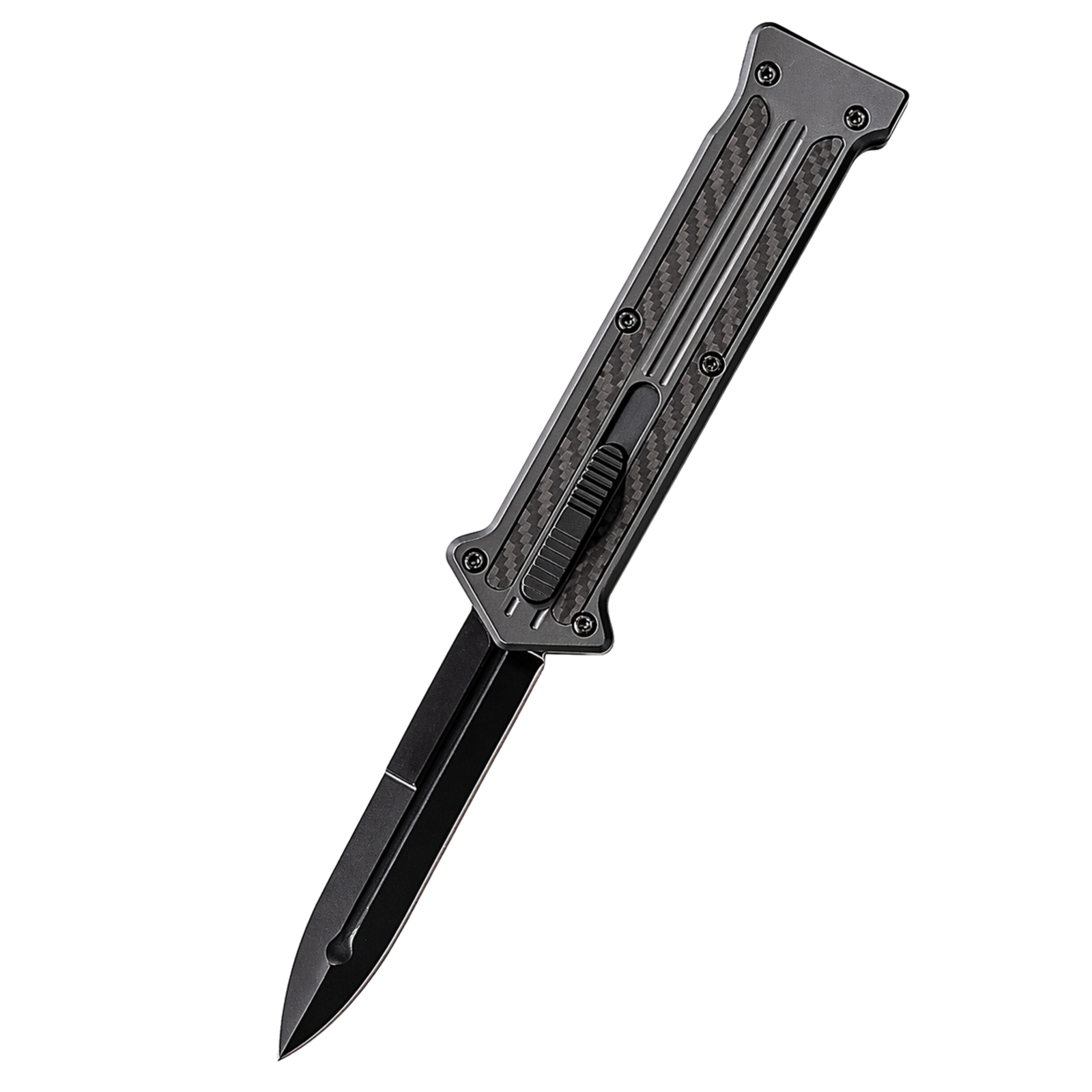
Yes—OTF knives can be sold online in the United States, but only if the destination law allows the sale or shipment, the selling channel permits the listing, the payment provider accepts the transaction, and the carrier will deliver it.
For most sellers, the practical answer is: yes on a controlled website, often no or limited on major marketplaces, and never without checking the buyer’s state and local rules first.
Yes, but only if…
- The destination is lawful. OTF knives are a type of automatic knife, so state and local switchblade or automatic-knife laws matter.
- The channel allows the listing. Your own site usually offers more control than a third-party marketplace.
- The payment processor does not block the order. Some providers treat automatic knives as restricted goods.
- The carrier will accept the shipment. Legal merchandise can still be rejected under carrier or service terms.
- The listing is accurate. The product should be described as an out-the-front automatic knife, not disguised as a generic tool or utility item.
- The buyer meets your age and compliance checks. Even where state law is unclear, many sellers use adult-only terms and manual review.
Federal baseline: what U.S. law says about switchblades
At the federal level, the starting point is the Federal Switchblade Act, codified at 15 U.S.C. §§ 1241-1245. The statute defines a switchblade knife and regulates introduction into interstate commerce, transportation, and distribution in certain channels. The authoritative text is available from the Legal Information Institute at Cornell Law School: 15 U.S. Code, Chapter 29 — Switchblade Knives.
Two practical points matter here:
- The federal law is not a simple blanket ban on every online sale of an OTF knife.
- Federal law is only the baseline. State and local law still decide much of the real-world answer, especially possession, transfer, age limits, and carry.
That is why sellers should not rely on a single nationwide rule. An OTF order may be legal to list on your own site, but still unlawful or commercially unworkable to ship to a particular state, city, or buyer.
OTF-specific issue: sale, shipment, ownership, and carry are different questions
OTF knives create confusion because buyers often treat one legal answer as if it covers everything. It does not.
- Sale: whether you may offer or accept the order.
- Shipment: whether the item may be sent to that destination using that carrier.
- Ownership or possession: whether the buyer may lawfully receive and keep it.
- Carry: whether the buyer may lawfully carry it in public after delivery.
For OTF knives, that distinction matters more than for ordinary manual folders because the automatic opening mechanism is often the exact feature regulated by law or platform policy.
State and local law: concrete examples of why the answer changes by destination
State treatment of automatic knives varies widely, and local rules can make the answer narrower still.
California is a good example of a state where details matter. California Penal Code section 21510 restricts carrying, possessing in a vehicle in a public place, selling, offering for sale, exposing for sale, loaning, transferring, or giving a switchblade knife with a blade two inches or longer. Primary source: California Penal Code § 21510. For an online seller, that means California is not a simple yes/no state; blade length and transaction type matter.
New York changed its treatment of many automatic knives in recent years, but sellers still need to check current state law and local enforcement realities before shipping. New York’s weapons statutes are published here: New York Penal Law Article 265.
Texas is often more permissive than older knife-law summaries suggest. Texas broadly revised its knife laws, but sellers still need to distinguish possession from location-based carry restrictions. Primary source: Texas Penal Code Chapter 46.
Illinois allows some automatic knives under conditions, but the state’s weapons law still requires careful reading and should not be reduced to a nationwide template. Primary source: 720 ILCS 5/24-1.
Local law can also matter. A state may be comparatively permissive while a city or local prosecutor’s interpretation creates more risk for sellers. That is one reason many online knife sellers maintain a destination exclusion list that is stricter than the bare text of state law.
Practical blockers: the four places an online OTF sale usually fails
1) Destination law blocks the order
This is the first filter. If the destination state or locality restricts sale, transfer, or possession of switchblades or automatic knives, the order should not proceed. For OTF knives, sellers should verify the mechanism category, blade length, and whether the law distinguishes sale from carry.
2) Marketplace policy blocks the listing
Many large marketplaces use prohibited-items policies that are stricter than state law. In practice, a lawful OTF knife may still be removed because the platform bans switchblades, automatic knives, or weapons categories generally. This is why OTF sales are usually more workable on a seller-controlled site than on a broad consumer marketplace.
3) Payment policy blocks the transaction
Even if the listing is lawful, the payment processor may classify automatic knives as restricted products. Depending on the provider, the result may be declined transactions, reserves, account review, or account termination. Sellers should read their processor’s acceptable-use or restricted-business terms before listing OTF products.
4) Carrier policy blocks shipment
Carriers may accept many ordinary knives while imposing extra limits on automatic knives, weapons, or adult-signature deliveries. The seller should verify not only whether the item is legal, but whether the chosen shipping method will carry it to that destination under current terms.
Decision matrix for sellers
| Channel | Usually allowed? | Common blocker | Seller action |
|---|---|---|---|
| Own ecommerce site | Often yes | Destination law or processor restrictions | Block restricted states/ZIPs, use age checks, review flagged orders manually |
| Large third-party marketplace | Often limited or no | Prohibited-weapons policy | Read listing rules before posting; do not assume local legality means platform approval |
| Order to a permissive state | Often yes | Payment or carrier refusal | Confirm processor and shipping terms for automatic knives |
| Order to a restrictive state or city | Often no | State/local switchblade law | Do not ship unless current law clearly allows the transaction |
| Wholesale or dealer sale | Sometimes yes | Documentation and destination compliance | Use written compliance review and destination-specific policies; if needed, use the wholesale inquiry form |
What buyers and sellers should inspect on the listing
Because OTF knives are regulated by mechanism, the listing itself matters. Observable details can help determine whether the product is being sold compliantly and reduce disputes.
- Mechanism named clearly. The listing should say out-the-front automatic or OTF automatic.
- Blade length shown precisely. This matters in states such as California where length can change the legal result.
- Photos show the slider and deployed blade. That helps confirm the knife is actually an OTF automatic and not mislabeled.
- Shipping exclusions are posted. A serious seller usually names no-ship states or localities.
- Age language is visible. Adult-only terms or age confirmation are common risk controls.
If you need a product-category reference, the relevant collection is the OTF knife catalog.
Tradeoffs of selling OTF knives online
The main benefit of online sale is reach: buyers can find OTF models that local stores may not carry. The tradeoff is that OTF knives face more friction than ordinary folding knives because the automatic mechanism triggers extra review at almost every step.
There are also three separate risk buckets that sellers should not confuse:
- Operation risk: returns or complaints tied to deployment expectations, lockup, or misfires.
- Carry risk: the buyer receives the knife lawfully but cannot carry it lawfully in public.
- Maintenance risk: debris, lubrication, and upkeep affect performance, even though they usually do not decide sale legality.
Only the first of those is product-performance related; the second is a legal issue after delivery; the third affects post-sale satisfaction. None should be mistaken for the core question of whether the sale itself is allowed.
Common mistakes that create avoidable risk
- Assuming ownership law and shipping law are the same.
- Using a generic marketplace listing without checking automatic-knife policy.
- Describing the knife vaguely instead of identifying it as an OTF automatic.
- Ignoring blade length where state law uses a length threshold.
- Relying on old knife-law summaries without reading current statutes.
- Taking payment first and checking carrier rules later.
When the answer changes
The answer changes whenever any compliance boundary changes: the ship-to state, the city, the blade length, the buyer’s age, the marketplace policy, the payment processor’s restricted-goods rules, or the carrier’s terms. A transaction that is workable on your own site today may become blocked tomorrow if a processor updates its policy or a state revises its switchblade law.
Concise FAQ
Can an OTF knife be sold online on a website you control?
Often yes, if the destination allows it and your payment and shipping providers permit the transaction.
Does federal law ban all online OTF sales?
No. The Federal Switchblade Act is important, but it does not create a simple blanket ban on every online OTF sale.
Are marketplaces and the law the same thing?
No. A marketplace can ban a lawful item under its own prohibited-items rules.
If a buyer can legally own an OTF knife, can you always ship it there?
No. Shipment can still be blocked by local law, seller policy, processor terms, or carrier rules.
Bottom line: OTF knives can be sold online, but only through a channel that allows them, to a destination that allows them, using payment and shipping services that will actually process and deliver the order. Laws and commercial policies change, so sellers should verify current federal, state, local, platform, processor, and carrier rules before listing, charging, or shipping.