

What Affects the Cost of an OTF Automatic Knife?

Short answer
Learn what really changes the cost of an OTF automatic knife, from mechanism quality and blade steel to handle machining, QC, finish, production scale, and bran
Key Takeaways
- Knife rules can vary by state, city, blade style, opening mechanism, carry method, and intended use.
- Do not treat a product nickname as a legal category; check the actual features and local rule.
- Retailers should keep legal or safety language factual and avoid promising that one item is allowed everywhere.
Terms Used Here
- OTF
- Out-the-front; a knife design where the blade moves forward from the front of the handle.
- Automatic knife
- A knife that opens by a spring-driven mechanism after the user activates a button, switch, or slider.
In this article
- 01 1) Mechanism quality is usually the biggest cost driver
- 02 2) Blade steel and heat treat affect cost, but not always as much as buyers expect
- 03 3) Handle material and machining directly affect function
- 04 4) Quality control and testing add cost you cannot always see in photos
- 05 A quick failure case
- 06 5) Finish, coatings, and hardware can be meaningful or mostly cosmetic
- 07 6) Production scale changes the cost per knife
- 08 7) Brand reputation and retail markup still matter
- 09 How these factors show up in real price tiers
- 10 Budget OTFs
- 11 Mid-range OTFs
- 12 Premium OTFs
- 13 When is a higher price actually justified?
- 14 Common mistake: overpaying for the spec sheet
- 15 Quick checklist: signs the higher price may be worth it
The cost of an OTF automatic knife is affected most by the quality of its mechanism, then by blade steel and heat treat, handle material and machining, quality control, finish work, production scale, and finally brand and retail markup. A simple decision standard: approve a higher price when it buys smoother, more consistent action and fewer visible manufacturing compromises; test more when the upgrade is mostly on paper; reject when the price jump is driven mainly by cosmetics or branding.
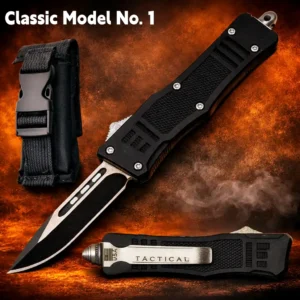
That order matters because OTF knives are not priced like simple manual folders. On an out-the-front automatic, hidden parts do a lot of the work. Two knives can share the same blade shape, size, and even steel name, yet feel very different in the hand because one has cleaner internal track machining, more consistent spring force, a better-tuned switch, and tighter assembly. In practice, those differences often explain price better than the spec sheet does.
1) Mechanism quality is usually the biggest cost driver
If you want to know why one OTF costs more than another, start with the action. The blade has to travel on internal rails, lock into position, retract cleanly, and do it with repeatable force. That takes more machining accuracy and more assembly attention than many shoppers realize.
Higher mechanism cost usually comes from:
- cleaner track machining inside the handle
- better surface finishing on the contact points
- more consistent spring material and spring tension
- switch geometry that balances thumb effort with reliable firing
- closer fit between blade carrier, chassis, and slider
- extra tuning and cycle testing during assembly
This is also where cheap OTFs tend to reveal themselves. Common signs are a gritty slider, noticeably uneven force between deployment and retraction, rattly lockup, or occasional failure to fire unless the knife is held a certain way. Those problems are not just annoyances; they are direct evidence that the factory spent less on precision and testing.
A useful comparison lens is this: on an OTF, the handle is part of the machine, not just a grip. If the chassis is not machined straight and consistently, the mechanism pays for it.
2) Blade steel and heat treat affect cost, but not always as much as buyers expect
Steel matters, but it rarely tells the whole pricing story by itself. Better steel costs more as raw material, and a better heat treat adds process control and reject risk. Still, in many OTFs, the jump from basic stainless to a respectable mid-tier steel adds less manufacturing complexity than making the action smoother and more reliable.
What raises cost here:
- higher raw material cost for premium stainless or tool steels
- more controlled heat treatment
- more careful grinding and finishing after heat treat
- higher scrap or reject rates if the process is inconsistent
For a real-world example, an OTF in an entry steel with a crisp, dependable action is often a better buy than a knife advertised with a premium steel name but average firing and rough switch feel. That is especially true for general everyday use, where deployment reliability and corrosion resistance matter more than chasing the highest possible edge retention.
In short: steel can justify part of a higher price, but on an OTF it should not distract you from the mechanism.
3) Handle material and machining directly affect function
Handle construction changes cost in two ways: material cost and machine time. OTF handles are structural. They hold the rails, spring system, switch, and blade path in alignment. Better machining is not just nicer to look at; it helps the knife work better.
Typical pricing differences show up like this:
- Zinc alloy or simpler cast construction: lower cost, heavier feel, often seen in budget models
- Basic aluminum handles: common mid-range choice with a good balance of weight and durability
- Higher-grade aluminum with more CNC work: higher cost because of tighter tolerances, chamfering, texturing, and cleaner fit
- Decorative inserts or overlays: can raise cost without improving action much
A practical example: two OTFs may both use aluminum, but one has simple flat slabs and broad internal tolerances while the other has more precise internal machining, a better-fitted switch cutout, and cleaner seams around the chassis. The second knife costs more not because aluminum itself is expensive, but because machine time and fit control are expensive.
4) Quality control and testing add cost you cannot always see in photos
QC is one of the easiest things for a factory to reduce when trying to hit a lower price. It is also one of the biggest reasons two similar knives behave differently after a few weeks of use.
Better QC can include:
- cycle testing the action before packing
- checking lockup consistency
- sorting out units with overly stiff or overly light switches
- inspecting blade centering within the opening path
- catching cosmetic defects around the blade slot, screws, and finish
This is where a higher price can be justified even when the visible specs look close. A factory that rejects more borderline units and spends more labor checking the action will have a higher unit cost. The result for the buyer is usually fewer lemons and less variation from one knife to the next.
A quick failure case
Imagine two similar single-edge OTFs in the same advertised steel. The cheaper one saves money with lighter inspection. On day one, both seem fine. After a month, some units from the cheaper run start showing heavier thumb effort, occasional incomplete retraction, and uneven blade play from knife to knife. The more expensive run costs more upfront, but the buyer gets more consistent action and fewer surprises. That is a very typical OTF pricing difference: not flashy, but real.
5) Finish, coatings, and hardware can be meaningful or mostly cosmetic
Surface finish changes cost through extra process steps and stricter appearance standards. Some finishes are practical. Others mainly change the look.
Common examples:
- Stonewash: usually a modest upcharge and good at hiding wear
- Clean satin: often costs more than people think because surface prep has to be more uniform
- Black blade coatings: add processing cost and can raise reject rates if coverage is uneven
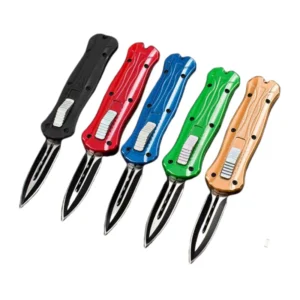
- Anodized handle colors: increase finishing complexity, especially when color consistency matters
- Decorative screws, glass breakers, or logo-heavy hardware: may raise price more than function
This is one area where buyers should be skeptical. A coated blade and bright handle hardware can make a knife look premium online while doing little to improve the core action. If the mechanism feels average, the finish should not carry a premium price by itself.
6) Production scale changes the cost per knife
Low-volume production costs more per unit. Setup time, tooling, programming, finishing, and inspection are spread across fewer knives. High-volume runs usually lower the unit cost, especially on models with standard finishes and common parts.
That helps explain why limited editions, unusual color combinations, or short-run variants often cost more even when the base knife is familiar. The knife may not be mechanically better; it may simply be less efficient to produce.
For most consumers, this matters less than mechanism quality, but it still affects the final price you see on the shelf.
7) Brand reputation and retail markup still matter
Not every price difference comes from the knife itself. Brand reputation, warranty support, dealer margin, and retail positioning can all push the street price up. A better-known brand may charge more because buyers trust its QC, service, or resale value. Sometimes that premium is justified. Sometimes it is mostly market positioning.
That is why two OTFs with similar construction can land in different retail tiers. One may carry a stronger warranty network or tighter dealer standards. Another may simply be using brand recognition to hold a higher price.
What this does not tell you: it cannot predict the exact selling price in every market, because local laws, availability, and dealer strategy still affect retail numbers.
How these factors show up in real price tiers
Budget OTFs
At the budget end, buyers usually get simpler handle construction, more basic blade steel, less refined switch feel, and wider variation from one unit to another. Some are perfectly usable, but this is where misfires, rough tracks, and inconsistent lockup are more common. A low price here is often achieved by reducing machining time and inspection.
Mid-range OTFs
Mid-range models usually offer the best balance for most users. Expect aluminum handles, better action consistency, cleaner machining around the slider and blade opening, and steel choices that are sensible rather than flashy. This is often the range where paying more starts to buy a noticeably better user experience.
Premium OTFs
Premium pricing usually brings tighter tolerances, more consistent spring behavior, smoother switch tuning, cleaner cosmetic finishing, stronger QC, and often better warranty support. Premium steel may be part of the package, but it is rarely the only reason for the higher cost. On a good premium OTF, the difference should be obvious in the action and assembly quality, not just in the branding.
When is a higher price actually justified?
A higher price is easier to justify when you can observe one or more of these:
- smoother deployment and retraction without excessive thumb force
- more consistent lockup and less variation across multiple examples
- cleaner handle seams, better switch fit, and fewer sharp edges
- better grind symmetry and cleaner finish around the blade opening
- evidence of stronger QC rather than just fancier packaging
Approve the higher price when those gains are obvious. Test more when the only difference is a steel label, coating, or colorway. Reject the premium when the action feels ordinary and the extra money appears to be going mostly toward presentation.
Common mistake: overpaying for the spec sheet
The easiest mistake with OTF knives is to shop by steel name, blade shape, or exterior styling first. Those things matter, but they do not control the experience the way the action does. A plain-looking OTF with a well-machined chassis and consistent spring setup often delivers more value than a prettier knife with a premium steel stamp and average internals.
Quick checklist: signs the higher price may be worth it
- Slider moves with deliberate, even resistance rather than gritty drag.
- Blade fires and retracts cleanly several times in a row.
- Lockup feels consistent, with no obvious outlier movement.
- Handle seams, screws, and blade opening look clean and well finished.
- The upgrade improves action, fit, or QC more than appearance alone.
For readers comparing current models, the OTF knife catalog is one place to review styles and configurations. Retailers or distributors who need quote-specific details can use the wholesale inquiry form.