
Short answer
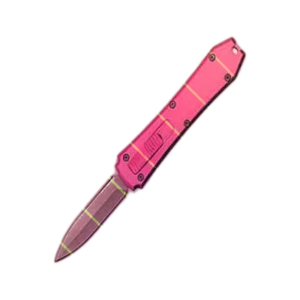
Yes—mini OTF knives are practical for light EDC and backup carry, but they are not ideal as a primary knife for heavier cutting or larger hands. See real size e
Key Takeaways
- Knife rules can vary by state, city, blade style, opening mechanism, carry method, and intended use.
- Do not treat a product nickname as a legal category; check the actual features and local rule.
- Retailers should keep legal or safety language factual and avoid promising that one item is allowed everywhere.
Terms Used Here
- OTF
- Out-the-front; a knife design where the blade moves forward from the front of the handle.
- Automatic knife
- A knife that opens by a spring-driven mechanism after the user activates a button, switch, or slider.
- EDC
- Everyday carry; gear intended for regular daily tasks.
In this article
- 01 Mini OTF vs standard OTF at a glance
- 02 Direct verdict: practical, but only within clear limits
- 03 Real size examples: what counts as mini, and what changes in use
- 04 What mini OTF knives handle comfortably
- 05 Where mini OTF knives stop being a good answer
- 06 Hand size matters more than many buyers expect
- 07 The tradeoff
- 08 Best for / not best for
- 09 Short checklist before you buy
- 10 What supports this answer
- 11 FAQ
- 12 Are mini OTF knives good for everyday carry?
- 13 Are mini OTF knives too small for most people?
- 14 What is the biggest downside of a mini OTF?
- 15 Should I buy a mini or a standard OTF?
Yes. Mini OTF knives are practical if you want a very compact knife for light everyday carry, but they are usually not the best choice as your only knife if you do frequent cardboard breakdown, longer cuts, or have larger hands.
For this page, “mini OTF” means production out-the-front knives with blades roughly in the 1.9 to 2.5 inch range and shorter handles than standard OTF models. The comparisons here are limited to common production knives and normal daily tasks, not hard-use testing, defensive use, or legal advice. Practicality can also vary by store type or market, because a gift-focused shop, an EDC retailer, and a tactical dealer often attract different expectations about size and use.
Mini OTF vs standard OTF at a glance
| Factor | Mini OTF | Standard OTF |
|---|---|---|
| Pocket comfort | Excellent; easy in light clothing or small pockets | More noticeable and heavier |
| Grip fit | Often a 2.5 to 3-finger grip for medium or large hands | Usually a fuller 4-finger grip |
| Blade reach | Best for short, controlled cuts | Better for longer slices and deeper reach |
| Best tasks | Packages, tape, thread, plastic wrap, backup carry | Broader daily utility, more cardboard, more general cutting |
| Main downside | Can feel too small in hand | Bulkier to carry |
Direct verdict: practical, but only within clear limits
A mini OTF is most practical when carry comfort matters more than cutting range. If your real use is opening mail, cutting tape, trimming loose material, opening food packaging, or carrying a backup blade, a mini can be a smart size.
It becomes less practical when the knife needs to do repeated work. A short blade runs out of edge quickly on cardboard, and a short handle gives you less leverage and less confidence in the grip. That is the core reason opinions on mini OTF knives split so sharply: people are often judging them for different jobs.
Real size examples: what counts as mini, and what changes in use
Looking at known production sizes makes the answer clearer.
- Microtech UTX-70: about a 2.4 inch blade and about a 5.9 inch overall length. This is a true compact OTF that works well for tape, envelopes, blister packs, and other short cuts. Many users with medium or large hands will not get a full grip.
- Benchmade Mini Infidel: about a 3.1 inch blade and roughly 7.1 inches overall. It is called “mini,” but in actual use it sits closer to a compact standard than a tiny novelty-sized OTF. It offers more reach and a more usable grip than the smallest models.
- Microtech Ultratech: about a 3.4 inch blade and roughly 8.4 inches overall. This is a standard reference point. It is easier to control for longer cuts and better suited to being a primary everyday knife.
Those three examples show why the label alone is not enough. A 2.4 inch OTF and a 3.1 inch “mini” can feel very different in hand and in use. Once you get closer to the low-2-inch range, the knife becomes much more specialized toward light utility and compact carry.
What mini OTF knives handle comfortably
In normal daily use, mini OTF knives are usually comfortable for:
- Opening boxes, padded mailers, and envelopes
- Cutting tape, shrink wrap, and plastic bands
- Trimming loose threads, tags, or light cord
- Quick car, office, and home utility tasks
- Backup carry when you already have a larger primary knife
A practical example configuration is a double-action OTF with a blade around 2.2 to 2.4 inches, a simple drop-point blade, and a slim handle. That setup is enough for package opening and light utility while staying easy to carry in a small pocket.
Where many people are satisfied is not raw cutting power, but convenience. A knife that is small enough to disappear into a fifth pocket or ride comfortably in gym shorts is more likely to be carried every day. For some users, that carry advantage matters more than the loss in blade length.
Where mini OTF knives stop being a good answer
Mini OTFs are a weak fit if your routine includes repeated cuts through corrugated cardboard, thick plastic, dense packaging, or material that benefits from a long slicing stroke. They also become less appealing if your hands are large enough that the handle feels crowded.
Here are the most common practical limits:
- Grip length: If the handle only gives you two or three secure fingers, control drops fast once the cut gets tougher.
- Short cutting edge: Sub-2.5 inch blades can do the job, but they are slower and less comfortable for long cuts.
- Cramped switch area: On very small OTFs, the firing switch can feel tighter or less natural, especially for larger thumbs.
- Value hesitation: If a mini is priced close to a full-size model, some buyers feel the larger knife is the more useful purchase.
That does not make mini OTF knives bad. It just means they are purpose-specific tools, not universal ones.
Hand size matters more than many buyers expect
Blade length gets most of the attention, but handle length is often the deciding factor in whether a mini feels practical. As a rough guide:
- Small hands: A mini OTF may still feel secure enough for normal light tasks.
- Average hands: Many minis are usable, but comfort depends on handle shape and how much room sits behind the switch.
- Large hands: The smallest OTFs often feel like backup tools rather than primary knives.
If you cannot comfortably place at least three fingers on the handle without crowding, expect the knife to feel limited in real work. That is why in-hand photos and exact handle dimensions are more useful than terms like “compact” or “mini.”
The tradeoff
Mini OTF knives trade cutting comfort for carry comfort. That is the simplest way to judge them fairly.
If you want a knife that is easy to carry all day and only needs to handle quick utility cuts, a mini can be a very practical choice. If you want one OTF to cover a wider range of daily tasks with fewer compromises, a standard size is usually the safer pick.
Best for / not best for
Best for:
- Light EDC
- Backup carry
- Small pockets, light clothing, or pouch carry
- Users who prioritize low bulk over maximum utility
- Simple cutting jobs with short, controlled strokes
Not best for:
- Heavy or repeated cardboard cutting
- Users with large hands who want a full grip
- Anyone wanting one knife to do nearly everything
- Buyers who dislike paying near-standard prices for a smaller tool
Short checklist before you buy
- Check the actual blade length. A 2.1 inch blade feels much smaller in use than many first-time buyers expect.
- Check handle length, not just overall length. That tells you more about grip fit.
- Match the knife to your real tasks. Mostly tape and packages? Mini can work. Frequent cardboard? Go larger.
- Look for in-hand photos or videos. This is the fastest way to avoid size surprise.
- Check local law before buying or carrying. Automatic knife rules vary by state, city, and country.
What supports this answer
This guidance is based on publicly listed dimensions from common production OTF models, direct comparison of those size classes, and common use cases seen across knife retail and wholesale listings over recent years. The sample type is practical and observational rather than a controlled lab test: product dimensions, model comparisons, customer-facing use descriptions, and common buyer concerns. Because of that limitation, this article uses terms like typically and usually rather than exact performance claims.
For retailers and brands, a few buyer considerations also come up repeatedly. Very small OTFs can create returns when shoppers do not understand the scale, especially if the product page lacks in-hand images. They can show weaker sell-through when merchandised as full-size replacements rather than light-duty tools. Reorder risk also rises when the knife gets attention as a novelty but not as a repeat-use item. Clear dimensions, realistic task descriptions, and simple blade shapes tend to reduce those problems.
FAQ
Are mini OTF knives good for everyday carry?
Yes, if your everyday carry needs are light. They are well suited to package opening, tape, and quick utility cuts.
Are mini OTF knives too small for most people?
No, but they are often too small to be ideal for larger hands or for people who want one knife to handle every task.
What is the biggest downside of a mini OTF?
The biggest downside is the combination of short grip and short blade, which limits comfort, reach, and control on longer or tougher cuts.
Should I buy a mini or a standard OTF?
Buy a mini if low bulk is your top priority and your tasks are light. Buy a standard OTF if you want a more versatile primary knife.
For current models and sourcing details, review OTF knife catalog and wholesale inquiry form.