
Short answer
A 2010 survey showed optimism among the kitchenware suppliers it contacted. A current purchase still needs a product-specific quote and approved sample.
Key Takeaways
- Steel name alone does not prove quality; heat treatment, geometry, and finish matter too.
- Match materials to the expected use, climate, maintenance level, and price point.
- Good product listings explain tradeoffs instead of treating every steel or handle material as universally best.
Terms Used Here
- Blade style
- The shape and edge design of the blade, which affects cutting tasks and buyer preference.
- Handle material
- The material used for grip, comfort, appearance, and durability.
- Assortment
- A grouped buying selection planned around customer needs, price points, and repeat orders.
In this article
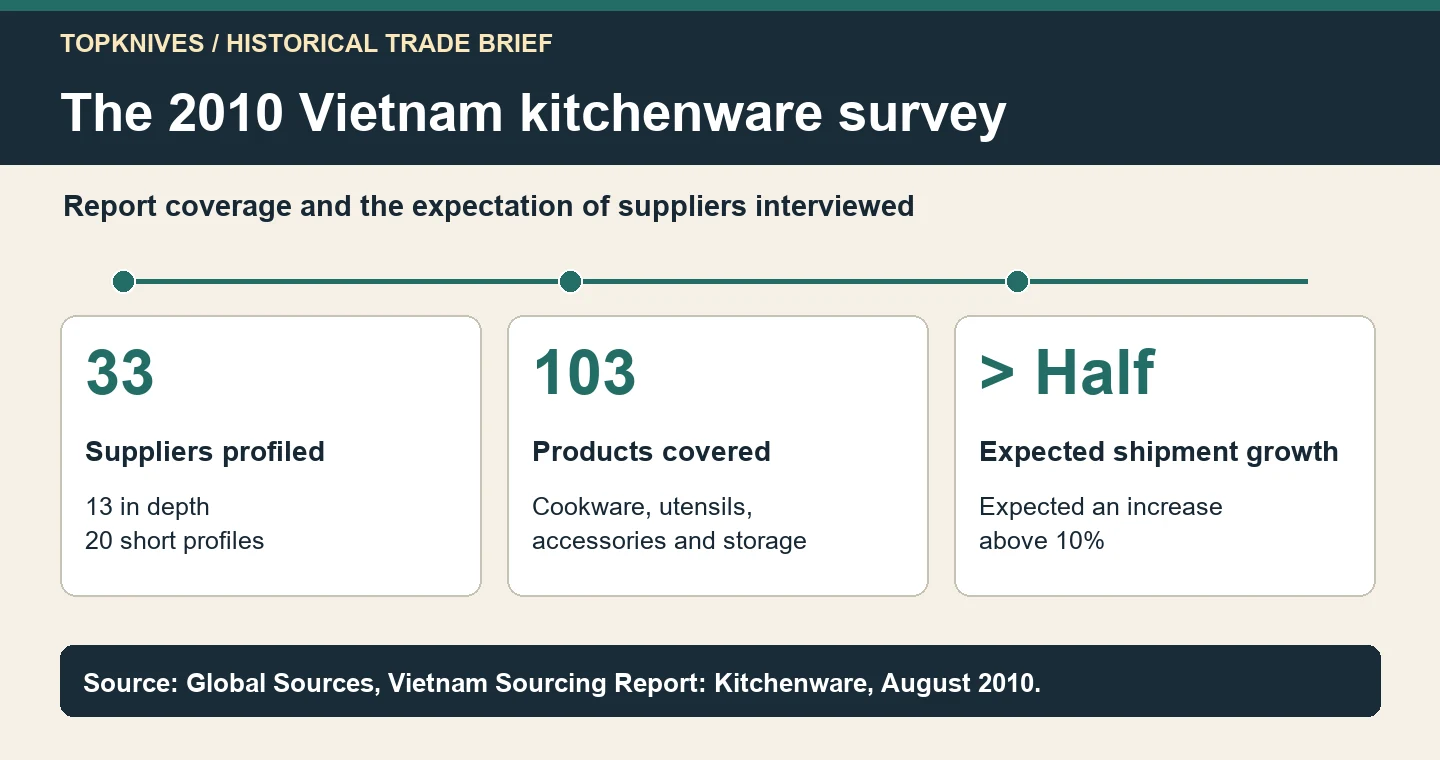
On 19 October 2010, Housewares covered a Global Sources report about the prospects for Vietnam’s kitchenware exporters. The story reported that nearly all featured suppliers expected sales growth and about half expected an increase above 10%. The publisher’s August 2010 sample pages describe the proportion expecting shipments to rise by more than 10% as more than half. Both records describe expectations gathered from suppliers.
What the 2010 survey covered
The original sample describes 33 manufacturer profiles and 103 export products. It says researchers visited the manufacturers featured in depth and visited or phoned the other companies. The product scope covered cookware, kitchen accessories, food storage and utensils across materials. Housewares highlighted suppliers’ interest in development and alternative materials and said companies that planned price increases expected to keep them within 5%. The sample pages say most businesses expected unchanged prices over the next six months. Those positions belong to that survey and period.
Read the trade record on its own terms
The source report explains that its broader steel and rattan customs categories were used because industry-specific totals were unavailable. For a separate official reference, the World Bank’s WITS tables, sourced to UN Comtrade, show Vietnam’s total reported merchandise exports rising from US$57,096 million in 2009 to US$72,237 million in 2010. Those amounts are current-dollar export values across merchandise. The totals neither isolate kitchenware nor verify the size of any one supplier’s shipments. A buyer trying to track a specific item should use a suitable product classification and consistent origin, destination and years.
Turn the old sourcing signal into a current quote
Use the report for ideas about product families and materials. Then send each supplier a current specification and ask which facility will manufacture, finish and pack it. If a proposal changes the material, get the full specification and the documentation for the destination and intended food contact. Ask the supplier to explain what an environmental claim refers to, which part of the item or pack it covers, and which evidence supports it. Build any material change into a separately approved line.
| What to compare | Records to request | Purchase decision |
|---|---|---|
| Export continuity | Exact manufacturing site, current capacity, first shipment date and expected repeat lead time. | Choose an order schedule the named facility can confirm. |
| Unit cost and carton | Quantity bands, currency, price basis, validity, included packaging and any tooling or testing charges. | Normalize the delivered basis and price each change as its own line. |
| Sample versus production | Signed drawing and sample revision, approved mark and pack, lot identification and inspection arrangements. | Release the shipment once the agreed sample and purchase order match the lot. |
Keep a catalog benchmark separate from the order
For example, the Winco COD-3 specification identifies a three-quart stainless steel colander with a footed base and rounded handles. Use those fields to make a bid comparable. Draw the size and drainage requirements for your prep bench, confirm carton quantity and storage footprint, and run the same wash-and-rinse check on the candidates. The catalog record supplies a specification reference without identifying a Vietnamese factory or establishing current price.
Ask the final supplier to sign the specification and identify which quote remains valid after the sample changes. Before release, compare the carton count, model, lot and inspection record with the purchase order. Record any unshipped balance and give the reorder its own lead-time confirmation. Those checks tie the order to the current product and named facility.
Plain Meaning
Knife material topics are about tradeoffs, not single-word rankings. Steel name, heat treatment, edge geometry, coating, handle construction, and quality control all work together.
A material can look premium while still needing context. The useful question is what the material does well, what care it needs, and which use case it fits.
Why It Matters
Readers often compare steel names because they are visible in listings. The finished knife, however, depends on manufacturing choices that are not always obvious from the name alone.
Clear material education helps prevent unrealistic expectations around hardness, corrosion resistance, toughness, sharpening, and price.
What To Check Next
- Steel type, heat treatment, edge geometry, and blade thickness.
- Handle material, grip texture, weight, and balance.
- Corrosion resistance and expected maintenance level.
- Whether the material choice fits the customer use case and price point.