
Short answer
Decide when to resurface or replace a commercial cutting board. Compare condition, material, fit, a usable spare and collection turnaround.
In this article
- 01 Start with condition, then use the calendar
- 02 Identify the material and find out whether it can be serviced
- 03 Compare the downtime and the replacement order
- 04 Put the new board’s details on the reorder record
- 05 Sources
- 06 Models in this article
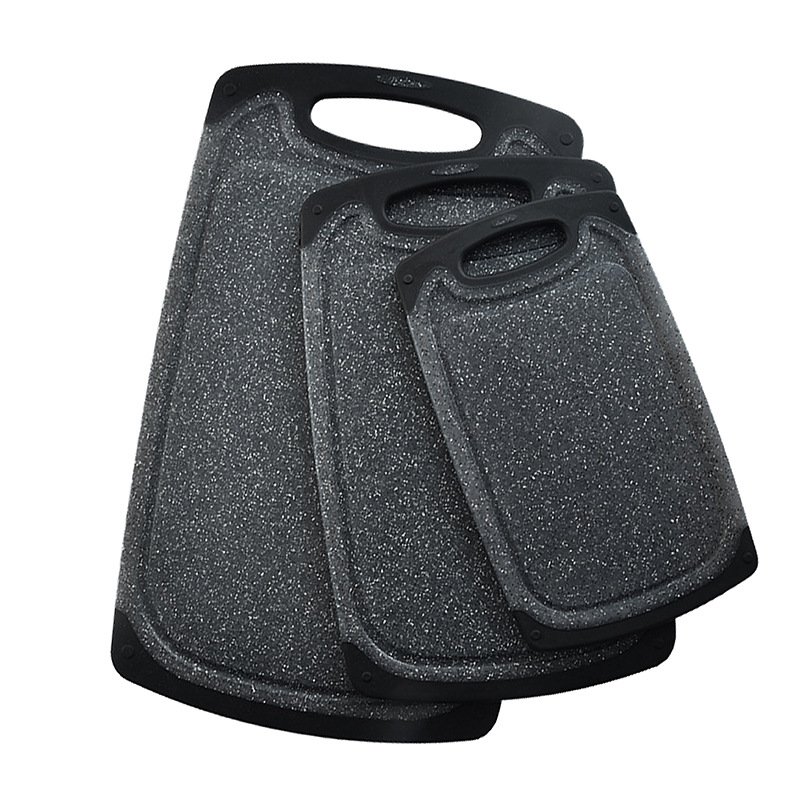
- 07 Grey Speckled PP Cutting Board with Grip Opening
Lift a board under good light after routine cleaning. If the grooves are deep enough to keep the surface from being cleaned and sanitised effectively, take it out of service. The next decision is whether that particular board can be professionally resurfaced and returned in usable condition, or whether it needs replacing.
| Step | Record before returning it to service |
|---|---|
| Check after routine cleaning | Identify deep scores, cracks and movement. Hold the affected board out of service while it is assessed. |
| Assess resurfacing | Ask whether the exact model can be serviced. Check material and remaining thickness against the actual workstation. |
| Confirm fit or replace | Look at cleanability, rack fit and stability after service. Choose a correctly sized spare if repair or cleaning cannot restore usability under the site’s rules. |
Start with condition, then use the calendar
Nella Cut suggests inspection and service intervals that vary with use, from three to four months for high-volume kitchens to about six months for medium-use sites and annually or as needed for light use. Treat these as a service provider’s planning example. A thinner board, heavier chopping load or more frequent use may need attention sooner.
Record your board’s task, the problem that triggered the check and whether the board stays flat on its bench or workstation. Use an out-of-service location while you wait for a decision. A spare assigned to that station keeps the line working without switching to a board reserved for another purpose.
Identify the material and find out whether it can be serviced
Send the maker or resurfacing service the board model, material, original thickness, remaining thickness and a clear picture of the damaged area. Ask if the process is suitable for that product and whether the board would still fit its rack, frame or workstation after material is removed. Confirm if handles, feet or other features affect serviceability.
Agree what will be checked on return. The board should sit securely, present a surface the team can clean properly and still fit the storage and cleaning equipment. Ask what happens if the service finds a crack or cannot restore a useful surface.
Compare the downtime and the replacement order
Ask for collection and return timing, separate fees for each board and any replacement cost. Count the number of stations the service affects. A multi-site operator can group service by location while keeping one usable spare per critical task, or compare that plan with one replacement shipment.
The UK Food Standards Agency’s Safer Food, Better Business maintenance guide advises replacing scratched, pitted or scored chopping boards. In the US FDA Food Code model, Section 4-501.12 directs operators to resurface a scored board that can no longer be cleaned and sanitised effectively, or discard it if resurfacing is unsuitable. For multi-country orders, map each location to its own procedure and applicable authority.
Put the new board’s details on the reorder record
Record board dimensions, thickness, material, colour and part number with a dated photo. When replacing a board that slides into existing equipment, order by the measured size and locating points. A same-colour product with a different thickness can interrupt the station setup.
At receiving, match the clean board to the recorded station assignment and check that it is stable and fits the slot. Note the start date. After a few rounds of inspection, the kitchen can set a check frequency based on the actual wear rate at that station.
Sources
Models in this article
Grey Speckled PP Cutting Board with Grip Opening
TKSC-1600663849203. Replacement stock candidate to check for the actual task, thickness and storage fit.