

What Are the Disadvantages of an OTF Automatic Knife?

Short answer
Yes, OTF automatic knives have real disadvantages. Learn where they struggle most: lint and grit, maintenance, side-load weakness, slimmer grip ergonomics, misf
In this article
- 01 The main disadvantages of an OTF automatic knife
- 02 1. OTF knives are more sensitive to lint, grit, and fine debris
- 03 2. They need more maintenance than many people expect
- 04 3. They are weaker under side load, twisting, and prying
- 05 4. Slimmer handles can be less secure in the hand
- 06 5. They often cost more for the same amount of work utility
- 07 6. Occasional misfires are part of the ownership experience
- 08 What users often misjudge about OTF knives
- 09 OTF vs manual folder vs fixed blade: where the disadvantages show up
- 10 Best for / worst for
- 11 Quick checklist: should you avoid an OTF?
- 12 Verdict
- 13 FAQ
- 14 Are OTF knives less reliable than manual folders?
- 15 Why do OTF knives misfire?
- 16 Is an OTF knife bad for cardboard?
- 17 Who benefits most from an OTF knife?
Yes, an OTF automatic knife has real disadvantages. They matter most when your knife lives in a linty pocket, sees dust or grit, gets used with wet hands or gloves, or has to do harder utility work than simple slicing.
This page answers that question from one angle only: real-world reliability and task fit. It is not about novelty, collecting, or self-defense claims. If you are comparing options in an OTF knife collection, the useful question is not whether the mechanism is fast. It is whether the tradeoffs match the way you actually use a knife.
The main disadvantages of an OTF automatic knife
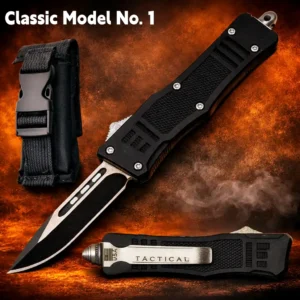
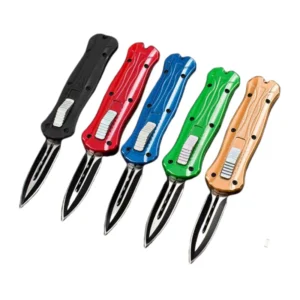
An OTF knife sends the blade out the front of the handle instead of rotating it open on a pivot. That design gives fast one-handed deployment, but it also creates a few practical weaknesses that simpler knives avoid.
1. OTF knives are more sensitive to lint, grit, and fine debris
This is the drawback most users notice first. Pocket lint, drywall dust, sand, cardboard fibers, and tape residue can all get into the blade channel or onto the internal tracks. The mechanism-level reason is simple: a double-action OTF depends on a spring-driven carriage moving through a narrow path inside the handle, so contamination can slow that travel or interrupt full lockup.
In real use, that means an OTF may struggle in places like:
- Front-pocket carry with loose lint: lint works its way into the opening where the blade exits.
- Drywall or warehouse work: fine dust mixes with oil and creates drag inside the action.
- Beach, farm, or truck-floor environments: grit and sand are small enough to reach moving parts but abrasive enough to affect smooth travel.
- Heavy box breakdown: cardboard dust and adhesive from packing tape can build up faster than many buyers expect.
This does not mean every OTF fails in dirty conditions. It means they are generally less tolerant of contamination than a fixed blade and often less forgiving than a good manual folder.
2. They need more maintenance than many people expect
Because the blade runs through the handle and the firing system has multiple internal parts, OTF knives usually ask for more routine attention. The mechanism-level reason is that debris, old lubricant, and wear all affect the same moving path that controls deployment and retraction.
What maintenance actually involves is not mysterious, but it is more than many first-time owners assume. In normal carry, it can mean:
- blowing out lint and dust from the blade opening
- wiping the blade clean after cutting tape or cardboard
- using the right amount of lubricant rather than over-oiling the mechanism
- checking for sluggish firing or incomplete retraction
- resetting the mechanism after a misfire if the blade did not complete its travel
That last point matters. On many double-action OTFs, a misfire does not mean the knife is broken. It often means the internal carriage disconnected from full travel as a safety response to resistance. The user then has to pull or retract the blade to reset the mechanism before trying again. That is better than forcing the system, but it is still an inconvenience.
3. They are weaker under side load, twisting, and prying
OTF knives are cutting tools, not pry tools, and they are less forgiving when force stops being straight-line cutting force. The mechanism-level reason is that the blade interface and lockup are designed around in-and-out travel, not around the kind of lateral stress created by twisting, scraping, or levering.
Here are common situations where that matters:
- Zip ties tightened against metal: if you cut aggressively and the blade binds against the metal surface, sideways pressure rises quickly.
- Thick cardboard or dense plastic: when the blade gets buried and the hand starts twisting to finish the cut, side load increases.
- Scraping staples or adhesive: the tip sees leverage it was not meant to handle.
- Prying open lids or paint cans: this is misuse for almost any knife, but OTFs are especially poor candidates.
That does not make an OTF fragile. It means that for forceful utility work, its design gives you less margin for bad technique than a fixed blade and often less than a sturdy manual folder.
4. Slimmer handles can be less secure in the hand
Many OTF knives carry well because the handles are narrow, flat, and rectangular. That shape disappears in the pocket, but it is not always the best shape for sustained cutting. The ergonomic reason is straightforward: a slim handle gives you less contour, less palm fill, and sometimes less traction than a fuller utility folder.
You are most likely to notice this when:
- cutting thick cardboard for several minutes
- working in wet conditions
- wearing smooth work gloves
- bearing down on rope, hose wrap, or dense packaging
A handle that feels sleek during pocket carry can feel less planted once your grip is wet, gloved, or under pressure. This is not true of every model, but it is a common tradeoff with the format.
5. They often cost more for the same amount of work utility
An OTF can be worth the price if you specifically value automatic in-and-out action. But if your goal is simply to cut tape, cord, plastic wrap, and boxes reliably, an OTF often gives less pure work value per dollar than a manual folder or fixed blade. The reason is not blade steel alone. A meaningful part of the cost goes into the automatic mechanism and handle construction rather than into making the knife better at dirty, forceful cutting.
That makes the value question pretty practical: are you paying for a feature you will actually use, or paying extra while accepting more maintenance and lower dirt tolerance?
6. Occasional misfires are part of the ownership experience
This point deserves its own section because buyers often interpret it the wrong way. A double-action OTF can misfire if the blade meets too much resistance during travel, if debris slows the carriage, or if the user partly obstructs deployment. The mechanism-level reason is that many OTFs are designed to stop short rather than force the blade forward when travel is interrupted.
In plain terms, the blade may come out only partway or fail to lock fully, and you then have to reset it. That is not the same as catastrophic failure. It is still a disadvantage, because a manual folder usually does not have this exact interruption pattern in routine use.
What users often misjudge about OTF knives
The most common misunderstanding is assuming fast deployment equals hard-use capability. It does not. OTFs are often bought for speed and convenience, but speed and convenience are not the same thing as dirt tolerance, grip security, or resistance to twisting loads.
Users also tend to misjudge these points:
- Pocket carry sounds clean, but often is not: pockets collect lint, crumbs, dust, and grit.
- Light slicing is not the same as utility abuse: opening mail and cutting shrink wrap tell you little about how the knife behaves in thick cardboard or strapped bundles.
- A misfire is not always a broken knife: sometimes it just needs a reset because travel was interrupted.
- Closed size is not open-hand comfort: a knife can carry beautifully and still feel narrow or slick in use.
OTF vs manual folder vs fixed blade: where the disadvantages show up
| Factor | OTF automatic | Manual folder | Fixed blade |
|---|---|---|---|
| Dirt and lint tolerance | Lowest of the three in most cases; blade channel and internal action are easier to foul | Usually better than OTF; fewer enclosed moving parts | Best; simplest to rinse and wipe clean |
| Maintenance burden | Highest; needs periodic cleaning and careful lubrication | Moderate; pivot and lock need upkeep but are easier to access | Lowest; minimal moving parts |
| Grip security | Often slimmer and flatter; can feel less secure with wet hands or gloves | Often better contour and texture for utility cutting | Usually best handle security for forceful work |
| Side-load and twisting tolerance | Least forgiving for prying, torque, or bind-heavy cuts | Often better than OTF, though still not a pry bar | Best of the three for hard cutting loads |
| Cost for equivalent utility | Often highest because of the automatic mechanism | Usually better value for general work | Often strongest value if carry method fits your needs |
Best for / worst for
Best for: clean pocket carry, quick one-handed access, opening packages, cutting tape, trimming cord, and short everyday slicing where fast retraction is useful.
Worst for: lint-heavy pocket carry, drywall dust, sandy environments, wet gloves, repeated cuts through thick cardboard, and zip ties cinched against metal where the blade can bind and twist.
Quick checklist: should you avoid an OTF?
- If your knife will live around lint, grit, drywall dust, or sand, an OTF is more likely to need attention.
- If you often cut with wet hands or gloves, a fuller-handled folder may feel more secure.
- If your tasks involve thick cardboard, dense plastic, scraping, or twisting, an OTF is usually not the best fit.
- If you dislike cleaning and occasional reset behavior, the mechanism may become annoying rather than useful.
- If you mainly want the best cutting value for the money, a manual folder or fixed blade often makes more sense.
Verdict
The disadvantages of an OTF automatic knife are real: lower tolerance for lint and grit, more maintenance, less forgiveness under side load, slimmer grip ergonomics, higher cost for equivalent work utility, and occasional misfire/reset inconvenience.
If your knife is a work tool for dirty environments, gloves, and forceful cuts, you should usually avoid an OTF and choose a sturdier manual folder or fixed blade instead. If your use is cleaner, lighter, and centered on quick one-handed access and short controlled cuts, an OTF can still be a good fit as long as you accept the maintenance and reliability tradeoffs.
FAQ
Are OTF knives less reliable than manual folders?
In clean, light use, not necessarily. In lint, grit, dust, and harder utility work, they are generally less tolerant of contamination and interruption.
Why do OTF knives misfire?
Usually because the blade met resistance during travel or debris slowed the internal carriage. Many designs stop and require a reset instead of forcing the mechanism through the obstruction.
Is an OTF knife bad for cardboard?
Not for occasional light cuts. For repeated breakdown of thick cardboard, cardboard dust, handle comfort, and binding under pressure can make a manual folder or fixed blade the better tool.
Who benefits most from an OTF knife?
Users who value fast one-handed deployment and retraction for short, controlled cuts in relatively clean carry conditions may still benefit from an OTF despite its drawbacks.