

How to Carry a Fixed Blade Knife Safely and Comfortably


Short answer
Learn practical ways to carry a fixed blade knife, from belt sheaths to pack carry, plus safety tips, buyer considerations, and common mistakes to avoid.
In this article
- 01 Start with the right sheath and carry position
- 02 Common ways to carry a fixed blade knife
- 03 Belt carry
- 04 Vertical versus horizontal carry
- 05 Pack, bag, and vehicle storage
- 06 Boot or concealed-style carry considerations
- 07 What makes a fixed blade easy to carry
- 08 Safety habits that should come first
- 09 Mistakes to avoid when carrying a fixed blade
- 10 How retailers and resellers can choose better carry-friendly inventory
- 11 Practical FAQ
- 12 What is the most comfortable way to carry a fixed blade knife?
- 13 Can I carry a fixed blade knife every day?
- 14 Should a fixed blade be carried edge up or edge down?
- 15 Is a larger fixed blade harder to carry?
- 16 What should I check before buying fixed blades for resale?
The safest and most practical way to carry a fixed blade knife is in a secure sheath that covers the edge, holds the knife firmly, and fits your daily use. From there, the best carry method depends on the knife size, your clothing, your work environment, and local rules. A small belt knife may ride comfortably on the hip, while a larger outdoor knife may be better on a pack or in a dedicated storage system when not in active use. Always verify local laws and workplace policies before carrying.
Start with the right sheath and carry position
A fixed blade knife should never be carried loose. The sheath is what makes daily carry safe, and it should do three things well: protect the edge, prevent accidental release, and allow a smooth, controlled draw when needed. Leather, Kydex, and nylon each have strengths. Leather can be comfortable and classic, Kydex often offers a firmer retention feel, and nylon can work well for lightweight utility setups if it is well made.
Carry position matters just as much. A knife worn too high may dig into your ribs when you sit. A knife worn too low may bump into chairs, car seats, or tools. For many users, a hip carry around the 3 o’clock to 5 o’clock area is a practical starting point, but the best spot is the one that stays secure, does not interfere with movement, and matches the knife’s size.
Common ways to carry a fixed blade knife
Belt carry
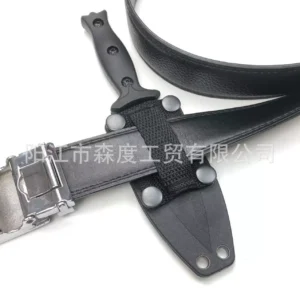
Belt carry is one of the most common options because it keeps the knife accessible and stable. It works well for compact utility knives, hunting knives, and many everyday outdoor models. If you are choosing knives for a retail display or wholesale assortment, belt-ready sheaths are often among the easiest for customers to understand and use.
For buyers, look for a sheath that rides close to the body and has a strong belt loop or clip. A loose loop can let the knife swing, which is uncomfortable and can wear down the sheath over time. A good belt setup should remain steady when you walk, bend, or climb in and out of a vehicle.
Vertical versus horizontal carry
Vertical carry is the familiar straight-down position. It is simple, compact, and often the easiest for new users to manage. Horizontal carry can be more comfortable for some people, especially with shorter knives, because it can reduce pressure when sitting. That said, horizontal carry is not ideal for every sheath or every body type, so the fit should be checked carefully before relying on it.
For resellers and store buyers, offering both vertical and horizontal sheath-compatible models can help you meet different customer preferences without overcomplicating the product mix.
Pack, bag, and vehicle storage
Some fixed blades are better carried in a pack or stored in a bag when not needed at hand. This is common with larger camp knives, survival knives, and backup tools. The knife still needs a secure sheath, and it should be placed where it will not shift around or contact other gear.
If the knife is kept in a vehicle, use a dedicated storage spot that prevents movement and keeps the blade covered. Do not leave it loose in a glove box, under a seat, or with other metal items that can damage the edge or create a safety issue.
Boot or concealed-style carry considerations
Some users look for boot carry or other compact concealed-style setups. These can work for small fixed blades, but comfort and legality should be checked first. A boot carry can be awkward if the sheath is too rigid, too bulky, or positioned where it rubs during long walks. For many people, a smaller belt carry is more practical and easier to manage.
Because laws and workplace policies vary, anyone considering concealed carry should verify local rules before buying inventory for resale or before carrying for personal use.
What makes a fixed blade easy to carry
When shoppers ask how to carry fixed blade knife models comfortably, the answer often starts with the knife itself. A good carry knife is not just sharp; it is balanced, compact enough for the task, and paired with a sheath that complements its shape.
- Blade length: Smaller blades usually carry more comfortably for everyday utility, while larger blades may be better suited to outdoor use.
- Handle shape: Smooth, secure handles reduce snagging and improve comfort against the body.
- Weight: Heavy knives can pull on a belt or shift in a pack, so weight should match the carry method.
- Sheath retention: The knife should stay locked in place during normal movement.
- Carry angle: The knife should sit at an angle that fits the user’s body and activity level.
For wholesale buyers, these details matter because customers often return to the store asking why one knife “carries well” and another does not. A strong assortment should include models with different blade sizes, sheath styles, and carry options so buyers can match the knife to the person, not just the price point.
Safety habits that should come first
Carrying a fixed blade responsibly is mostly about preventing accidents. Keep the blade fully covered when not in use, and check the sheath regularly for wear, cracks, loose stitching, or weak retention. If the knife can fall out during normal movement, the carry setup needs to be replaced or adjusted.
It also helps to build a habit of always returning the knife to the same sheath orientation and using two hands when re-sheathing if the setup is tight. Rushing is one of the easiest ways to cause a cut. If you are handling inventory in a retail shop or warehouse, train staff to inspect sheath fit before packing or displaying the knife.
Another practical point: avoid carrying a fixed blade in a way that interferes with seat belts, climbing gear, tool belts, or other equipment. Comfort is not just about convenience; if a knife is annoying to wear, people are more likely to adjust it carelessly.
Mistakes to avoid when carrying a fixed blade
- Using a loose sheath: A poor fit can lead to accidental drops or edge exposure.
- Choosing size before comfort: A larger knife may look appealing, but it may be harder to carry daily.
- Ignoring local rules: Carry laws can vary by location, so verify before use or resale.
- Letting the knife swing: Excess movement can be uncomfortable and may damage clothing or gear.
- Mixing the knife with other loose items: Keys, tools, and metal parts can scratch the blade or create hazards.
- Buying without testing the sheath: A knife may look good online but carry poorly if the sheath is weak or awkward.
How retailers and resellers can choose better carry-friendly inventory
For stores and distributors, fixed blades that carry well tend to sell more smoothly because customers can imagine using them right away. When evaluating inventory, look for sheath quality, retention consistency, blade size variety, and clear product presentation. Buyers often prefer knives that feel ready for work, camping, hunting, or general utility without extra accessories.
If you are building a wholesale selection, it can help to include a range of compact belt knives, outdoor utility models, and sheath styles that suit different budgets. A curated selection from a fixed blade knife wholesale category like fixed blade knife wholesale options gives you a better chance of matching end-user preferences across retail and B2B channels.
Shoppers also appreciate honest product details. If a knife is best for pack carry rather than all-day belt carry, say so. If the sheath is designed for a close ride, note that as well. Clear information reduces returns and improves trust.
Practical FAQ
What is the most comfortable way to carry a fixed blade knife?
For many users, a compact belt carry with a well-fitted sheath is the most comfortable. Others prefer pack carry for larger knives. The right choice depends on body size, clothing, and how often the knife needs to be accessed.
Can I carry a fixed blade knife every day?
Many people do carry fixed blades daily for work, outdoor use, or utility tasks, but it depends on local laws, workplace rules, and the knife’s size. Check the rules where you live and where you plan to carry it.
Should a fixed blade be carried edge up or edge down?
That depends on the sheath design and carry position. The key is secure retention and a safe draw. Use the orientation the sheath was designed for, and do not force a setup that feels unstable.
Is a larger fixed blade harder to carry?
Usually yes. Larger blades can be heavier, more noticeable when sitting, and more likely to interfere with clothing or gear. They are often better for outdoor use or pack carry than for casual daily carry.
What should I check before buying fixed blades for resale?
Check sheath quality, carry comfort, blade size range, and how clearly the product can be described to customers. Knives that are easy to explain and easy to carry often perform better in retail settings.
In the end, the best way to carry a fixed blade knife is the method that keeps the blade secure, the user comfortable, and the setup appropriate for the task. Choose a sheath that holds firmly, test the carry position before relying on it, and make sure the knife fits both the body and the purpose. That practical approach is just as important for individual buyers as it is for stores, resellers, and distributors looking to stock dependable gear.