
Short answer
Learn the general rules for carrying a knife in checked baggage on an international flight, what to check before you travel, and how buyers and sellers can choo
Key Takeaways
- Separate carry-on rules, checked-bag rules, airline policy, and destination law before making a decision.
- Use current official guidance for travel questions; product descriptions alone are not enough.
- For resale, clear customer notes reduce confusion around travel, carry, and storage.
Terms Used Here
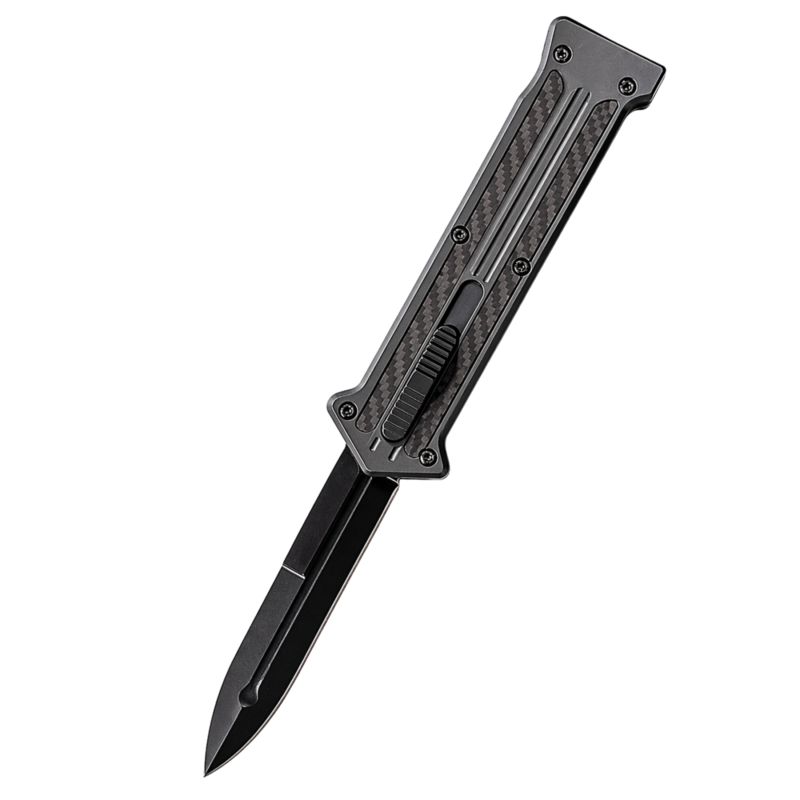
- OTF
- Out-the-front; a knife design where the blade moves forward from the front of the handle.
- Automatic knife
- A knife that opens by a spring-driven mechanism after the user activates a button, switch, or slider.
- Pocket knife
- A compact knife intended for pocket carry, often with a folding blade.
- Folding knife
- A knife with a blade that pivots into the handle for storage.
- Fixed blade
- A knife with a blade that does not fold or retract into the handle.
In this article
- 01 What travelers usually need to know first
- 02 Which knives are more likely to be a problem
- 03 How to pack a knife in checked baggage safely
- 04 Why international travel is different from domestic travel
- 05 Common mistakes people make with knives in checked luggage
- 06 What store buyers and resellers should consider
- 07 Practical examples
- 08 How to avoid surprises at the airport
- 09 Frequently asked questions
- 10 Can I put a pocket knife in checked baggage on an international flight?
- 11 Is checked baggage safer than carry-on for knives?
- 12 Can an airline take my knife even if it is in checked luggage?
- 13 Do automatic or OTF knives face more restrictions?
- 14 What is the safest way to travel with a knife in checked baggage?
- 15 Final takeaway
In many cases, yes—you can carry a knife in checked baggage on an international flight, but the final answer depends on the airline, the departure and arrival countries, and the knife itself. Checked bags are usually the right place for permitted knives, while carry-on rules are much stricter. Before traveling, always verify the airline policy and the laws at both ends of the trip, because a knife that is allowed in one country may be restricted in another.
What travelers usually need to know first
Airports and airlines generally treat knives as prohibited in the cabin but potentially acceptable in checked luggage if they are packed safely and meet local rules. That said, “international flight” does not mean one standard rule applies everywhere. Customs laws, aviation security rules, and even local possession laws can change from one country to another.
A practical way to think about it is this: if the knife is legal to own and legal to transport, and it is packed so it cannot injure baggage handlers or inspectors, it may be accepted in checked baggage. If it is a restricted style, a disguised knife, or a blade that is illegal in the destination country, it can still be seized even if it was in checked luggage.
Which knives are more likely to be a problem
Some knives raise more questions than others, especially on international trips. Examples often include:
- Automatic or OTF knives
- Switchblades and assisted-opening knives, depending on local law
- Fixed blades with large or aggressive profiles
- Double-edged blades
- Disguised knives or novelty items that conceal a blade
If you are a retailer, distributor, or online reseller, this matters when you are selecting inventory for customers who travel. A product that sells well domestically may create avoidable problems for buyers crossing borders. Many wholesale buyers prefer to stock a clear mix of everyday utility knives and more specialized items, while making sure product descriptions are accurate and warnings are easy to understand.
How to pack a knife in checked baggage safely
If a knife is allowed, packing it properly helps reduce the risk of injury, damage, or inspection issues. Good packing also shows that the item was stored responsibly.
- Close and lock the blade if the knife has a locking mechanism.
- Use a sheath, blade cover, or protective case.
- Wrap the knife so it cannot shift or cut through luggage.
- Place it in the center of the checked bag, away from openings and loose items.
- Keep the knife separated from tools, liquids, and valuables that could be damaged.
- Do not leave the knife loose in a pocket where it can move during handling.
For sellers shipping travel-oriented products or for buyers stocking a retail display, packaging quality matters just as much. A well-made sheath, secure box, or clamshell case is not just presentation—it is part of responsible ownership.
Why international travel is different from domestic travel
Domestic rules can be confusing enough, but international travel adds another layer. A knife may be legal in the country where you board, yet restricted where you land. Some countries focus on blade length, opening mechanism, or blade style. Others care about whether the knife is considered a tool or a weapon under local law.
That is why travelers should check three things before departure:
- The airline’s baggage policy
- The security rules at the departure airport
- The import, possession, and carry rules at the destination
Transit matters too. If you have a layover, the airport or country where you connect may have its own rules. Even if you never leave the airport, your checked bag still passes through that jurisdiction.
Common mistakes people make with knives in checked luggage
Most problems happen because travelers assume checked baggage solves everything. It does not. These are some of the most common mistakes:
- Assuming a knife is allowed because it is not in carry-on luggage
- Ignoring destination-country laws
- Packing the knife loosely so it can move around
- Forgetting that an automatic or OTF knife may be restricted
- Leaving the knife in a bag that is later opened for inspection without proper protection
- Buying a knife as a gift and not checking whether the recipient can legally receive it
If you are a wholesale buyer, these mistakes can turn into customer complaints and returns. Clear labeling, responsible product descriptions, and staff training help reduce confusion. If you are looking for a broad selection of automatic and OTF styles for your store or online catalog, you can review the OTF and automatic knife wholesale category for product options that are easier to compare by style and use case.
What store buyers and resellers should consider
For B2B buyers, the travel question is not only about compliance—it is also about customer expectations. Many customers want knives for everyday utility, outdoor use, or collecting, but they also ask whether a knife is practical for travel. That makes it smart to choose inventory with clear product details.
When sourcing knives for retail or resale, look for:
- Blade style and opening mechanism clearly described
- Sheath or storage protection included
- Compact, practical designs for utility use
- Packaging that supports safe handling and display
- Products with straightforward customer guidance
If you buy wholesale, it also helps to ask whether the supplier can support mixed orders, consistent packaging, and product information your customers can understand. For stores that want to build a broader knife program, a reliable wholesale partner can simplify restocking and reduce the chance of customer confusion at the point of sale. If you are preparing a bulk order or want to discuss product selection, the wholesale inquiry form is the easiest way to request more information.
Practical examples
Here are a few simple examples to show how the rules can vary:
- Example 1: A small folding pocket knife packed in a sheath inside checked luggage may be acceptable if both countries allow it and the airline has no special restriction.
- Example 2: An OTF knife packed in checked baggage may still be prohibited in the destination country if local law restricts automatic knives.
- Example 3: A fixed-blade camping knife may be allowed in one country but treated more strictly in another, especially if the blade is large or easy to access.
- Example 4: A decorative or collectible knife may seem harmless, but if it qualifies as a prohibited style under local rules, it can still be stopped.
These examples show why “checked bag” is only one part of the decision. The knife’s design and the destination matter just as much as the flight itself.
How to avoid surprises at the airport
The best approach is to check early, not at the counter. Review the airline website, contact the airline if the item is unusual, and look at the official travel or customs guidance for the countries involved. If the knife is expensive, collectible, or part of a commercial shipment, keep purchase records and product details handy in case questions come up.
For business buyers, it can also help to train staff on what products are best suited for general retail and which ones require extra customer explanation. A simple printed note or product card can reduce misunderstandings about storage, transport, and legal responsibility.
Frequently asked questions
Can I put a pocket knife in checked baggage on an international flight?
Often yes, but only if it is legal in the countries involved and allowed by the airline. Always verify the rules before traveling.
Is checked baggage safer than carry-on for knives?
For permitted knives, checked baggage is usually the only acceptable place. Carry-on bags are much more restricted and often prohibit knives entirely.
Can an airline take my knife even if it is in checked luggage?
Yes. If the knife violates airline policy, airport security rules, or local law, it may be removed or refused.
Do automatic or OTF knives face more restrictions?
They often do, especially internationally. Laws can vary widely, so buyers and travelers should verify the rules for each destination.
What is the safest way to travel with a knife in checked baggage?
Use a sheath or protective case, pack the knife securely, and confirm it is legal at both ends of the trip. If there is any doubt, leave it at home.
Final takeaway
You can sometimes carry a knife in checked baggage on an international flight, but it is never something to assume. The safest rule is simple: check the airline policy, confirm the laws in every country on your route, and pack the knife securely if it is allowed. For shoppers and wholesale buyers alike, choosing clearly described, responsibly packaged knives makes travel questions easier to answer and reduces avoidable problems at the airport.