

What Makes an OTF Knife Safer to Use?

Short answer
An OTF knife is safer to use when it resists accidental actuation, keeps the blade secure when closed, and reacts predictably if deployment is interrupted. Lear
In this article
- 01 The core safety framework for OTF knives
- 02 What those safety factors look like in the mechanism
- 03 Carry conditions matter more than many users expect
- 04 How to tell a safer OTF from a riskier one
- 05 Warning signs that an OTF may be becoming less safe
- 06 Short checklist before you rely on an OTF for carry
- 07 Mistakes that make OTF use less safe
- 08 FAQ
- 09 Is a stiffer OTF slider always safer?
- 10 Are OTF knives safer than side-opening automatics?
- 11 If an OTF stops when it hits something, does that mean it cannot injure you?
- 12 What is the clearest sign an OTF is becoming less safe to use?
- 13 What makes an OTF knife safer to use overall?
It depends on the mechanism and how the knife is carried. An OTF knife is safer to use when it resists accidental actuation, retains the blade securely in the closed position, and behaves predictably if deployment is interrupted.
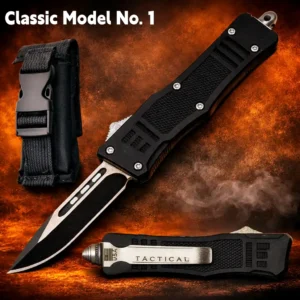
That is the practical answer for someone deciding whether an OTF is safe enough for normal pocket carry and handling. Unlike a manual folder or side-opener, an OTF deploys by sliding the blade straight out of the handle on an internal track, so the main safety question is not just blade sharpness or lock strength. It is whether the actuator, closed retention, and interruption behavior stay controlled in real use.
The core safety framework for OTF knives
If you want one simple way to judge an OTF, focus on these three points together rather than in isolation:
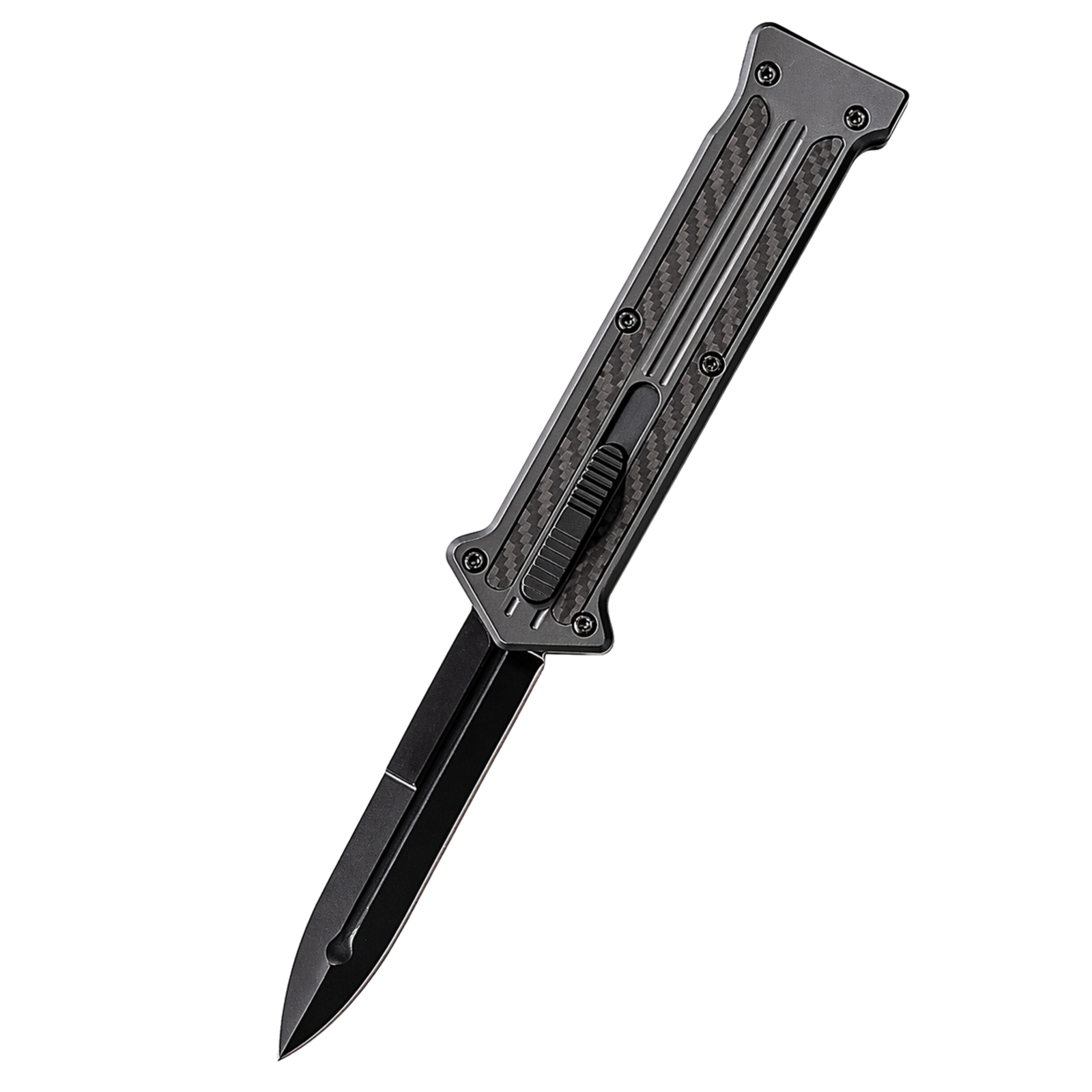
- Accidental actuation resistance: The slider should require deliberate thumb pressure, not casual contact from a pocket seam, waistband, keys, or a bag.
- Closed-position retention: The blade should stay positively seated when closed, without noticeable forward creep or vague engagement.
- Predictable interruption behavior: If the blade meets resistance before full lockup, the mechanism should stop or disconnect in a consistent way and reset clearly.
An OTF that does well in all three areas is generally safer to carry and handle than one that does well in only one. For example, a knife may have a strong spring but still be easy to fire by accident if the slider is tall, exposed, or unusually light.
What those safety factors look like in the mechanism
The safest-feeling OTFs are usually the most predictable, not the most aggressive. In practice, consistency matters more than raw spring force.
For the slider, look for steady resistance across the full stroke. A good actuator should feel intentional from start to finish. If it starts very light and then suddenly breaks free, it can be easier to move unintentionally and harder to control with the thumb.
For closed retention, the blade should feel clearly seated when the knife is closed. Some blade play is normal in many OTF designs, especially double-action models, but that is different from forward creep or a blade that no longer returns to the same closed position every time.
For interruption behavior, many double-action OTFs are designed so the blade will stop or disconnect if it hits an obstruction during travel. That feature can reduce the chance of a full locked deployment against an object, but it is not a guarantee of harmless contact. The blade may still move forward enough to cut, scrape, or puncture depending on momentum and what it hits.
This is also where manufacturer guidance matters. Many OTF manuals and product notes warn that automatic knives should be kept clean, inspected for changes in action, and not treated as fail-safe devices. Designs vary by spring system, internal track geometry, lockup design, and maintenance condition, so two OTFs can have very different carry behavior even if they look similar from the outside.
Carry conditions matter more than many users expect
A mechanically sound OTF can still become less safe in poor carry conditions. Because the actuator sits on the handle body, pocket environment matters more than many first-time users expect.
Common conditions that raise risk include:
- Shared pocket carry: Keys, coins, or other hard objects can press directly on the slider.
- Tight or compressed clothing: Seated carry in tight jeans, athletic wear, or overstuffed pockets can keep constant pressure on the actuator.
- Poor clip stability: If the knife rotates or rides loose, the slider may face outward toward seat edges, work surfaces, or body pressure.
- Lint and debris buildup: Pocket lint near the actuator opening or inside the track can change how the mechanism travels or resets.
- Bag carry without protection: In a soft bag or crowded compartment, outside pressure can reach the slider more easily than in stable clipped pocket carry.
In other words, a safer OTF is not just a matter of design. It is also one that is carried in a way that reduces direct pressure on the actuator and keeps the mechanism reasonably clean.
How to tell a safer OTF from a riskier one
When comparing models, use one practical standard: does the knife behave the same way every time under normal handling?
Safer examples usually share these traits:
- A slider that sits relatively low or protected and needs full, deliberate thumb travel
- A closed blade that stays fully seated during normal movement and pocketing
- A clear, repeatable reset after interrupted deployment
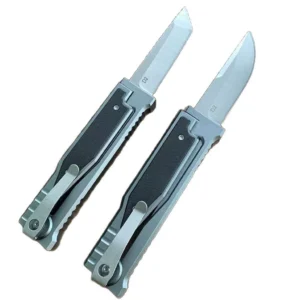
- A clip that holds the knife deep and stable enough to control orientation
Riskier examples often show the opposite pattern:
- A tall or loose slider that moves from incidental side pressure
- Inconsistent closed seating or visible blade creep
- Uncertain behavior after the blade is blocked during travel
- A weak clip that lets the handle rotate and expose the actuator
If you are comparing available OTF knives, these traits are usually more useful than marketing claims such as “heavy-duty action” or “strong spring.” Strong action alone does not make an OTF safer.
Warning signs that an OTF may be becoming less safe
No OTF should be assumed to stay in the same condition forever. Wear, contamination, poor lubrication choices, impact, and repeated pocket debris can all change how the mechanism behaves.
Watch for these warning signs:
- The slider suddenly feels lighter, rougher, or inconsistent
- The blade no longer stays fully seated when closed
- Deployment starts failing without any obvious obstruction
- The knife does not reset cleanly after interrupted deployment
- The pocket clip loosens enough to let the knife shift position
A change in feel is not something to ignore. With OTFs, a sudden difference in slider resistance or closed retention is often the clearest early sign that the knife needs cleaning, inspection, adjustment, or removal from carry until the cause is understood.
Short checklist before you rely on an OTF for carry
Use this quick check if you want a practical answer without overtesting:
- Actuator: Does the slider require steady, intentional pressure through the full stroke?
- Closed retention: Does the blade stay fully seated after normal handling and pocketing?
- Reset behavior: If deployment is interrupted in a careful controlled test, does the knife stop and reset predictably?
- Carry setup: Does the clip keep the knife stable, and is the slider protected from repeated outside pressure?
This checklist does not prove an OTF is safe in every situation. It does help identify whether the knife’s real-world behavior matches what safer carry requires.
Mistakes that make OTF use less safe
Some OTF problems come from the knife itself, but many come from avoidable user habits.
- Assuming a stiff spring equals safety: Spring force matters less than controlled slider resistance and secure closed retention.
- Ignoring carry orientation: A good knife can still become easier to actuate if the slider faces constant outside pressure.
- Letting lint build up for long periods: OTF mechanisms are more sensitive to contamination than many users expect.
- Continuing to carry after the action changes: If the knife starts feeling different, treat that as a mechanical warning.
- Testing carelessly against hard objects or the body: Interruption behavior should only be checked carefully and conservatively, never by assuming the knife cannot cut on contact.
FAQ
Is a stiffer OTF slider always safer?
No. A safer slider is usually one with consistent, deliberate resistance. Overly heavy or uneven travel can make operation less controlled, while a very light slider can be easier to actuate by accident.
Are OTF knives safer than side-opening automatics?
Not automatically. They have a different risk profile. An OTF moves straight out on a track, while a side-opener swings through an arc. For OTFs, accidental actuation resistance and interruption behavior are especially important because the actuator is built into the handle.
If an OTF stops when it hits something, does that mean it cannot injure you?
No. Many OTFs are designed to stop or disconnect when interrupted, but that should be treated as a limiting feature, not a guarantee. The blade can still move forward enough to create risk.
What is the clearest sign an OTF is becoming less safe to use?
The clearest sign is usually a change in action: lighter slider feel, rough travel, inconsistent deployment, poor reset, or new blade creep in the closed position.
What makes an OTF knife safer to use overall?
In one sentence: a safer OTF resists accidental firing, keeps the blade securely closed, and reacts in a predictable way if deployment is interrupted. If one of those three conditions is weak, the knife deserves closer scrutiny before regular carry.