

Are OTF Knives Dangerous for Beginners?

Short answer
Yes, OTF knives can be riskier for beginners than manual knives. Learn the main OTF-specific hazards, when a manual folder is the safer first choice, and what t
In this article
- 01 Why OTF knives can be harder for beginners
- 02 Are OTF knives more dangerous than manual knives for beginners?
- 03 When an OTF is a poor first knife choice
- 04 What makes one OTF safer for a beginner than another
- 05 Carry conditions matter as much as the mechanism
- 06 Failure modes and warning signs
- 07 Beginner mistakes to avoid
- 08 Quick checklist: should a beginner carry this OTF?
- 09 Bottom line
- 10 Can an OTF open accidentally in a pocket?
- 11 Is an OTF misfire dangerous?
- 12 What is safer for a first knife: OTF or manual folder?
- 13 Where can I ask about specific OTF models?
Yes. OTF knives can be riskier for beginners than manual knives because accidental slider activation, misfires, and pocket carry conditions add failure points. If you are new to knives and wondering whether an OTF is a smart first carry, the short answer is that some beginners can use one safely, but the lowest-risk learning curve is usually a manual folder.
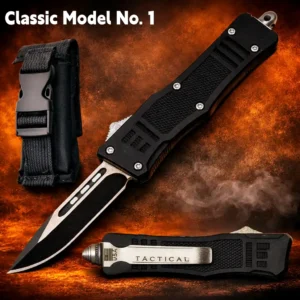
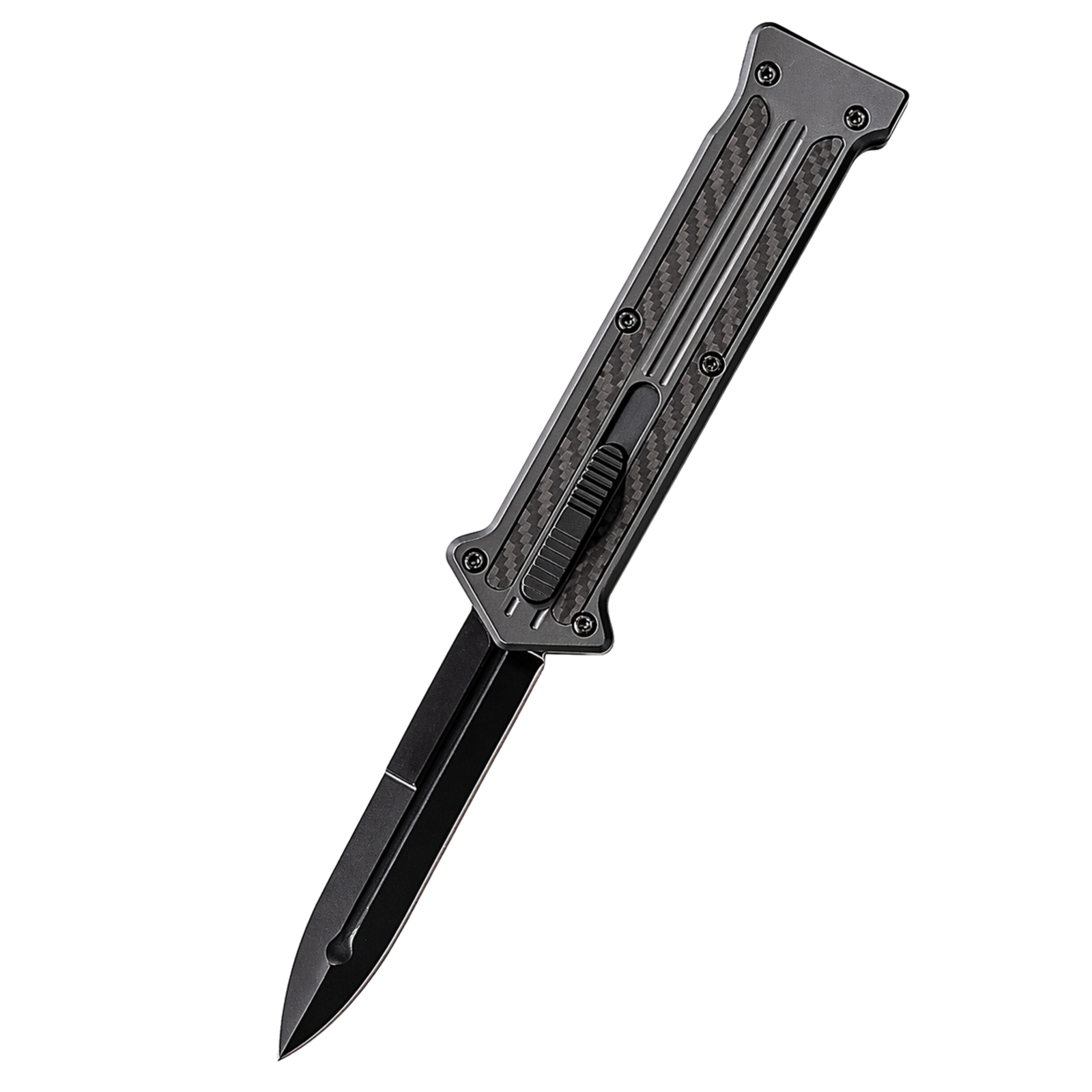
An OTF knife is different from a manual folder or side-opening automatic because the blade travels straight out of the handle on an internal track. That design gives you a fast, compact action, but it also creates beginner-specific issues: the slider can be pressed unintentionally, the blade can stop short if the stroke is incomplete, and pocket lint or obstruction can affect deployment more than many first-time users expect.
Why OTF knives can be harder for beginners
Most beginners do not struggle with the sharp edge first. They struggle with the mechanism. A manual folder usually teaches basic opening and closing with fewer moving parts and fewer surprises. An OTF adds a spring-driven action and a thumb slider that must be used correctly every time.
The main beginner risks are:
- Accidental slider movement: The actuator sits on the handle, so pocket pressure, fabric tension, or contact with other objects can matter.
- Short-stroking: If the user does not drive the slider fully, the blade may not deploy or retract cleanly.
- Obstruction behavior: Many OTFs are designed to stop when the blade meets resistance during launch, which can leave the blade partially deployed instead of fully open.
- Carry-related unpredictability: Clip strength, pocket depth, and loose items in the pocket can change how safe the knife feels in real use.
- False confidence: Beginners sometimes assume the slider acts like a safety lock. It does not.
That last point matters. On an OTF, slider resistance is only a deterrent to unintended movement. It is not a guarantee that the knife cannot move in the pocket or under pressure.
Are OTF knives more dangerous than manual knives for beginners?
Usually, yes. For a beginner, a manual folder is often safer because it has fewer failure points and is less sensitive to partial actuation or pocket pressure. That does not mean every OTF is unsafe. It means the margin for user error is usually smaller with an OTF than with a straightforward manual knife.
If your goal is the easiest and safest way to learn basic knife handling, start with a manual folder. If your goal is specifically to carry an OTF, choose one with firm, consistent action and be more careful about how you carry and maintain it.
When an OTF is a poor first knife choice
Beginners should usually avoid starting with an OTF if any of these apply:
- You want a knife that can be tossed into a crowded pocket with keys and coins.
- You are unlikely to clean lint from the handle and track area.
- You tend to fidget with mechanisms absentmindedly.
- You want the lightest possible thumb effort rather than deliberate actuation.
- You are not confident recognizing when a knife is misfiring or behaving inconsistently.
In those situations, a manual folder is usually the safer first choice. It is simpler to understand, easier to inspect visually, and less dependent on perfect actuation technique.
What makes one OTF safer for a beginner than another
If a beginner is set on buying an OTF, the goal is not the fastest or most exciting action. The goal is predictable mechanics. A safer beginner model should feel deliberate rather than twitchy.
Look for these signs:
- Firm, consistent slider travel: The actuator should require clear thumb intent, not a light accidental bump.
- Reliable full deployment and retraction: Repeated cycles should feel similar, without random hesitation.
- Stable closed-position retention: When closed, the blade should remain properly seated in the handle.
- Good clip retention: The clip should hold the knife in a repeatable position so it does not rotate or expose the slider to constant contact.
- Handle design that does not leave the slider overly exposed: Some shapes are easier to press unintentionally during pocket carry.
That is where model quality matters. A cheap or inconsistent OTF can be frustrating even for experienced users. For a beginner, it can be confusing enough to create avoidable risk. If you are comparing OTF knives, focus less on speed and more on repeatable actuation, clip security, and how controlled the slider feels.
Carry conditions matter as much as the mechanism
A beginner can test an OTF at a table and think it feels fine, then run into problems once it goes into a pocket. That is because OTF safety is heavily affected by carry conditions.
Common carry factors that raise risk include:
- Keys, coins, or other metal objects in the same pocket: These can press against the slider or interfere with orientation.
- Weak clip tension: A shifting knife is more likely to rotate, tilt, or rub the actuator against fabric and objects.
- Loose or shallow pockets: The handle can move more than expected.
- Heavy lint buildup: Lint can affect slider travel and internal movement.
- Pressure from sitting or bending: Seat edges, waist pressure, or tight clothing can change how the handle is loaded through the fabric.
For a beginner, the safest carry habit is simple: carry the OTF alone in a stable pocket, check that the clip keeps it oriented consistently, and avoid treating the actuator area like a fidget surface. That still does not make carry risk-free, but it reduces the most common avoidable problems.
Failure modes and warning signs
One useful thing for beginners to learn early is that OTF problems often show up as inconsistency before they show up as complete failure. If the action starts changing, assume the knife is less predictable until you know why.
Watch for these warning signs:
- Incomplete deployment after a full stroke
- Frequent misfires during ordinary use
- Slider movement suddenly becoming much lighter or rougher
- Inconsistent retraction
- Noticeably looser closed retention or increased rattle
Not every interrupted deployment means the knife is defective. Many OTF designs intentionally stop when they hit resistance. But repeated misfires without obvious obstruction are a sign that the knife may not be a good beginner carry. If that starts happening, stop relying on it until the cause is identified.
Beginner mistakes to avoid
The most common beginner errors with OTF knives are mechanical, not dramatic. They include:
- Assuming the slider is a true safety: It is not.
- Buying based on novelty: A dramatic action is not the same as controlled action.
- Using a crowded pocket: OTFs are less forgiving of poor pocket setup.
- Ignoring weak clip retention: If the knife moves around, risk goes up.
- Continuing to use a knife that is clearly misfiring: Inconsistency is a warning, not a challenge.
Quick checklist: should a beginner carry this OTF?
- Can the slider be moved only with deliberate thumb pressure?
- Does the knife open and close consistently when fully actuated?
- Does the clip keep it stable in one pocket position?
- Will you carry it alone, not mixed with keys or coins?
If the answer is no to more than one of those, a manual folder is probably the better first knife.
Bottom line
OTF knives are not automatically too dangerous for beginners, but they are usually less forgiving than manual knives. The biggest risks are accidental slider activation, incomplete actuation, obstruction-related misfires, and poor pocket carry conditions.
The clearest recommendation is this: if you want the safest, simplest first step into knife use, start with a manual folder. If you specifically want an OTF, choose one with deliberate slider resistance, stable closed retention, a secure clip, and consistent action, and carry it in a way that does not work against the mechanism.
Can an OTF open accidentally in a pocket?
It can under some conditions. The risk is higher when the slider is easy to move, the clip is weak, or the pocket also contains keys, coins, or other objects.
Is an OTF misfire dangerous?
It can be. A single interrupted deployment may happen if the blade meets resistance, but repeated misfires make the knife less predictable and less suitable for a beginner.
What is safer for a first knife: OTF or manual folder?
For most beginners, a manual folder is safer. It usually has fewer failure points and a lower chance of confusion during opening, closing, and pocket carry.
Where can I ask about specific OTF models?
If you need help comparing models or configurations, you can use the buyer support form.