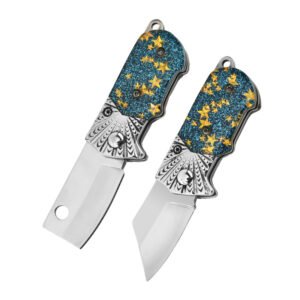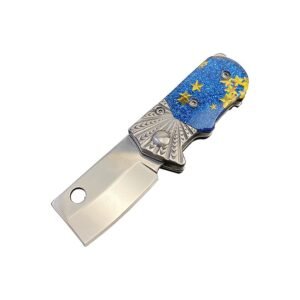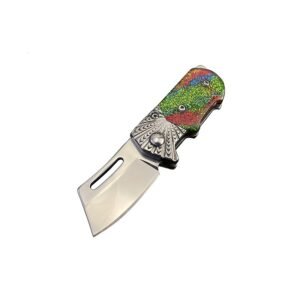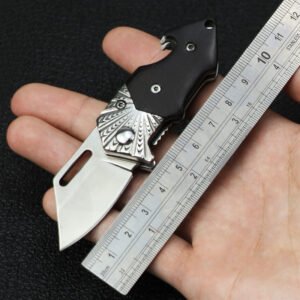


Are Mini OTF Knives Novelty Items or Real Users?

Short answer
Mini OTF knives are not automatically novelty items. Learn when they are real users, where they fall short, and how wholesale buyers should judge size, mechanis
Key Takeaways
- Knife rules can vary by state, city, blade style, opening mechanism, carry method, and intended use.
- Do not treat a product nickname as a legal category; check the actual features and local rule.
- Retailers should keep legal or safety language factual and avoid promising that one item is allowed everywhere.
Terms Used Here
- OTF
- Out-the-front; a knife design where the blade moves forward from the front of the handle.
- Automatic knife
- A knife that opens by a spring-driven mechanism after the user activates a button, switch, or slider.
In this article
- 01 What a mini OTF is, and what it is not
- 02 Where mini OTF knives are real users
- 03 How to tell novelty from real utility before you buy
- 04 Common buying mistakes that make minis feel gimmicky
- 05 Not the best choice when the job or customer profile changes
- 06 Bottom line for wholesale buyers
- 07 Are mini OTF knives good for everyday carry?
- 08 What size mini OTF is too small to be practical?
- 09 Do mini OTF knives have a place in wholesale assortments?
- 10 Should a reseller treat minis as novelty products?
Verdict: mini OTF knives are real users when their size matches light-duty tasks, legal limits, and carry constraints; they become novelty items when the dimensions are too small for a stable grip or the mechanism is treated as the selling point instead of the tool. This answer is for wholesale buyers, distributors, private-label programs, and serious retail customers who need to separate true daily-use minis from tiny impulse pieces that create returns.
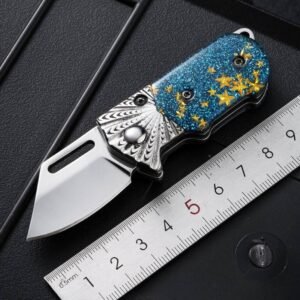
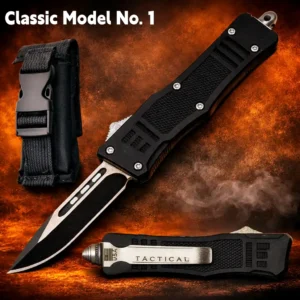
A mini OTF knife, in this context, is an out-the-front automatic with a compact handle and short blade, usually below the size of a standard everyday OTF. Why this answer: the distinction is based on product specs, common use patterns, and policy constraints more than marketing language. A 1.9-inch blade with a 3.2-inch handle behaves very differently from a 2.8-inch blade with a 4.1-inch handle, even if both are sold as “mini.”
Evidence note: this judgment is based on three practical factors seen across OTF assortments: measured blade and handle dimensions, how users actually open packages or cut cord with compact autos, and the return patterns that happen when buyers expect full-size hand fit from a mini frame.
What a mini OTF is, and what it is not
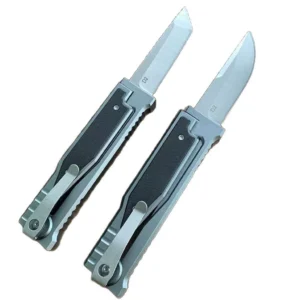
A mini OTF is a compact automatic knife where the blade deploys and retracts straight out the front of the handle. It is not simply any OTF with a short blade. For real-world use, the important question is whether the handle gives enough purchase for controlled cuts and whether the blade stock and edge length match the intended task.
That means two knives with the same 2-inch blade may belong in different buckets:
- A 2.0-inch blade with a 3.0-inch handle and narrow chassis may be a novelty or backup tool because only two fingers fit securely.
- A 2.0-inch blade with a 3.8-inch handle, usable jimping, and a sensible thumb-switch force can be a legitimate package opener, tape cutter, thread trimmer, and light utility knife.
The mechanism does not decide the category by itself. Size, grip, edge access, and task fit do.
Where mini OTF knives are real users
Mini OTFs are real users in environments where the job is short, repetitive, and controlled. Think opening cartons, cutting shrink wrap, trimming zip ties after loosening them, slicing loose threads, or breaking down small packaging at a counter. In those jobs, a compact automatic can be faster to access than a manual knife and less obtrusive than a full-size OTF.
Here are three concrete examples:
Example 1: A mini with a 1.9-inch blade and 3.6-inch handle works for retail back-room tasks like tape cuts, poly bag opening, and receipt-roll trimming. It is small enough for apron or front-pocket carry, but large enough for a three-finger grip.
Example 2: A 2.2-inch blade with a 3.9-inch handle suits office, warehouse desk, or trade-show use where the knife opens clamshell edges, cuts string, and handles light cardboard scoring. It stays below the bulk of a standard 3-inch OTF while still giving decent control.
Example 3: A very small 1.5-inch blade with a 2.8-inch handle is usually a backup or novelty-adjacent piece. It may open letters and snack packaging, but many adults cannot stabilize it for repeated utility cuts.
A realistic buyer scenario shows the difference. A regional distributor added two mini OTF sizes to a private-label line: one with a 1.7-inch blade and one with a 2.3-inch blade. The smaller piece sold quickly as a counter-item but drew complaints about grip and switch stiffness. The 2.3-inch model sold slower at first, then became the repeat-order item because convenience-store staff and warehouse users actually carried it for daily light tasks. The lesson was simple: fast initial sell-through does not always mean long-term utility demand.
How to tell novelty from real utility before you buy
For wholesale buying, the safest approach is to judge mini OTF knives by measurable factors instead of labels. Use this checklist before committing to a run or adding a SKU from an OTF knife catalog:
- Blade length: 1.8 to 2.4 inches is usually the practical mini range for light utility. Below about 1.7 inches, cutting edge becomes limited for anything beyond opening small packaging.
- Handle length: under 3.2 inches often means compromised hand fit for average adult users. Around 3.5 to 4.0 inches is more usable without losing the mini category.
- Hand fit: can most users get at least a secure three-finger grip? If not, expect more “too small” feedback.
- Switch effort: a mini should not require excessive thumb force. A stiff switch on a tiny handle makes repeated use annoying and can turn a practical knife into a drawer item.
- Task type: match the knife to tape, plastic wrap, string, and light cardboard only. If your buyers expect heavy corrugated breakdown, the format is wrong.
- Carry context: mini OTFs make more sense where low bulk matters: scrubs, slacks, aprons, small pockets, or key-organizer carry. They make less sense where belt carry or glove use is normal.
- Edge shape and access: a useful mini should expose enough edge to start cuts cleanly. Some tiny OTFs leave so little usable edge that deployment feels clever but cutting performance is poor.
A quotable rule for buyers: “A mini OTF is a user if the handle fits the hand and the edge fits the job; if either one fails, it is mostly a novelty.”
Common buying mistakes that make minis feel gimmicky
The biggest mistake is buying by blade length alone. A short blade may satisfy a legal or merchandising target, but if the handle shrinks too far, control disappears. Buyers then blame the OTF format when the real problem is proportions.
Another mistake is assuming all customers want the smallest possible automatic. In practice, many want the smallest knife that still feels normal in hand. That is usually not the tiniest model in the case.
A third mistake is ignoring buyer expectations around use. If packaging, product copy, or sales staff imply hard-use capability, returns follow. Mini OTFs should be positioned honestly as light-duty tools, backup cutters, or legally constrained daily carry options.
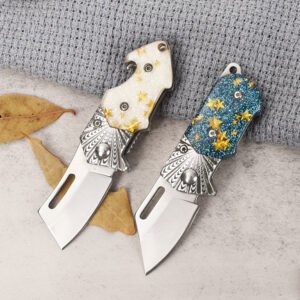
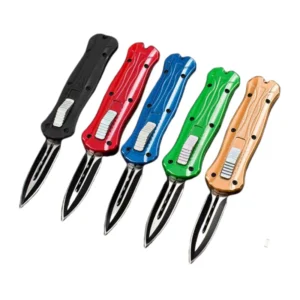
One more issue is overbuilding the novelty cues. Bright finishes, oversized glass breakers on tiny frames, or exaggerated tactical styling can push a compact OTF into gift-item territory even when the mechanism is sound. For private-label programs, cleaner styling often helps a mini read as a tool rather than a toy. If you need to compare samples or discuss fit with a factory, a direct wholesale inquiry is usually more useful than relying on catalog names alone.
Not the best choice when the job or customer profile changes
Mini OTF knives are not the best choice when the user wears gloves, has large hands, breaks down heavy corrugated daily, or expects the knife to serve as an all-day primary cutter. They are also a weak fit for users who need fine food prep, outdoor camp tasks, or long controlled slicing cuts, because the short edge and compact handle limit leverage and comfort.
For wholesale assortments, minis can also disappoint if your customer base skews toward workwear users, mechanics, or field-service crews. Those buyers often tolerate more bulk in exchange for a longer handle and better retention in hand. A standard-size OTF or a compact-but-not-mini frame may produce fewer complaints.
Tradeoffs matter here. A mini gives easier pocket carry, lower visual footprint, and sometimes simpler compliance with local blade-length preferences. In exchange, you lose grip area, cutting stroke length, and often some confidence under repeated use. That is not a flaw; it is the design bargain.
Bottom line for wholesale buyers
Mini OTF knives are neither automatically novelty pieces nor automatically serious tools. They are real users in the right size band, for the right tasks, and for customers who value compact carry more than full-hand grip. They lean toward novelty when the frame is so small that deployment is the main attraction and cutting is secondary.
For a wholesale line, the safer bet is usually a mini with a blade around 2.0 to 2.4 inches and a handle close to 3.6 to 4.0 inches, paired with honest light-duty positioning. That size range gives you a better chance of repeat orders from actual users instead of one-time curiosity sales.
Are mini OTF knives good for everyday carry?
Yes, if everyday carry means light cutting tasks, low-bulk pocket carry, and occasional use. No, if the user expects a full-size work knife.
What size mini OTF is too small to be practical?
For many adults, practicality drops fast below about a 1.7-inch blade or a 3.2-inch handle. At that point, grip and edge length often become the limiting factors.
Do mini OTF knives have a place in wholesale assortments?
Yes. They work well as compact utility options, legally constrained carry choices, and backup cutters. They work poorly if they are the only OTF size offered to work-focused customers.
Should a reseller treat minis as novelty products?
Only some of them. Treat ultra-small models as gift or impulse items, and treat properly proportioned minis as light-duty tools with clear use limits.