

What Is a Normal Defect Rate for Wholesale OTF Knives?


Short answer
Learn what defect rate is normal for wholesale OTF knives, what counts as acceptable at incoming inspection, and what must be confirmed in writing before placin
Key Takeaways
- Start with a mild method and increase pressure or abrasion only when the blade condition requires it.
- Edge angle, steel type, corrosion level, and handle material all affect the right care method.
- For wholesale assortments, simple care instructions help customers keep knives useful longer.
Terms Used Here
- OTF
- Out-the-front; a knife design where the blade moves forward from the front of the handle.
In this article
- 01 What is typical, what varies, and what must be confirmed in writing
- 02 The OTF-specific defects that matter most in wholesale buying
- 03 The commercial rule: judge defect rate together with remedy policy
- 04 What to confirm before approving the PO
- 05 A compact example: when 3% is acceptable and when it is not
- 06 FAQ
- 07 Is 5% defect rate acceptable for wholesale OTF knives?
- 08 Should buyers expect zero defects on OTF knives?
- 09 What defect rate should be written into the PO?
- 10 Are spare parts better than full replacements?
- 11 How should a new buyer start with an unfamiliar supplier?
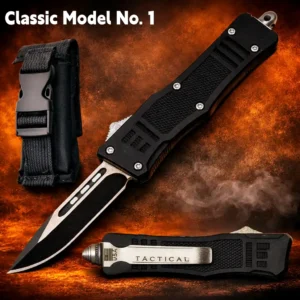
A normal defect rate for wholesale OTF knives is often around 1% to 3% major defects at incoming inspection for a stable production run, with up to 5% sometimes seen on lower-cost programs or first runs. For OTF knives, the real issue is not just the percentage itself, but which defects are included, how they are measured, and what remedy the supplier will honor in writing.
That range is not universal. It changes with price tier, sample approval quality, MOQ, packaging method, and whether the order is a repeat build or a new private-label setup. A buyer approving a 1,000-piece PO should treat defect rate as a purchasing term, not a vague quality promise.
What is typical, what varies, and what must be confirmed in writing
For wholesale OTF knives, buyers should separate defects into three buckets: functional defects, cosmetic defects, and packing defects. An OTF can look clean but still fail deployment, lockup, or retraction. That is why a “2% defect rate” means very little unless the factory states what is being counted.
A practical baseline looks like this:
Typical on repeat orders: 1% to 3% major defects found at incoming inspection, assuming approved sample retention, stable components, and no last-minute packaging change.
Variable on first production runs: 3% to 5% may occur if the knife uses a new chassis, new spring setup, fresh logo tooling, or a newly specified finish.
Needs written confirmation before PO approval: defect definition, inspection method, sample size, remedy window, spare-parts support, and whether freight credit or replacement stock is included.
On OTF knives, the most important major defects are usually failure to fire, failure to retract, off-track action, weak lockup, broken spring, blade rub causing severe finish damage, and unsafe misfire under normal thumb pressure. Cosmetic issues such as minor anodizing tone shift or small coating variation may be treated differently depending on the agreed standard and price point.
Buyers should also ask whether the quoted rate refers to factory final QC or customer incoming QC. Those are not the same. Factory numbers can look lower because the supplier has already sorted obvious failures. Incoming numbers can look higher because transit, repacking, and carton compression introduce new issues.
The OTF-specific defects that matter most in wholesale buying
OTF knives have more moving parts and tighter tolerance interactions than a simple manual folder. That does not mean they are unreliable by default, but it does mean the defect conversation must be more precise.
The defects that affect wholesale acceptance most often are functional rather than cosmetic. A distributor can often live with a tiny finish inconsistency on a budget SKU. A knife that fails to deploy on the sales counter is a different problem because it creates returns, labor cost, and brand damage.
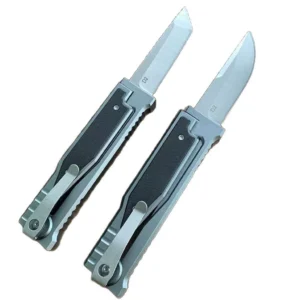
Common wholesale-relevant defect categories include spring fatigue out of the box, slider drag, inconsistent firing force, blade play outside approved tolerance, switch screws backing out, glass-breaker cap looseness, and packaging that allows the knife to arrive pre-scratched. Private-label buyers should also watch for logo placement drift, wrong blade steel marking, and mixed carton labels, because those become channel problems even when the knife itself still functions.
This is where landed-cost logic matters. A low unit price can stop looking attractive if 4% of a shipment needs sorting, parts replacement, or customer-service handling. On a 2,000-piece order, the difference between 1.5% and 4.5% is not just a quality statistic. It is labor, replacement inventory, and margin leakage.
If you are reviewing options in a wholesale OTF knife catalog, compare not only design and price but also whether the supplier can state a repeatable QC standard for the exact mechanism family you are buying.
The commercial rule: judge defect rate together with remedy policy
A “normal” defect rate is only acceptable if the remedy process is workable. Wholesale buyers should spend less time arguing over whether 2% or 3% is ideal and more time confirming what happens when defects are found.
For OTF knives, the cleanest commercial setup is usually one of these:
- Pre-agreed spare-parts support: extra springs, screws, switches, clips, or complete internal assemblies packed with the order for field repair by qualified staff.
- Replacement-on-next-order credit: confirmed count of verified defects credited or replaced in the next shipment.
- Immediate short-shipment or parts reimbursement: used when defects are severe or when the buyer cannot wait for the next production cycle.
Spare-parts support is not the same as warranty support. Spare-parts support helps the buyer fix a known percentage of serviceable issues inside their own channel. Warranty support is the broader policy for end-user claims after sale. Buyers should define both separately. A supplier may be willing to include springs and screws for 2% of units but may not accept open-ended consumer warranty exposure.
Lead time also changes the right remedy. If your repeat order lead time is 35 days, next-order replacement may be fine. If you are supplying a launch date for a retailer and the goods arrive with deployment failures, replacement on the next PO may be commercially useless. That must be discussed before deposit payment.
MOQ matters too. A 300-piece trial order often carries more variation than a 3,000-piece repeat run because the line has less process history and less incentive to tune every station. That does not mean small orders should accept poor quality. It means the buyer should expect a tighter sample policy and a clearer defect remedy clause.
What to confirm before approving the PO
Before production starts, ask for these points in writing and keep them attached to the PO or pro forma invoice:
- Defect definition. List what counts as major functional defect, minor cosmetic defect, and packing defect.
- Inspection stage. State whether acceptance is based on pre-shipment QC, arrival inspection, or both.
- Sample policy. Identify the sealed approval sample or golden sample, including finish, logo, packaging, and firing force expectation if discussed.
- Allowed variance. Confirm what cosmetic tolerance is acceptable on coating, anodizing, edge finish, and blade play.
- Remedy window. Set the number of days after receipt for reporting defects with photo or video evidence.
- Remedy method. Credit, replacement units, spare parts, or mixed remedy.
- Spare-parts pack. Specify whether extra springs, screws, clips, or switch parts are included and in what quantity.
- Packaging standard. Polybag, foam tray, retail box, master carton drop protection, and anti-scratch separation.
- Revision control. No running changes to spring spec, screw type, finish code, box art, or logo location without written approval.
- Repeat-order stability. Confirm whether the next order will use the same bill of materials and assembly process unless approved otherwise.
This written confirmation matters more than broad assurances. OTF quality problems often come from small, undocumented changes: a different spring supplier, a revised slider texture, or tighter retail packaging that presses on the switch during transit.
A compact example: when 3% is acceptable and when it is not
Suppose a reseller places a 1,200-piece private-label OTF order at a mid-market price. The MOQ is met, lead time is 45 days, and the supplier includes 24 spare spring kits and 12 extra clips. Incoming inspection finds 2.5% of units with either weak deployment or loose hardware. If the supplier had already agreed to a 30-day claim window, next-order credit for non-repairable units, and spare parts for serviceable units, this result may be commercially acceptable.
Now change one detail: the same 2.5% defect rate appears, but there is no written remedy policy, no parts support, and the knives are packed in retail boxes that scuff the finish during transit. The percentage is unchanged, yet the order is much worse in business terms because the buyer absorbs all sorting, service, and replacement cost.
That is the useful wholesale answer: normal defect rate is not just a number; it is a number plus a remedy system.
FAQ
Is 5% defect rate acceptable for wholesale OTF knives?
It can be acceptable on a first run or low-cost program, but only with a clear remedy policy. On repeat orders for a stable model, most buyers would push for better than 5%.
Should buyers expect zero defects on OTF knives?
No. Zero is an aspiration, not a normal wholesale planning assumption. OTF mechanisms, coatings, and packaging all introduce real-world variation. The goal is controlled defects, consistent QC, and fast remedy.
What defect rate should be written into the PO?
Rather than writing one simple percentage, define major and minor defects, inspection timing, claim window, and remedy terms. That is more useful than a single number with no context.
Are spare parts better than full replacements?
For serviceable issues, often yes. Spare parts reduce downtime and landed cost. For unsafe firing problems, wrong branding, or widespread assembly faults, full replacement or credit is usually the better remedy.
How should a new buyer start with an unfamiliar supplier?
Use a sample-first process, confirm revision control in writing, and keep the first PO manageable. If you need a formal quote or want to define QC and remedy terms before ordering, use the OTF bulk inquiry form and ask specifically about defect classification, spare-parts support, MOQ, and repeat-order stability.