

Can a Serrated Edge Knife Be Sharpened?


Short answer
Learn whether a serrated edge knife can be sharpened, how the process works, when replacement makes sense, and what buyers should look for when choosing quality
Key Takeaways
- Knife rules can vary by state, city, blade style, opening mechanism, carry method, and intended use.
- Do not treat a product nickname as a legal category; check the actual features and local rule.
- Retailers should keep legal or safety language factual and avoid promising that one item is allowed everywhere.
Terms Used Here
- OTF
- Out-the-front; a knife design where the blade moves forward from the front of the handle.
- Automatic knife
- A knife that opens by a spring-driven mechanism after the user activates a button, switch, or slider.
In this article
- 01 How serrated edges actually wear down
- 02 Can you sharpen it at home?
- 03 What makes a serrated knife easier or harder to sharpen
- 04 When sharpening is worth it, and when replacement makes more sense
- 05 Common mistakes people make with serrated blades
- 06 What a good serrated knife should offer buyers
- 07 How to keep a serrated knife cutting longer
- 08 When to choose a professional sharpening service
- 09 Practical FAQ
- 10 Can a serrated edge knife be sharpened with a regular sharpener?
- 11 Do serrated knives stay sharp longer than straight-edge knives?
- 12 How do I know if my serrated knife needs sharpening?
- 13 Is it better to sharpen or replace a cheap serrated knife?
- 14 Are there legal concerns with owning or selling serrated knives?
- 15 Final thoughts for buyers and resellers
Yes, a serrated edge knife can be sharpened, but it is not sharpened the same way as a straight-edge blade. The raised teeth on a serrated knife need individual attention, and the best results usually come from a tapered sharpening tool or a professional service. In many cases, a serrated knife can keep cutting well for a long time with only light maintenance, especially if the blade is made from quality steel and the serrations are well formed.
For shoppers, store buyers, and wholesale customers, the real question is not just whether a serrated knife can be sharpened, but how easy it is to maintain, how long it stays useful, and whether it is worth repairing or replacing. That depends on the knife’s steel, the shape of the serrations, how heavily it is used, and whether the edge is designed for everyday utility or specialized cutting.
How serrated edges actually wear down
A serrated blade cuts by using small points and grooves instead of one continuous edge. Those points do much of the work, especially on tough materials like rope, cardboard, bread, synthetic straps, and fibrous packaging. Over time, the points become rounded and the valleys between them can collect residue or show wear from repeated use.
Unlike a straight blade, a serrated knife often stays “usable” even after it starts to dull. That is one reason many buyers like them for work sites, kitchens, outdoor kits, and utility use. The tradeoff is that once the teeth lose their bite, restoring them takes more care than running a standard knife across a sharpening stone.
Can you sharpen it at home?
Yes, many serrated knives can be sharpened at home if you have the right tool and patience. The best approach is to match the sharpening tool to the shape of the serrations. A tapered ceramic rod, diamond cone, or other narrow sharpener can reach into each scallop without flattening the teeth.
That said, not every knife is a good candidate for do-it-yourself sharpening. Very fine serrations, deeply worn edges, or premium blades with unusual tooth patterns may be better handled by a professional. If a knife is inexpensive and heavily damaged, replacement may be more practical than spending time restoring each serration.
What makes a serrated knife easier or harder to sharpen
- Serration size: Larger, more open serrations are usually easier to reach with a tapered sharpener.
- Blade length: Shorter blades are easier to control, while long blades take more time and consistency.
- Steel hardness: Harder steels can hold an edge longer, but they may take more effort to sharpen properly.
- Tooth pattern: Uniform serrations are generally simpler to maintain than mixed or specialty patterns.
- Current condition: Light dullness is much easier to correct than broken or flattened teeth.
When sharpening is worth it, and when replacement makes more sense
For many buyers, the decision comes down to value. If the knife is a dependable tool with a good handle, solid steel, and a comfortable grip, sharpening can extend its life significantly. This is especially true for retail customers who use the knife often but do not want to replace it every season.
Replacement may make more sense if the blade is bent, the serrations are badly damaged, or the knife was built as a low-cost disposable item. In wholesale and resale settings, it is helpful to consider how your customers use these knives. A store buyer stocking outdoor tools, emergency kits, or general utility knives may want models that are durable enough to maintain rather than discard.
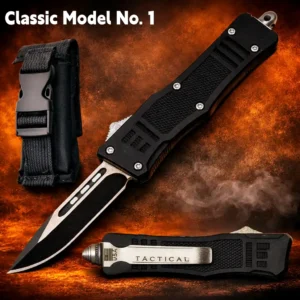
If you are sourcing inventory for resale, it can also be useful to look at the overall blade construction before placing a larger order. A well-made serrated knife often creates better customer satisfaction because it performs longer and feels more dependable in hand. For buyers reviewing product lines, the OTF and automatic knife wholesale category can be a useful place to compare blade styles, build quality, and handle designs across different use cases.
Common mistakes people make with serrated blades
Sharpening a serrated knife is more forgiving than many people think, but a few mistakes can shorten the life of the blade or reduce cutting performance.
- Using a flat stone on the whole edge: This can grind down the points and change the original serration shape.
- Over-sharpening every tooth: Removing too much metal can weaken the blade and shorten its lifespan.
- Ignoring the flat side: Some serrated knives are sharpened mostly from one side, but the flat side still matters for edge alignment.
- Skipping cleaning first: Debris in the serrations can make the blade seem duller than it really is.
- Forcing the tool: Rushing the process can create uneven teeth and inconsistent cutting.
For store buyers and distributors, these mistakes matter because customers often judge the knife by its first few uses after purchase. If a serrated blade is difficult to maintain or easy to damage, returns and complaints become more likely. That is one reason many wholesale buyers prefer products with straightforward care requirements and clear product descriptions.
What a good serrated knife should offer buyers
If you are choosing serrated knives for retail shelves or bulk inventory, focus on the features that make maintenance and long-term use easier. A good serrated knife should feel balanced, cut cleanly, and be made from materials that hold up under regular use.
- Quality steel: Better steel usually means better edge retention and more predictable sharpening.
- Comfortable handle: A secure grip helps with control during everyday use and maintenance.
- Consistent serrations: Uniform teeth are easier to sharpen and perform more evenly.
- Practical blade length: The right size depends on the customer’s intended use, from food prep to utility tasks.
- Simple care instructions: Buyers appreciate products that are easy to clean, store, and maintain safely.
For B2B customers, these details can influence sell-through just as much as price. A knife that is easy to maintain often has better long-term appeal than a cheaper item that dulls quickly and frustrates end users.
How to keep a serrated knife cutting longer
Sharpening is only part of the story. Regular care can delay the need for major maintenance and help the blade stay effective between touch-ups. Clean the blade after use, dry it fully, and store it in a way that protects the edge from impact. Avoid using a serrated knife on materials it was not meant for, since that can round off the teeth faster.
It also helps to inspect the edge periodically. If the knife still cuts but feels less aggressive, a light touch-up may be enough. Waiting until the blade is severely dull usually means more work later. For businesses that supply knives to customers, including basic care guidance can improve the user experience and reduce dissatisfaction.
When to choose a professional sharpening service
Professional sharpening can be a smart choice when the serrations are uneven, the blade is expensive, or the owner wants consistent results without trial and error. A good sharpener can preserve the original profile better than an inexperienced hand with a generic sharpening tool.
This is especially useful for buyers handling premium inventory, specialty tools, or gift-grade knives. If the product is positioned as a higher-end item, serviceability becomes part of the value. Customers often expect a quality knife to last, and they appreciate knowing it can be maintained rather than discarded.
Practical FAQ
Can a serrated edge knife be sharpened with a regular sharpener?
Usually not very well. A regular sharpener is designed for straight edges and can damage the shape of the serrations. A tapered tool or a professional sharpening service is typically a better choice.
Do serrated knives stay sharp longer than straight-edge knives?
Often, yes. Serrated blades can keep cutting effectively for a longer period because the points do much of the work. However, when they do dull, they are more specialized to restore.
How do I know if my serrated knife needs sharpening?
If it starts tearing instead of cutting, requires more pressure, or struggles with materials it used to handle easily, it may be time for a touch-up.
Is it better to sharpen or replace a cheap serrated knife?
If the blade is very low cost, badly worn, or damaged, replacement may be more practical. If the knife is sturdy and comfortable, sharpening can extend its useful life.
Are there legal concerns with owning or selling serrated knives?
Rules vary by location and product type. Buyers and sellers should verify local laws and any age, display, storage, or shipping requirements before stocking or purchasing knives.
Final thoughts for buyers and resellers
A serrated edge knife can absolutely be sharpened, but the process is more precise than sharpening a straight blade. For end users, that means a little more care and the right tool. For retail buyers and wholesale customers, it means choosing products that balance cutting performance, durability, and maintainability.
If you are comparing inventory for a store, online shop, or distribution channel, it pays to think beyond the initial sale. Knives that hold up well, sharpen cleanly, and feel dependable in everyday use usually create better customer satisfaction. For wholesale questions or product sourcing, you can also send a wholesale inquiry to discuss available options and ordering needs.