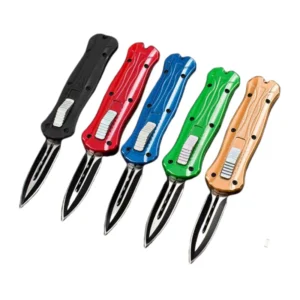


Can Sand Damage an OTF Knife?


Short answer
Yes, sand can damage an OTF knife by contaminating the internal track, spring, and lock parts. Learn what is normal, what is a warning sign, and what safe check
Key Takeaways
- Start with a mild method and increase pressure or abrasion only when the blade condition requires it.
- Edge angle, steel type, corrosion level, and handle material all affect the right care method.
- For wholesale assortments, simple care instructions help customers keep knives useful longer.
Terms Used Here
- OTF
- Out-the-front; a knife design where the blade moves forward from the front of the handle.
In this article
- 01 Why sand is a bigger problem for OTF knives than for many side-openers
- 02 Normal behavior vs defect indicators after sand exposure
- 03 What sand actually does inside the mechanism
- 04 1. Friction in the blade path
- 05 2. Abrasion on moving and locking surfaces
- 06 3. Obstruction in the switch or spring system
- 07 Safe first-step checks you can do without opening the knife
- 08 What not to do with a sandy OTF
- 09 When to stop troubleshooting and send it for service
- 10 FAQ
- 11 Can one trip to the beach ruin an OTF knife?
- 12 Is a little blade play after sand exposure normal?
- 13 Should I add more lubricant if the knife feels gritty?
- 14 Can compressed air fix a sandy OTF?
- 15 What is the clearest sign that sand has caused real damage?
Yes. Sand can damage an OTF knife because the knife’s blade rides through a narrow internal track, and grit can interfere with the spring, firing button, lockup surfaces, and carrier. A little roughness after beach or pocket exposure is possible, but repeated misfires, grinding, or a button that sticks are warning signs, not normal behavior.
Quick triage:
- Normal: slightly gritty button feel, one hesitant deployment after obvious dust exposure, light cosmetic scratching on the blade finish.
- Maybe: deployment feels slower than usual, retraction needs extra thumb pressure on the switch, faint scraping sound from inside the handle.
- Stop-use: repeated failure to lock open or closed, blade comes off track, strong grinding, button jams, or visible chips/wear on the blade tang or lock faces.
Why sand is a bigger problem for OTF knives than for many side-openers
An OTF knife has less tolerance for grit because its mechanism depends on straight-line travel inside the handle. In a typical double-action OTF, the thumb slide moves a carrier that tensions and releases the spring system, sending the blade forward or back along internal rails or a track. The blade then engages lockup points at the open or closed position.
Sand causes trouble because those parts work with small clearances. The exact parts most often affected are the thumb slide, carrier, blade track or rails, spring, blade tang, and lock faces. Fine grit can act like a brake, while coarse grit can act like an abrasive. In plain terms, the knife may still fire, but each cycle can grind contamination into the moving surfaces.
This is why an OTF that feels only “a little dirty” can get worse fast if it is repeatedly opened and closed with sand inside. The damage risk is not just jamming. It is wear on the parts that control travel and lockup.
Normal behavior vs defect indicators after sand exposure
Not every rough-feeling OTF is permanently damaged. The key is to separate temporary contamination from actual wear or a developing mechanical fault.
- Usually normal after light exposure: the switch feels dry or slightly scratchy, the first deployment is sluggish, or a tiny amount of dust falls out of the handle opening.
- Possible contamination issue: the blade deploys but does not hit full lock once, then works after careful cleaning; the switch travel feels uneven; the blade has side-to-side play that seems worse than before.
- Likely damage or service issue: repeated misfires after debris is removed, blade tip or edge contacting the inside of the handle, lockup becoming inconsistent, or the blade derailing from its normal path.
Three observable signs help distinguish common causes:
- Grinding noise plus slow travel usually points to grit in the track, carrier, or switch channel.
- A hard stop before full open or closed lock may mean debris is blocking the blade tang or lock faces.
- Normal speed but unreliable lockup can suggest wear or contamination at the engagement surfaces, not just a weak spring feeling.
- Button sticks but blade path feels free often points to debris in the thumb slide channel rather than the blade track itself.
A useful rule: one odd cycle after obvious dirt exposure can happen; a pattern of failures is a warning sign.
What sand actually does inside the mechanism
Sand affects OTF knives in three main ways: friction, abrasion, and obstruction.
1. Friction in the blade path
Fine grit increases drag between the blade and the internal track. That can slow the blade enough that it does not fully seat into the open or closed lock position. On a double-action OTF, that often feels like a weak fire, but the real issue is lost energy from friction.
2. Abrasion on moving and locking surfaces
Repeated cycling with sand inside can wear the finish and the metal itself at the blade tang, carrier contact points, and lock faces. This is more serious than a dirty feel because wear changes how parts fit together. Once those surfaces wear unevenly, the knife may keep misfiring even after it is clean.
3. Obstruction in the switch or spring system
Coarser particles can lodge in the thumb slide channel or around internal moving parts. That can make the switch feel sticky, prevent full travel, or keep the spring-driven sequence from completing cleanly.
Saltwater beach sand is especially unfriendly because it combines grit with corrosion risk. Even stainless-bladed OTF knives can suffer if salty residue remains inside the handle.
Safe first-step checks you can do without opening the knife
For most owners, the safe approach is external inspection and basic debris removal only. Many makers state in their manuals that disassembly by the user can affect warranty coverage, and lubrication type or amount should follow the maker’s instructions rather than guesswork. If your brand provides a manual, use that as the controlling guidance.
Start with this checklist:
- Unload the environment, not the knife: move away from the sand source so you do not add more grit during inspection.
- Check the switch travel: with the knife in a safe direction, feel whether the thumb slide moves evenly or catches at one point.
- Inspect the handle openings: look for visible grit near the blade exit, switch channel, and seams.
- Do a limited function check: one careful deploy and retract is enough to confirm the symptom. Do not keep cycling a gritty knife.
- Use maker-approved basic cleaning only: if the manual allows it, use non-invasive cleaning such as compressed air or a rinse method specifically described by the manufacturer. Dry thoroughly as instructed.
- Re-test once: if the symptom clears, monitor it. If it persists, stop and arrange service.
If you are comparing options before buying, a broad OTF knife catalog can help you see how different handle constructions and switch designs vary, but cleaning and service should still follow the specific maker’s manual for the exact model in hand.
What not to do with a sandy OTF
Some common “fixes” make the problem worse.
- Do not keep firing it to “shake the sand out.” That can grind grit into the track and lock surfaces.
- Do not flood it with random oil or grease. Many lubricants trap grit, and some makers recommend very little lubricant or a specific product only.
- Do not force the switch. Extra thumb pressure can damage the slide, internal actuator parts, or spring sequence.
- Do not disassemble it unless the maker explicitly allows owner disassembly. Many OTF manuals direct owners to factory service for internal issues, and unauthorized disassembly may void warranty support.
- Do not use picks, blades, or metal tools inside the blade opening. It is easy to mar the track or lock faces.
The short version: if sand is inside, less cycling and less improvisation is usually safer.
When to stop troubleshooting and send it for service
Stop home checks and seek maker or qualified service if any of the following are true:
- The knife repeatedly fails to lock open or closed after basic external cleaning allowed by the manual.
- The blade fires off-track, rubs the handle, or shows new uneven scratches near the tang or spine.
- The switch jams or does not return normally.
- You hear loud grinding or feel a hard obstruction.
- The knife was exposed to wet sand or saltwater and now shows corrosion, discoloration, or persistent roughness.
Service is the right move when the problem has likely moved from contamination to wear, misalignment, or internal damage. If you need a source for larger orders or private-label planning later, you can use the wholesale inquiry form, but for a sandy knife already in use, the priority is proper maker-guided cleaning or service, not more testing.
FAQ
Can one trip to the beach ruin an OTF knife?
Not necessarily. Light sand exposure may cause temporary roughness only. The bigger risk comes from repeated cycling while grit is inside the handle.
Is a little blade play after sand exposure normal?
Some OTF knives have a normal amount of blade play by design. What matters is change. If play suddenly becomes worse after sand exposure, especially with misfires or scraping, treat that as a warning sign.
Should I add more lubricant if the knife feels gritty?
Only if the maker’s manual recommends a specific lubricant and method. Extra oil can hold grit in the mechanism and make the problem worse.
Can compressed air fix a sandy OTF?
Sometimes, if the contamination is light and the maker allows it. Compressed air can help remove loose grit, but it will not undo wear already caused by abrasive particles.
What is the clearest sign that sand has caused real damage?
Repeated failure to lock, off-track blade movement, or persistent grinding after approved basic cleaning are the clearest signs that the issue is beyond simple dirt.