

How to Remove Lint From an OTF Knife Safely


Short answer
Use short bursts of compressed air and a soft dry brush to remove lint from an OTF knife. Learn the safest steps, what to avoid, and when to stop and get servic
Key Takeaways
- Knife rules can vary by state, city, blade style, opening mechanism, carry method, and intended use.
- Do not treat a product nickname as a legal category; check the actual features and local rule.
- Retailers should keep legal or safety language factual and avoid promising that one item is allowed everywhere.
Terms Used Here
- OTF
- Out-the-front; a knife design where the blade moves forward from the front of the handle.
- Folding knife
- A knife with a blade that pivots into the handle for storage.
In this article
- 01 Quick answer
- 02 Safe step-by-step lint removal
- 03 Compact decision checklist
- 04 What not to do
- 05 When to stop and get service
- 06 Brief FAQ
- 07 Can I use canned air on an OTF knife?
- 08 Should I oil my OTF after removing lint?
- 09 Why does my OTF still misfire after I cleaned out the lint?
- 10 How often should I remove lint from an OTF knife?
Use short bursts of compressed air and a soft dry brush around the blade opening and slider; if the knife still misfires or the button binds, stop and seek service rather than adding oil.
Here is the concrete rule: if your OTF opens and retracts normally and you only see fuzz around the handle opening or slider, a simple dry cleanout is usually fine. If it has repeated misfires, a sticky actuator, weak blade travel, or the blade stops short of full lockup, remove only surface lint and stop there.
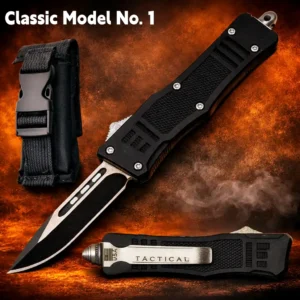
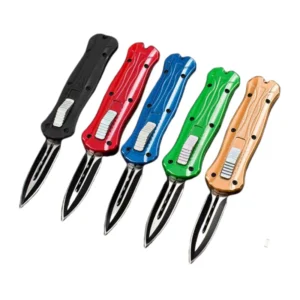
OTF knives collect lint differently from folding knives because the blade runs through a narrow internal channel. Pocket fibers, dust, and oily residue can build up at the mouth of the handle, around the slider track, and along the blade path. That means the fastest safe fix is usually a careful dry cleaning, not a teardown and not more lubricant.
Quick answer
For routine pocket lint, use canned compressed air or another source of clean, dry compressed air in short bursts, then loosen visible debris with a soft dry brush. Hold the knife pointed away from your face and keep fingers clear of the blade path. Cycle it a few times only after visible lint is cleared from the opening and slider area.
DIY cleaning is generally fine when:
- you can see lint at the blade opening or around the slider
- the knife still fires with normal speed and lockup
- the button feels mostly normal, not hard-bound
- there is no grinding, impact damage, or bent blade tip
Stop DIY and get service if any of these are present after one cleaning pass:
- repeated misfires on extension or retraction
- button binding that does not improve
- blade travel that feels weak or stops before full lockup
- metal-on-metal scraping, visible damage, or problems that started after a drop
One model-agnostic note: always check your knife maker’s cleaning and warranty instructions first. Manufacturer guidance overrides generic advice, especially if the brand restricts disassembly, certain solvents, or lubrication types.
Safe step-by-step lint removal
This method is meant for normal carry debris, not for impact damage or major internal contamination. You do not need to disassemble a working OTF just to remove lint.
- Set up a safe work area. Work over a clean table in good light. Point the knife away from yourself and others. Keep your hands clear of the blade slot and opening path.
- Check the easy-access areas first. Look closely at the handle mouth, the exposed base of the blade, and the slider track. Most lint buildup you can safely address will be visible there.
- Use compressed air correctly. Use short bursts, not a long continuous blast. Keep the nozzle a short distance away rather than pressing it into the opening. For most users, that means canned air held upright and used briefly so it blows out loose fibers without forcing debris deeper. Blow across the blade opening and around the slider track from a couple of angles.
- Brush only the accessible lint. Use a clean, soft dry brush, such as a small nylon detailing brush or soft toothbrush. Sweep away fuzz at the opening and around the actuator. Do not jab the brush deep into the handle.
- Wipe the exposed blade base. If lint is clinging near the exposed portion of the blade, wipe it with a dry microfiber cloth or other lint-free cloth. Keep the cloth out of the internal channel.
- Deal with sticky residue carefully. If the lint has mixed with excess oil and formed dark sludge near the opening, use a very small amount of knife-safe cleaner on a cloth or swab and clean only the accessible area. A little is enough. Let it dry fully before testing the action.
- Cycle and recheck. Open and retract the knife a few times. The slider should feel smooth and the blade should extend and retract with normal speed and positive lockup. If it does, stop. More cleaning is not better once normal function returns.
The reason this dry-first method works well on OTF knives is geometry. The opening and slider area are the main entry points for lint during pocket carry, especially in denim, fleece, and workwear pockets. Clearing those zones often solves the problem without disturbing the mechanism.
Compact decision checklist
| What you see or feel | What to do |
|---|---|
| Visible fuzz at handle opening, normal firing, normal slider feel | Use compressed air and a soft dry brush |
| Light sluggishness after pocket carry, no repeated failures | Do one careful dry cleaning pass and retest |
| Black sticky residue near opening | Clean accessible residue lightly; do not add more oil |
| Repeated misfires, hard button bind, weak lockup, scraping noise | Stop DIY and seek service |
What not to do
Most OTF cleaning mistakes come from trying to fix a small lint issue with aggressive methods. Avoid these:
- Do not flood the handle with oil. Excess lubricant is one of the main reasons lint turns into paste. If the knife is already sluggish, more oil often makes it worse.
- Do not use long continuous blasts of canned air with the nozzle jammed into the opening. That can push debris farther inside instead of clearing it.
- Do not probe inside with picks, wire, needles, or another blade. Internal rails and locking surfaces can be scratched or damaged.
- Do not push cotton swabs deep into the handle. Cotton fibers can shed and become new debris.
- Do not disassemble a working knife just for lint. Many OTFs are not intended for casual teardown, and opening them may complicate warranty or reassembly.
- Do not keep cycling a knife that is clearly misfiring. If the blade repeatedly stops short or the actuator binds, repeated firing is not a cleaning method.
A good rule is this: if compressed air and a dry brush do not restore normal action, the next step is diagnosis or service, not stronger solvent, more oil, or deeper poking around.
When to stop and get service
Lint is common. Mechanical faults are less common, but they need a different response. Stop after one sensible cleaning pass if the knife still shows OTF-specific symptoms such as:
- Repeated double-action misfires on opening or closing
- Slider binding or failing to return smoothly
- Blade stopping short before full extension or retraction
- Weak lockup feel after visible lint has been removed
You should also stop if the problem started after a drop, if you hear metallic scraping, if the blade tip is bent, or if the knife has visible body damage. Those signs point beyond routine lint removal.
If your brand provides service or warranty instructions, follow those rather than improvising. Generic OTF cleaning advice is useful for surface lint, but brands can differ on approved cleaners, lubrication, user disassembly, and service intervals. If you are comparing replacement options, you can browse the OTF knife catalog. If you need product support at account level, the wholesale inquiry form is available, but routine lint removal usually does not require that step.
Brief FAQ
Can I use canned air on an OTF knife?
Yes. Use clean, dry canned air in short bursts, held a short distance from the opening. Keep the can upright and avoid prolonged spraying.
Should I oil my OTF after removing lint?
Only if the manufacturer specifically recommends it, and then only sparingly. For many lint-related issues, more oil makes the problem worse.
Why does my OTF still misfire after I cleaned out the lint?
If one dry cleaning pass does not restore normal action, the issue may be deeper contamination, wear, damage, or another internal fault. That is the point to stop DIY cleaning.
How often should I remove lint from an OTF knife?
It depends on carry conditions. Knives carried loose in denim, fleece, or dusty workwear usually need more frequent visual checks and occasional air cleanouts than knives carried in cleaner pockets or stored between uses.