

How to Sharpen a Fleshing Knife: A Practical Guide for Clean, Even Cuts


Short answer
Learn how to sharpen a fleshing knife with safe, practical steps, common mistakes to avoid, and buying tips for shops, resellers, and wholesale buyers.
Key Takeaways
- Knife rules can vary by state, city, blade style, opening mechanism, carry method, and intended use.
- Do not treat a product nickname as a legal category; check the actual features and local rule.
- Retailers should keep legal or safety language factual and avoid promising that one item is allowed everywhere.
Terms Used Here
- OTF
- Out-the-front; a knife design where the blade moves forward from the front of the handle.
- Automatic knife
- A knife that opens by a spring-driven mechanism after the user activates a button, switch, or slider.
- Sheath
- A protective cover used to store or carry a knife safely.
In this article
- 01 What makes a fleshing knife different
- 02 Before you sharpen: inspect the blade first
- 03 How to sharpen a fleshing knife step by step
- 04 1. Establish the angle
- 05 2. Work the full edge evenly
- 06 3. Remove the burr carefully
- 07 4. Finish with a finer surface
- 08 5. Test the edge safely
- 09 Common sharpening mistakes to avoid
- 10 How often should a fleshing knife be sharpened?
- 11 What buyers should look for in a quality fleshing knife
- 12 Safety and storage matter after sharpening
- 13 Practical FAQ
- 14 Can I sharpen a fleshing knife with a regular sharpening stone?
- 15 Should the edge be razor sharp?
- 16 What if the blade has small nicks?
- 17 How do I know when the knife is ready?
- 18 Is it worth buying in bulk for a store or reseller business?
- 19 Final thought
The best way to sharpen a fleshing knife is to keep the edge flat, even, and consistent from heel to tip, then finish it with a fine stone or strop so it glides smoothly instead of tearing. A fleshing knife does its best work when the blade is sharp but controlled, because the goal is clean, even contact rather than a slicing edge that bites too aggressively. If your knife is dragging, skipping, or leaving uneven results, it is time to restore the edge before it becomes harder to use and more frustrating to maintain.
What makes a fleshing knife different
A fleshing knife is not sharpened like a kitchen knife or a pocket blade. It is usually a broad working tool designed for controlled scraping and smoothing, so the edge needs to stay uniform across a wider surface. Many users prefer a slight working edge rather than a razor-thin finish, because an overly aggressive edge can catch, chatter, or wear too quickly. The right sharpness depends on the material you are working with and the style of the blade, but the common goal is the same: consistent performance and less effort during use.
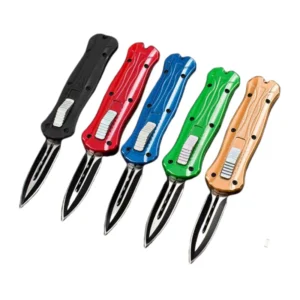
If you buy tools for a shop, resale business, or distribution program, it helps to compare blade thickness, steel quality, and handle comfort before you stock them. For buyers looking at related inventory, the OTF and automatic knife wholesale category can be useful for understanding how blade materials and construction vary across product lines.
Before you sharpen: inspect the blade first
Before you start sharpening, take a close look at the knife. A dull blade is often only part of the problem. Nicks, bends, rust spots, and uneven wear can all affect the result. If the edge has visible damage, you may need more than a quick touch-up.
- Check for chips: Small nicks can be removed with careful stone work, but larger damage may require more time.
- Look for rust or pitting: Surface corrosion can make sharpening inconsistent if it is not cleaned first.
- Confirm the blade shape: A fleshing knife should stay even across the working edge, so watch for flat spots or warping.
- Clean the blade: Remove residue, oil, and debris so you can see the true edge.
For wholesale buyers, this inspection step matters because returned or poorly maintained stock often reflects on the seller. A quick quality check before display or shipment helps reduce complaints and keeps customers satisfied.
How to sharpen a fleshing knife step by step
Use a stable work surface, good lighting, and a sharpening method that lets you control the full length of the blade. The exact tool can vary, but a medium stone followed by a finer stone or finishing surface is a dependable approach for many blades.
1. Establish the angle
Hold the blade at a consistent angle that matches its original edge. Many users make the mistake of steepening the angle too much, which can create a thicker edge that does not perform well. If the knife already has a factory bevel, follow that shape instead of forcing a new one.
2. Work the full edge evenly
Move the blade across the stone in smooth, controlled passes. Keep pressure light to moderate and try to cover the entire edge from one end to the other. Uneven pressure creates an edge that feels sharp in one section but dull in another. For a wide blade, consistency matters more than speed.
3. Remove the burr carefully
As you sharpen, a small burr may form on the opposite side of the edge. That is normal, but it should be reduced before finishing. Flip the blade and make lighter passes to even out the edge. If you skip this step, the knife may feel sharp at first and then lose performance quickly.
4. Finish with a finer surface
Once the edge is shaped, use a finer stone, honing surface, or strop to refine it. This final step helps the knife cut more smoothly and reduces roughness along the edge. The finish does not need to be mirror-perfect, but it should feel clean and consistent.
5. Test the edge safely
Test the knife on suitable material or by checking how evenly it contacts the surface. Avoid careless handling and always follow basic safety practices. A good edge should feel controlled, not overly grabby. If the blade still pulls unevenly, return to the stone and correct the problem before use.
Common sharpening mistakes to avoid
Many sharpening problems come from rushing the process or using the wrong technique. A fleshing knife is a working tool, so a little patience goes a long way.
- Changing the angle too often: This can create a rounded or inconsistent edge.
- Pressing too hard: Heavy pressure can remove too much metal and shorten blade life.
- Ignoring the whole edge: A knife that is sharp in the middle but dull at the ends will not perform well.
- Skipping cleaning: Dirt and residue make it harder to maintain a true edge.
- Over-sharpening: A blade that is made too thin may feel fragile and wear out faster.
For retail buyers and resellers, these are also the issues that lead to disappointing customer reviews. A clear care guide can reduce returns and help customers get better results from the first use.
How often should a fleshing knife be sharpened?
There is no single schedule that fits every user. Frequency depends on use, blade steel, storage conditions, and the material being worked. Some blades need only occasional touch-ups, while others benefit from regular maintenance after heavy use. The best rule is to sharpen when the knife starts to drag, requires extra force, or leaves inconsistent results.
If your business supplies tools to farms, shops, or outdoor users, it is worth recommending routine inspection rather than waiting for major wear. Preventive maintenance usually costs less than replacing a badly damaged blade.
What buyers should look for in a quality fleshing knife
If you are sourcing knives for wholesale or resale, sharpening performance should be part of the buying decision. A blade that is easy to maintain can save time for end users and create better satisfaction over the long term.
- Steel quality: Look for steel that balances edge retention with practical sharpening.
- Blade geometry: A uniform edge and stable profile make maintenance easier.
- Finish and fit: Smooth construction helps reduce handling problems and uneven wear.
- Handle comfort: A secure grip matters when sharpening, cleaning, and storing the tool.
- Consistent supply: Wholesale buyers benefit from dependable stock and repeatable product quality.
If you are building a catalog or planning a larger order, you can send a wholesale inquiry to discuss availability and sourcing options that fit your business.
Safety and storage matter after sharpening
Once the blade is sharpened, store it properly so the edge stays in good condition. A sharp tool should always be handled with care, kept clean and dry, and stored where it will not strike other metal objects. Use a sheath, wrap, or dedicated storage area when appropriate. For businesses, clear labeling and safe packaging also help reduce damage during shipping and handling.
General knife laws and ownership rules can vary by location, so verify local requirements before buying, carrying, or shipping any blade product. Responsible storage and lawful use should always come first.
Practical FAQ
Can I sharpen a fleshing knife with a regular sharpening stone?
Yes, in many cases a regular stone works well as long as you maintain the blade’s original angle and keep the edge even. For finishing, a finer stone or strop can help improve smoothness.
Should the edge be razor sharp?
Not always. A fleshing knife often works best with a controlled working edge that is sharp enough to perform cleanly without becoming too fragile. The ideal finish depends on the blade design and intended use.
What if the blade has small nicks?
Small nicks can often be smoothed out with patient stone work. If the damage is significant, it may take more time and material removal than a simple touch-up.
How do I know when the knife is ready?
The knife should move smoothly, feel even across the edge, and no longer drag or skip during use. A consistent result matters more than a flashy finish.
Is it worth buying in bulk for a store or reseller business?
Yes, if you have steady demand and want dependable pricing and supply. Wholesale purchasing can make sense for retailers, distributors, and online sellers who want to keep inventory available without frequent reordering.
Final thought
Sharpening a fleshing knife is mostly about control, consistency, and patience. Start with a clean blade, maintain the original edge angle, remove burrs carefully, and finish with a fine touch so the knife performs smoothly. Whether you are maintaining your own tools or selecting products for resale, a well-made blade that sharpens predictably is easier to trust, easier to sell, and easier to keep in service.