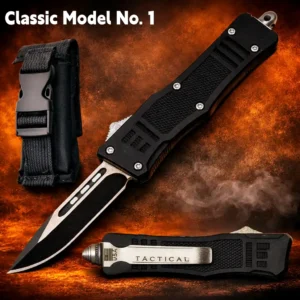


Is Real Damascus Worth It for an OTF Automatic Knife?


Short answer
Real Damascus is usually worth it on an OTF knife for looks, collectibility, and gifts—not for maximum performance per dollar. Learn how real Damascus differs f
Key Takeaways
- Knife rules can vary by state, city, blade style, opening mechanism, carry method, and intended use.
- Do not treat a product nickname as a legal category; check the actual features and local rule.
- Retailers should keep legal or safety language factual and avoid promising that one item is allowed everywhere.
Terms Used Here
- OTF
- Out-the-front; a knife design where the blade moves forward from the front of the handle.
- Automatic knife
- A knife that opens by a spring-driven mechanism after the user activates a button, switch, or slider.
- Fixed blade
- A knife with a blade that does not fold or retract into the handle.
- Damascus
- A patterned steel style often chosen for appearance as well as blade character.
- EDC
- Everyday carry; gear intended for regular daily tasks.
In this article
- 01 What “real Damascus” means on an OTF knife
- 02 The strongest reason to choose it, and the strongest reason to skip it
- 03 When real Damascus is worth it on an OTF
- 04 1. Collector carry
- 05 2. Gift buying
- 06 3. Light-duty EDC with realistic expectations
- 07 When it usually is not worth it
- 08 Hard-use utility
- 09 Humid or neglect-prone carry
- 10 Buyers who want simple sharpening and predictable behavior
- 11 Damascus vs realistic OTF alternatives
- 12 One OTF-specific mistake to avoid
- 13 How to tell if the premium is justified
- 14 Care basics for a Damascus OTF
- 15 Quick verdict
- 16 FAQ
- 17 Does real Damascus make an OTF cut better?
- 18 Is all Damascus on OTF knives non-stainless?
- 19 Is Damascus better than M390 for an OTF?
- 20 Can a Damascus OTF be a daily carry knife?
- 21 How can I tell if a Damascus blade is real?
If you are asking whether real Damascus is worth the extra money on an OTF automatic knife, the short answer is this: it is worth it mainly for collectors, gift buyers, and people who care most about appearance. It is usually not worth the premium for hard-use cutting, humid-pocket carry, or low-maintenance daily use.
The main exception is when the knife is being bought as a premium object as much as a tool. In that case, real pattern-welded steel can make an OTF feel more special, more giftable, and more collectible even if it does not clearly outperform a good monosteel blade in everyday cutting.
A practical way to judge “worth it” is by buyer type:
- Collector or gift buyer: usually yes. The visible layered pattern is the main value.
- Regular EDC user: maybe, but only if you are willing to pay more and do a little more maintenance.
- Hard-use user: usually no. A simpler stainless or tool steel blade is often the better buy.
What “real Damascus” means on an OTF knife
On modern knives, “real Damascus” usually means pattern-welded steel: two or more steels are forge-welded, folded or layered, then ground and acid-etched so the pattern becomes visible. That is different from a fake printed or laser-applied pattern on ordinary steel.
There are three common versions buyers should separate:
- Solid pattern-welded Damascus: the whole blade is made from the layered billet.
- Damascus cladding over a core steel: the sides show a Damascus pattern, but the actual cutting edge may come from a core steel such as VG-10 or another monosteel.
- Etched imitation: the blade only looks like Damascus. It may still be a usable knife, but the pattern is cosmetic rather than structural.
That distinction matters because performance comes from the steels used and the heat treat, not from the word “Damascus” by itself. A Damascus-clad blade with a good stainless core can behave very differently from a full non-stainless pattern-welded blade.
Common Damascus pairings vary by maker, but buyers often see combinations built around steels in the 1095/15N20 family for high contrast, or stainless combinations designed to reduce rust risk. Practical guidance, not lab-tested evidence: many high-contrast Damascus mixes are less stainless and more maintenance-sensitive than buyers expect. If the seller cannot tell you the steel pairing, be cautious about assuming high corrosion resistance.
The strongest reason to choose it, and the strongest reason to skip it
Strongest reason to choose it: real Damascus gives an OTF a premium visual identity that plain satin, black-coated, or stonewashed blades usually cannot match.
Strongest reason to skip it: you often pay more without getting clearly better edge retention, rust resistance, or ease of ownership.
That tradeoff is especially noticeable on an OTF because the mechanism already adds cost. With a fixed blade or simple folder, a blade-steel upgrade is a bigger share of what you are paying for. With an OTF, you are already paying for the out-the-front action, spring system, button, and internal track. That makes a cosmetic blade upgrade harder to justify if your main goal is practical cutting value.
When real Damascus is worth it on an OTF
1. Collector carry
If you rotate knives, enjoy patterns and finishes, and care about visual uniqueness, real Damascus can absolutely be worth it. An OTF with a well-etched Damascus blade often feels more like a special-piece carry than a pure utility knife.
2. Gift buying
For birthdays, retirements, holidays, or milestone gifts, Damascus makes sense because the buyer is usually paying for presentation and emotional impact. The recipient notices the blade pattern immediately, even if they never compare edge retention charts.
3. Light-duty EDC with realistic expectations
For opening boxes, cutting tape, slicing cord, or handling occasional daily tasks, a Damascus OTF can work perfectly well. The key is accepting that you are paying partly for looks and that maintenance may be less forgiving than with a straightforward stainless blade.
Example: someone carries an OTF mostly for package opening at an office, wipes it down occasionally, and likes premium finishes. That person may get real value from Damascus. Someone who tosses the knife into a sweaty pocket during summer yard work probably will not.
When it usually is not worth it
Hard-use utility
If you cut abrasive material often, touch up the edge regularly, or view the knife as a work tool first, Damascus is usually not the best performance-per-dollar choice. A good monosteel blade is easier to explain, easier to replace, and often easier to maintain.
Humid or neglect-prone carry
If you live in a humid climate, carry in a sweaty pocket, or know you will not wipe and oil the blade occasionally, many Damascus blades are a poor fit. Some stainless Damascus exists, but many buyers do not know which version they are getting. That uncertainty alone can make monosteel the safer buy.
Buyers who want simple sharpening and predictable behavior
Damascus is not automatically difficult to sharpen, but it can be less predictable because the edge behavior depends on the actual steels in the billet or the core. If you want a blade that behaves in a familiar, repeatable way, monosteel is usually the easier path.
Damascus vs realistic OTF alternatives
For most OTF buyers, the useful comparison is not against every premium steel on the market. It is against a few common alternatives.
- Damascus: best for appearance, collectibility, and gift appeal. Performance varies by steel mix and heat treat. Rust risk can range from moderate to high if the billet is not highly stainless.
- D2: often a practical value choice for users who cut a lot and do not mind basic care. Better performance-per-dollar than many Damascus OTFs, but still not highly stainless.
- 440C: often easier for casual owners because it is more forgiving about moisture and storage. A strong option if low drama matters more than premium looks.
- M390: usually the better premium choice for buyers who care first about edge retention and corrosion resistance rather than blade pattern.
In plain terms: if your first question is “Will it stay sharp and resist rust better than a premium stainless steel?” Damascus is often not the best answer. If your first question is “Will this feel special every time I open it?” Damascus is much easier to justify.
One OTF-specific mistake to avoid
A common mistake is paying extra for a Damascus blade, then using the knife in a way that quickly dulls the premium experience: repeated dirty deployment, pocket lint buildup, and storing the blade damp inside the handle channel.
On an OTF, the blade retracts into the handle after use. If you cut cardboard, tape, or dirty material and then close the knife without wiping the blade, you are not just risking spots on the steel. You are also pulling debris and moisture back toward the internal track area. That is not unique to Damascus, but it matters more when the blade finish is one of the reasons you paid more.
Simple fix: if you buy a Damascus OTF, use it for cleaner tasks, wipe it before retraction when practical, and do not leave fingerprints or moisture sitting on the blade for long periods.
How to tell if the premium is justified
Ask these end-user questions, not wholesale questions:
- Am I buying this mainly for looks or mainly for work?
- Do I know whether the Damascus is solid, clad, or just etched decoration?
- Can the seller tell me the actual steel pairing or core steel?
- Am I okay with occasional wipe-downs and light oiling?
- Would I rather put the same money into a better stainless monosteel?
If your honest answer is that you want a striking knife for display, gifting, or light carry, real Damascus can be worth the premium. If you want the easiest ownership experience, it usually is not.
Care basics for a Damascus OTF
Maintenance does not need to be complicated, but it does need to be more deliberate than with some stainless blades.
- Keep it dry: wipe off sweat, fingerprints, and moisture after carry.
- Use light oil when needed: especially if the Damascus is not highly stainless.
- Avoid harsh polishing: aggressive polishing can reduce the etched contrast that makes the pattern visible.
- Do not store it dirty: cardboard dust, tape residue, and pocket moisture are bad companions for any OTF blade.
If you want to compare available models, the OTF knife catalog is the logical place to start. If you later need larger-quantity details, the wholesale inquiry form is available, but most individual buyers should focus first on blade construction and care needs.
Quick verdict
Worth it for collectors and gift buyers; usually not worth the premium for hard-use or low-maintenance EDC. That is the cleanest answer for most shoppers.
FAQ
Does real Damascus make an OTF cut better?
Not automatically. Cutting performance depends on steel composition, heat treat, edge geometry, and use, not on the Damascus pattern alone.
Is all Damascus on OTF knives non-stainless?
No. Stainless Damascus exists, but many Damascus blades are less corrosion-resistant than buyers assume. Always ask what steels are actually used.
Is Damascus better than M390 for an OTF?
Usually not for pure performance. M390 is normally the better choice for buyers who prioritize edge retention and corrosion resistance. Damascus is the better choice for visual appeal and collector interest.
Can a Damascus OTF be a daily carry knife?
Yes, if your daily tasks are light and you are willing to wipe and maintain the blade. It is less ideal for wet, dirty, or neglect-prone carry.
How can I tell if a Damascus blade is real?
Ask whether it is pattern-welded steel, Damascus cladding over a core, or a decorative etched finish. A trustworthy seller should be able to explain the construction clearly.