

Is Zinc Alloy Acceptable for OTF Knives?


Short answer
Zinc alloy is acceptable for some budget OTF knives, but usually a poor choice for hard-use or premium models. Learn when it works, when it does not, and what t
Key Takeaways
- Knife rules can vary by state, city, blade style, opening mechanism, carry method, and intended use.
- Do not treat a product nickname as a legal category; check the actual features and local rule.
- Retailers should keep legal or safety language factual and avoid promising that one item is allowed everywhere.
Terms Used Here
- OTF
- Out-the-front; a knife design where the blade moves forward from the front of the handle.
- Automatic knife
- A knife that opens by a spring-driven mechanism after the user activates a button, switch, or slider.
In this article
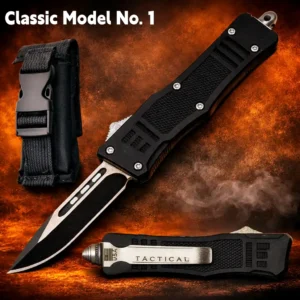
Yes, zinc alloy can be acceptable for OTF knives if the knife is a budget, light-use model.
The caveat is that OTF knives concentrate repeated stress in the handle, slider channel, body screws, and stop points, so zinc alloy usually becomes a poor choice when the knife is expected to handle heavy cycling, impacts, or premium-level durability.
For most users, that means a zinc-alloy OTF can be fine for occasional package opening, casual carry, or novelty appeal. That changes when the knife is fired constantly for fun, dropped on hard surfaces, taken apart repeatedly, or sold as a serious hard-use tool. In an OTF, the handle is not just a grip shell: it also contains the rails, spring-driven action, slider path, and the points that absorb opening and closing shock.
| Use case | Zinc alloy suitability | Main risk | Better alternative |
|---|---|---|---|
| Budget OTF for light cutting and occasional carry | Usually acceptable | Faster wear around screws and slider channel | 6061 aluminum if budget allows |
| Gift, display, novelty, or style-first model | Often acceptable | Cosmetic wear and lower long-term durability | Aluminum for better finish retention |
| Frequent fidgeting or high-cycle deployment | Usually not ideal | Track wear, loosened hardware, rough action | Machined aluminum with steel wear parts |
| Hard-use, duty-style, or premium OTF | Usually not recommended | Cracking, stripped threads, reduced structural confidence | Aluminum or steel frame |
Short answer
Zinc alloy is acceptable for some OTF knives, but only within the right expectations. It works best when cost is the priority and the knife is built for light use. It is usually a weaker answer for premium or high-cycle OTFs because cast zinc alloys tend to have softer threads, lower impact toughness, and less long-term resistance to wear at contact points than good aluminum or steel handles.
The important nuance is that “zinc alloy” is not one single material quality level. Different alloys, casting methods, wall thicknesses, and post-cast machining standards can change the result a lot. A thick, well-cast zinc handle with steel internal wear surfaces may perform acceptably in a low-cost OTF. A thin, porous die-cast handle with shallow screw engagement may feel loose or fail early.
The main tradeoff is simple: zinc alloy lowers cost and allows complex shapes, but often gives up thread strength, impact resistance, and long-term precision in an OTF mechanism.
Zinc alloy best for: entry-level OTFs, light use, and price-sensitive designs.
Zinc alloy not ideal for: hard-use carry, repeated firing, or premium expectations.
When zinc alloy is acceptable
Zinc alloy usually makes sense when the knife is honestly positioned as a budget OTF and the design does not ask too much from the handle material. OTF knives create repeated shock loads when the blade reaches its stop points, and they create constant rubbing where the thumb slider travels. If the high-wear parts are steel and the zinc is mainly acting as an outer chassis, the material can be serviceable.
That is why some lower-cost OTFs feel decent at first and remain usable for casual owners. The handle material itself is not always the only issue; what matters is how much the mechanism relies on that material to hold threads, guide movement, and absorb impact.
Zinc alloy is more acceptable when you see design choices like these:
- Steel liners or steel internal rails so the moving parts do not wear directly on the zinc body.
- Reinforced screw points, such as steel thread inserts or deeper bosses with enough material around them.
- Generous wall thickness around the slider channel, clip mount, and rear end of the handle.
- Clean casting and finish quality without pits, voids, or sharp transitions that can become crack starters.
- Limited-use expectations, meaning the knife is for normal cutting, not for repeated impact, prying, or constant recreational firing.
From a manufacturing standpoint, zinc alloys are popular because they cast easily into detailed shapes and can produce a substantial in-hand feel at low cost. That is a real advantage in budget knives. They also allow decorative contours, textures, and integrated shapes that would cost more to machine from aluminum.
For a plain user question, the practical answer is this: if the knife is inexpensive, the action is reasonably smooth, and the critical wear areas are not bare soft cast metal, zinc alloy is often acceptable.
Aluminum best for: mainstream everyday-carry OTFs that need a better balance of weight, strength, and durability.
Aluminum not ideal for: the absolute lowest-price build targets.
Steel best for: heavy, robust-feeling OTFs where weight is less important.
Steel not ideal for: buyers who want light pocket carry.
When it is not acceptable
Zinc alloy usually stops being a good choice when the knife is expected to survive high cycle counts, rough handling, or repeated disassembly. OTF mechanisms are less forgiving than simple manual folders because the action depends on alignment. Small changes in track wear, screw tightness, or frame distortion can make the knife feel inconsistent long before it fully fails.
Common OTF-specific problems with lower-grade zinc handles include:
- Stripped body-screw threads. Zinc threads are usually softer than threads cut into aluminum or steel. If the knife uses small screws and shallow engagement, overtightening during maintenance can permanently damage the handle.
- Cracks at the rear end or around cutouts. The butt end of an OTF often takes the hit when dropped. Cast zinc can be more brittle on impact, especially around thin corners, lanyard openings, or glass-breaker areas.
- Slider channel wear. If the thumb slide rides directly in a soft cast channel, the action can become gritty, sloppy, or uneven after repeated use.
- Loss of crisp action feel. OTFs already have some blade movement by design. If the handle material wears at stop surfaces or allows hardware to loosen, the knife may start to feel much cheaper than it looked when new.
Those are not abstract concerns. They follow directly from how OTF knives work. Every deployment sends force through the spring system into stop points inside the handle, and every retraction repeats that stress in the opposite direction. If the chassis material does not hold tolerances well, the mechanism often tells you early through roughness, extra play, or loose hardware.
This is why zinc alloy is usually a poor fit for:
- premium OTFs sold on action quality and long-term fit
- users who fire the knife dozens of times a day
- carry conditions with drops, impacts, or pocket abuse
- owners who like to disassemble and tune their knives often
If someone asks whether zinc alloy is acceptable for a serious OTF, the honest answer is usually no. It may function, but it is not the material most experienced buyers choose when durability matters.
What to inspect before buying
Before buying a zinc-alloy OTF, inspect the screw points, slider channel, rear corners, and internal wear interfaces, because those areas usually show whether the knife is merely cheap or actually usable.
Start with the body screws. They should seat cleanly, tighten with a defined stop, and not feel mushy. Soft or inconsistent screw feel can signal weak thread support. Next, cycle the action several times. The slider should move with consistent resistance, without a grinding spot or sudden drag halfway through travel. On an OTF, that kind of roughness often means poor track finish or alignment.
Then look at the handle itself:
- Check for thin sections around the clip mount, butt end, and openings.
- Look for casting flaws such as pits, bubbles, or uneven edges.
- See whether the slider rides on steel-backed parts or directly on the handle material.
- Ask whether the knife uses steel liners, steel rails, or thread inserts.
- After 20 to 30 cycles, see if any screw starts backing out or the action changes.
If you are comparing materials, the safest general rule is still this: for the same overall build quality, aluminum is usually the better all-around OTF handle material, while zinc alloy is the lower-cost compromise. If you want to browse examples of different OTF styles and constructions, the OTF knife catalog is a neutral place to compare formats. If you are sourcing for a business and need model-specific details on handle construction, the wholesale inquiry form is the right place to ask.
FAQ
Does zinc alloy automatically mean a bad OTF?
No. It usually means the knife belongs in the budget category, and whether it is acceptable depends on casting quality, design thickness, and whether steel parts protect the wear areas.
Is zinc alloy worse than aluminum for OTF knives?
Usually yes. Aluminum generally offers better strength-to-weight balance, better thread performance, and better long-term durability in the handle.
What matters more than the label “zinc alloy”?
The big factors are casting quality, wall thickness, screw design, and whether the mechanism rides on steel interfaces instead of directly on soft handle material.
What is true for most users?
For most users, a zinc-alloy OTF is acceptable if it is inexpensive and used lightly. That changes when the knife is expected to be premium, heavily cycled, or hard used.