

Are OTF Knives Reliable?

Short answer
Are OTF knives reliable? Yes, when they are well-made and correctly maintained, but reliability depends heavily on spring quality, track tolerances, debris resi
Key Takeaways
- Knife rules can vary by state, city, blade style, opening mechanism, carry method, and intended use.
- Do not treat a product nickname as a legal category; check the actual features and local rule.
- Retailers should keep legal or safety language factual and avoid promising that one item is allowed everywhere.
Terms Used Here
- OTF
- Out-the-front; a knife design where the blade moves forward from the front of the handle.
- Automatic knife
- A knife that opens by a spring-driven mechanism after the user activates a button, switch, or slider.
- Fixed blade
- A knife with a blade that does not fold or retract into the handle.
In this article
- 01 What makes an OTF knife reliable in real use
- 02 Where OTF knives usually fail or disappoint
- 03 A wholesale reliability checklist for OTF knives
- 04 12-point incoming sample check
- 05 OTF reliability compared with other knife types
- 06 How buyers can reduce reliability complaints after purchase
- 07 Are OTF knives reliable enough for everyday carry?
- 08 Do OTF knives fail more often than manual knives?
- 09 Is blade play normal on an OTF?
- 10 What is the biggest wholesale mistake with OTF knives?
- 11 What should buyers ask a supplier first?
Yes—OTF knives can be reliable for everyday opening and closing when they are well-made, properly maintained, and used within their design limits, but they are generally less tolerant of dirt, misuse, and poor assembly than a simple manual folder or fixed blade.
That short answer matters because “reliable” means different things to different buyers. A retailer may mean low return rates. A distributor may mean consistent lockup across a production run. A private-label buyer may mean fewer spring failures after months in inventory and customer use. For OTF knives, reliability is not just about whether the blade fires hard on day one. It is about repeatable deployment, stable retraction, acceptable blade play for the design, resistance to pocket lint and grit, and safe behavior when the mechanism does not complete its cycle.
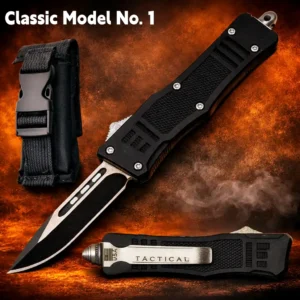
In wholesale reality, the biggest mistake is treating all OTFs as one category. A sample that feels impressive out of the box can still become a returns problem if the switch is rough, the internal track is poorly finished, or the spring loses consistency after repeated cycling. Buyers who want a clearer picture should compare multiple pieces from the same lot, not just one hand-picked sample. If you are reviewing current models, it helps to compare sizes and configurations in an OTF knife catalog instead of assuming one mechanism standard fits every SKU.
What makes an OTF knife reliable in real use
Reliable OTF performance comes from a small group of factors that are easy to describe and harder to manufacture well.
- Consistent spring energy: The spring must have enough force to deploy and retract the blade without feeling overstressed. Weak or inconsistent springs often show up first as intermittent misfires.
- Clean internal track geometry: The blade rides in channels. Rough machining, burrs, or uneven coating in those channels can create drag and early wear.
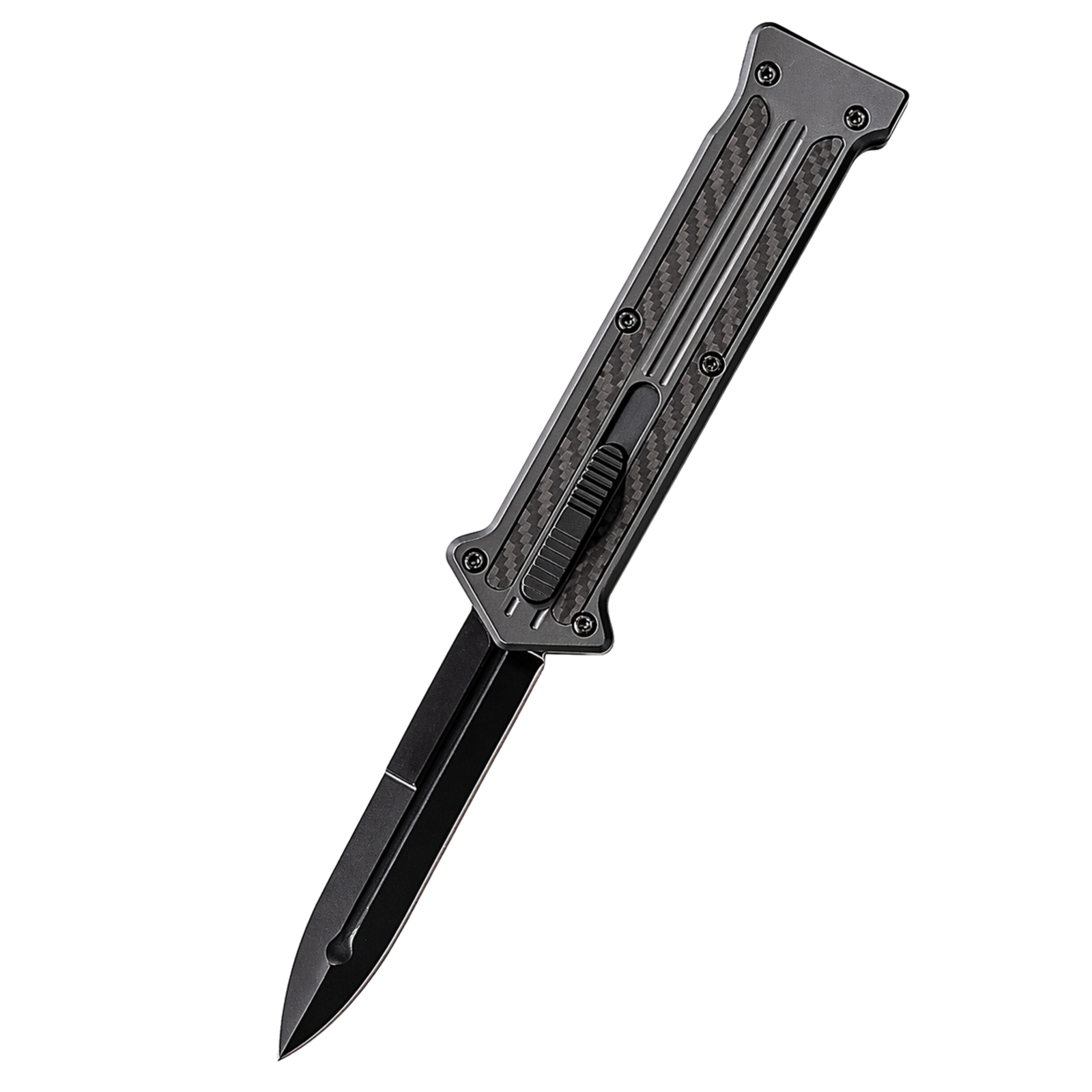
- Well-fitted firing button: The switch should move with deliberate resistance, not gritty scraping or side-to-side slop. A poor switch often predicts future complaints.
- Reasonable lockup for the design: OTF knives typically have some blade play. The question is whether the play is controlled and consistent, not whether it is zero.
- Tolerance to lint and debris: OTFs live in pockets. Pocket lint, dust, and fine grit are common causes of sluggish action. Better designs usually handle light contamination better before needing cleaning.
- Proper heat treatment and blade finish: Reliability includes edge stability and corrosion resistance, especially for inventory that may sit in storage before retail sale.
A useful rule for buyers is this: a reliable OTF should feel repeatable, not dramatic. Flashy opening force is less important than 50 to 100 cycles with the same feel, the same reset, and no unexplained hesitation.
Where OTF knives usually fail or disappoint
Most OTF complaints are predictable. They usually come from contamination, unrealistic use, or cost-cutting in the mechanism.
- Misfires during deployment or retraction: This can happen when debris increases friction, when spring force is marginal, or when the user partially rides the switch. Many OTFs are designed so the blade does not fully lock if it meets resistance. That is a safety-related behavior, but it still becomes a customer-service issue if buyers expected fixed-blade certainty.
- Switch wear or roughness: A firing button that starts smooth but quickly becomes gritty often points to poor finishing or premature wear inside the chassis.
- Excessive blade play: Some movement is normal in many OTF designs. Excessive rattle, inconsistent lockup, or movement that worsens quickly can indicate poor fit.
- Spring fatigue or breakage: This is one of the most important wholesale concerns. It may not appear in a short sample review. It shows up after repeated cycling, poor storage conditions, or inconsistent spring sourcing.
- Body screws backing out: Fastener quality matters. Loose hardware can change the feel of the action and create returns that look like “mechanism failure” even when the root cause is assembly control.
Another common disappointment is using an OTF as if it were a pry tool or hard-use utility knife. OTF knives are best judged as precision automatic cutting tools. They can be very dependable for opening packages, light-duty cutting, and carry convenience, but buyers should be cautious about marketing them as abuse-tolerant tools.
A wholesale reliability checklist for OTF knives
Here is a practical checklist that is specific to OTF evaluation. It works for importers, house-brand buyers, and retailers deciding whether a model is worth stocking.
12-point incoming sample check
- Cycle test: Run each sample through at least 50 open-close cycles. Watch for any change in sound, button effort, or lockup.
- Cross-sample consistency: Test at least 3 to 5 units from the same production batch, not one golden sample.
- Dry contamination check: After normal carry simulation, inspect how the action handles light lint exposure. Do not deliberately pack the chassis with debris, but do note whether light contamination immediately affects function.
- Switch feel: Confirm the button is firm and repeatable, with no scraping, sharp edges, or sudden binding.
- Blade centering in track: Look for rubbing marks, uneven finish wear, or signs the blade is contacting the chassis.
- Lockup consistency: Check blade play open and closed. Accept that some play may be normal, but compare unit to unit.
- Fastener retention: Inspect body screws after cycling. Any movement this early is a warning sign.
- Edge and tip inspection: Make sure the blade geometry is clean and the tip is not overly fragile for the intended market.
- Surface finish: Coating overspray or rough anodizing inside contact areas can hurt long-term reliability.
- Reset behavior after interrupted deployment: If the blade is stopped by harmless resistance, confirm the mechanism can be safely reset according to the design.
- Packaging and storage condition: Poor packaging can lead to cosmetic damage, moisture exposure, or spring stress during long transit and warehousing.
- Spare parts and support path: Before committing to volume, confirm whether the supplier can address springs, screws, clips, and defect handling. For that, a brief wholesale support inquiry is often more useful than a sales sheet.
This checklist catches many issues before they become return-rate problems. It also gives private-label buyers a better basis for comparing factories that all claim “strong action” and “premium quality.”
OTF reliability compared with other knife types
OTF knives are reliable in the right lane, but they are not the most forgiving knife mechanism on the market.
- Compared with manual folders: OTFs offer faster one-handed deployment, but manual folders usually tolerate dirt better and have fewer moving parts to troubleshoot.
- Compared with side-opening automatics: OTFs can be more compact in carry and easier to deploy straight out of the handle, but side-openers often have simpler internal layouts.
- Compared with fixed blades: Fixed blades remain the benchmark for pure mechanical dependability. An OTF should not be sold as mechanically equivalent to a fixed blade for extreme use.
For most sellers, the right comparison is not “Are OTFs perfect?” but “Are they reliable enough for the customer and price tier?” In the mid-market and premium segments, a well-built OTF can be reliable enough to satisfy serious users who value fast access and compact carry. In ultra-budget segments, the mechanism is less forgiving of shortcuts, so reliability often becomes inconsistent from batch to batch.
A concise buying principle is worth repeating: the lower the price, the more important batch testing becomes. OTF mechanisms punish small manufacturing shortcuts more quickly than many simpler knife designs.
How buyers can reduce reliability complaints after purchase
Even a solid OTF can generate avoidable complaints if the seller does not set expectations. A short product insert or listing note can help.
- Explain intended use: Present the knife as a cutting tool, not a prying tool or impact tool.
- Advise basic maintenance: Keep the mechanism reasonably clean and dry. Pocket lint and fine grit are normal enemies of OTF action.
- Note realistic lockup expectations: Some blade movement may be normal in this design category.
- Encourage safe handling: Keep hands clear of the blade path, do not test deployment toward the body, and reset the mechanism carefully if deployment is interrupted.
- Avoid overselling “tactical” claims: Dramatic marketing language often creates the wrong expectations and increases returns.
For wholesale buyers, reliability is partly a product issue and partly an expectation issue. The best-performing programs usually combine decent mechanism quality, lot testing, and honest product descriptions.
Are OTF knives reliable enough for everyday carry?
Often yes, if the knife is from a consistent maker, kept reasonably clean, and used for normal cutting tasks rather than abuse.
Do OTF knives fail more often than manual knives?
They can, because the mechanism is more complex and less tolerant of debris and poor assembly. Quality control matters more.
Is blade play normal on an OTF?
Some blade play is common in many OTF designs. What matters is whether it is controlled, consistent, and appropriate for the model.
What is the biggest wholesale mistake with OTF knives?
Approving a model from one impressive sample without checking multiple units from the same batch for cycle consistency and hardware stability.
What should buyers ask a supplier first?
Ask about batch consistency, defect handling, spring and hardware quality, and what support exists if a production lot shows action problems.