

Are Cheap OTF Knives Reliable?

Short answer
Cheap OTF knives can be reliable for light, occasional use, but they are more likely to misfire, loosen, or vary from unit to unit. Learn the warning signs, a s
In this article
- 01 Bottom line: when a cheap OTF is a reasonable buy
- 02 What reliability means on an OTF knife
- 03 The most common reliability problems in cheap OTF knives
- 04 1. Early misfires
- 05 2. Rough or inconsistent slider feel
- 06 3. Blade play that increases quickly
- 07 4. Screws or clip loosening early
- 08 5. Big variation between units
- 09 A specific buyer checklist: the 7-point cheap OTF screen
- 10 What is a fair pass-or-fail standard for a budget OTF?
- 11 Three examples that show the difference between cheap and reliable
- 12 The attractive but rough-inside knife
- 13 The acceptable light-use knife
- 14 The inconsistent model line
- 15 How to spot a better cheap OTF before buying
- 16 Mistakes buyers make with cheap OTF knives
- 17 Judging by the first opening only
- 18 Expecting premium lockup at entry-level pricing
- 19 Ignoring small warning signs
- 20 Short note for wholesale buyers
- 21 FAQ
- 22 Can a cheap OTF knife be good enough for everyday carry?
- 23 What is the biggest red flag?
- 24 Is blade play normal on an OTF?
- 25 Does strong action mean good quality?
- 26 How should I judge a budget OTF quickly?
Cheap OTF knives can be reliable enough for light, occasional cutting, but they are usually less consistent and more failure-prone than better-made OTFs.
That is the practical answer most buyers need. A low price does not automatically mean an OTF knife is bad, and a higher price does not guarantee perfect action. But budget OTFs usually leave less room for error in spring tuning, internal track finish, switch fit, hardware quality, and final assembly. Because of that, the real question is not whether a cheap OTF can work. Many do. The better question is whether it will keep working smoothly after repeated firing, pocket carry, and normal light use.
Bottom line: when a cheap OTF is a reasonable buy
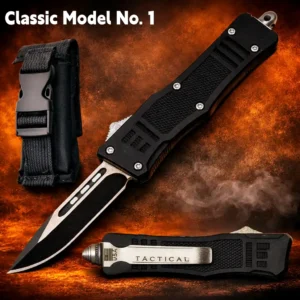
A cheap OTF is usually a reasonable buy if you want to try the OTF format, open boxes, cut tape, or keep one as a novelty or backup. It is usually a poor fit if you want dependable daily carry, very consistent action, or long service life.
- Usually acceptable for: package opening, light utility cuts, casual collection use, occasional carry where legal.
- Usually not ideal for: heavy daily cycling, work use, rough carry, buyers who dislike blade movement, or anyone expecting premium fit and finish.
In other words, a cheap OTF can be good enough, but it is rarely the best choice when reliability matters more than price.
What reliability means on an OTF knife
With an OTF, reliability is not just about whether the blade fires hard once out of the box. A reliable budget OTF should show repeatable behavior over time.
Look for these basics:
- It deploys and retracts with normal thumb pressure.
- It locks open and closed without frequent partial failures.
- Its switch feel stays fairly consistent from cycle to cycle.
- Blade play stays within a normal range and does not grow fast.
- Screws, clip, and handle fit do not loosen quickly.
That repeatability matters because OTF mechanisms are less forgiving than many manual folders. Small problems inside the knife often show up early as misfires, drag, or inconsistent switch travel.
The most common reliability problems in cheap OTF knives
1. Early misfires
This is the biggest warning sign. A cheap OTF may feel impressive at first, then start failing to lock open or closed after a short break-in period.
What it looks like: the blade launches partway and stops, or retracts but does not fully seat.
What it often suggests: marginal spring strength, rough internals, or too much friction in the track.
2. Rough or inconsistent slider feel
A button that feels gritty, sharp, or different every few cycles is more than a comfort issue. It often points to poor finishing around the switch slot or uneven fit between moving parts.
What it looks like: one stroke feels easy, the next feels sticky, or the button only works well when pushed at one exact angle.
3. Blade play that increases quickly
Some blade movement is normal on many OTF designs. The concern is rapid change.
What it looks like: after a few dozen cycles, the blade feels noticeably looser or starts to rattle more than it did when new.
Why it matters: even if the knife still opens, growing play can signal soft lock surfaces or poor internal fit.
4. Screws or clip loosening early
Budget hardware is often a weak point. If body screws back out quickly or the clip shifts after light carry, that is a sign the knife may not hold up well.
5. Big variation between units
One of the most important realities in low-cost OTFs is that two knives of the same model may not perform the same. One may run fine, while another feels stiff, drags, or misfires. For buyers, that means the model itself may be less predictable than the photos suggest.
A specific buyer checklist: the 7-point cheap OTF screen
If you want a fast way to judge a budget OTF, use this checklist before trusting it.
- Check the slider slot: rough edges, burrs, or uneven finishing often hint at rougher internals.
- Check the blade seating: the blade should sit cleanly in the channel when closed, not visibly rub one side.
- Cycle it 50 times: use normal thumb pressure, not exaggerated force.
- Count misfires: zero is good, one isolated failure may be tolerable, repeated failures are a reject sign.
- Compare cycle 1 to cycle 50: the button should not become much rougher or less predictable.
- Re-check screws and clip: any loosening this early is a bad sign.
- Make a few real cuts: cardboard and tape can reveal drag, debris sensitivity, or weak lockup better than dry firing alone.
This kind of short test is more useful than judging by appearance alone. Many cheap OTFs look convincing in photos but reveal their weaknesses after a few dozen cycles.
What is a fair pass-or-fail standard for a budget OTF?
Buyers often need a simple standard, not theory. For a cheap OTF, this is a practical way to think about it:
- Good budget result: 0 misfires in 50 cycles, stable screws, no major increase in blade play, and smooth enough switch travel for normal use.
- Borderline result: 1 isolated misfire, slightly stiff action, but no worsening trend.
- Poor result: 2 or more misfires in 50 cycles, rapidly growing play, rough button travel, or hardware loosening.
That standard is useful because many weak OTFs do not fail immediately. They start showing problems once parts settle, friction builds, or tolerances begin to matter.
Three examples that show the difference between cheap and reliable
The attractive but rough-inside knife
A budget OTF arrives with a nice-looking handle and strong first deployment. By cycle 30, the slider starts dragging. By cycle 45, it fails to lock open once. Externally it still looks good, but the internal finish and fit were not good enough to stay consistent.
The acceptable light-use knife
Another budget OTF is not especially smooth, but it completes 50 cycles with no failure, keeps the same level of blade play, and opens packages without issue. This is the kind of cheap OTF that can satisfy a casual owner, even if it does not feel refined.
The inconsistent model line
Two samples of the same knife are tested side by side. One is usable. The other takes much more thumb pressure and fails twice. That tells you the problem is not only the design. It is also production consistency, which is one of the biggest risks in this price range.
How to spot a better cheap OTF before buying
If you cannot handle the knife in person, focus on details that are more useful than broad marketing claims.
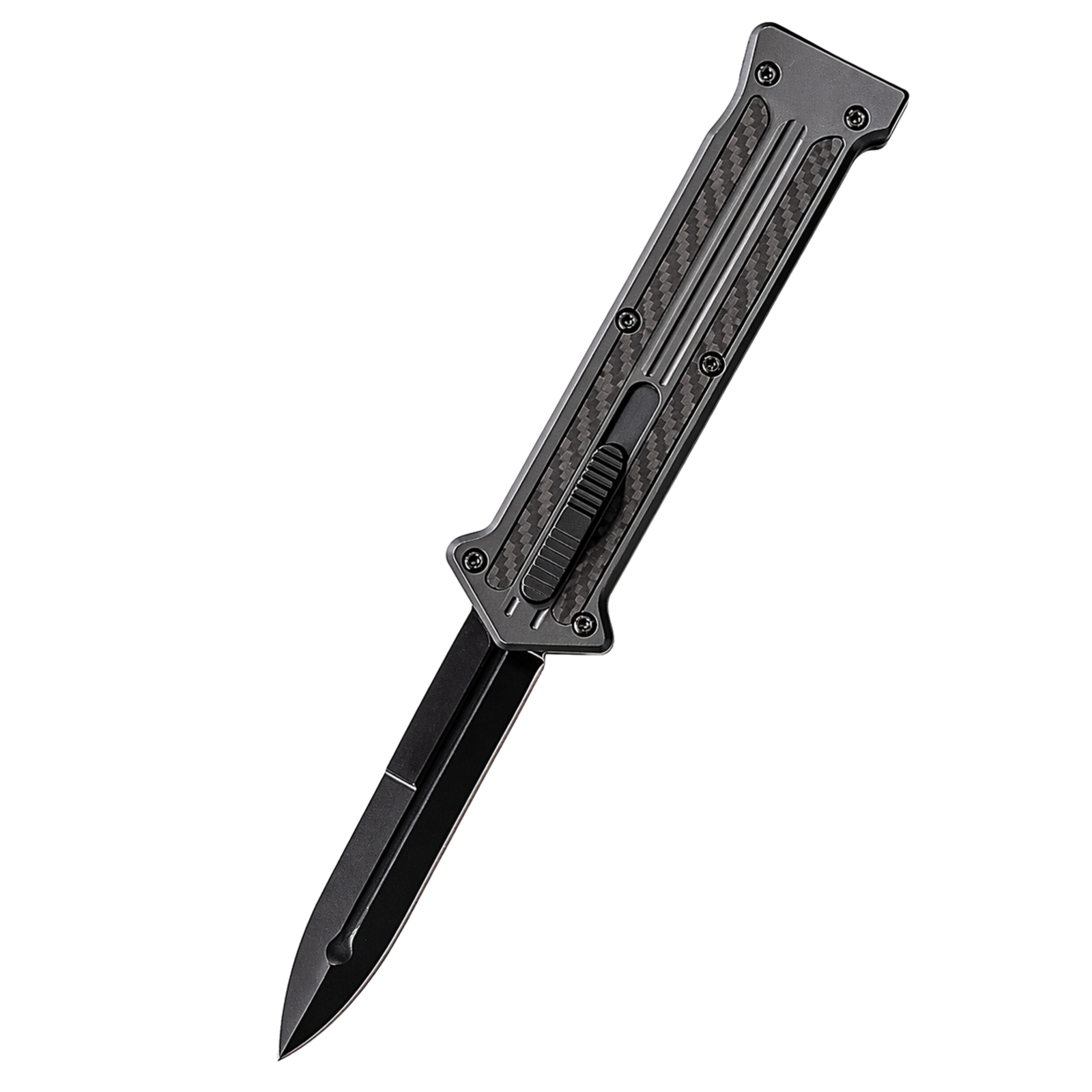
- Clear product photos of the switch slot and hardware: these can reveal rough finishing or soft-looking screws.
- Specific blade and handle details: exact size, handle material, and hardware style are more helpful than vague claims like “tactical” or “heavy duty.”
- Honest product positioning: a seller describing a knife as entry-level or light-use is more credible than one claiming every budget OTF is built for hard work.
- Support availability: budget OTFs have more unit-to-unit variation, so support matters.
If you are comparing styles and sizes, the OTF knife catalog is a useful starting point, but the important question is still how consistently a given model performs in real use.
Mistakes buyers make with cheap OTF knives
Judging by the first opening only
A hard first deployment can hide rough internals or marginal spring tuning. Always judge repeated performance, not a single dramatic firing.
Expecting premium lockup at entry-level pricing
Most cheap OTFs will have more blade movement than higher-grade models. The issue is not whether there is any movement. The issue is whether it is stable and acceptable.
Ignoring small warning signs
A gritty button, one loose screw, or a slight increase in play may seem minor at first. On a budget OTF, those details often predict bigger reliability problems later.
Short note for wholesale buyers
For wholesale, the main reliability issue is not whether one sample works well. It is whether the batch is consistent. A practical approach is to test several units from the same lot, track misfires over 50 cycles, compare switch feel, and watch for hardware variation. If you need batch support or model guidance, use the wholesale inquiry form.
FAQ
Can a cheap OTF knife be good enough for everyday carry?
Yes, for light everyday tasks, but usually not if you want high consistency or heavy long-term use.
What is the biggest red flag?
Repeated misfires in the first 50 cycles.
Is blade play normal on an OTF?
Yes. What matters is whether it is excessive or increases quickly.
Does strong action mean good quality?
No. A knife can fire hard and still have rough internals or weak long-term reliability.
How should I judge a budget OTF quickly?
Use a 50-cycle test, then re-check switch feel, blade play, and screw tightness.