
Short answer
Are expensive OTF knives more reliable? Usually yes, but price alone is not proof. Learn the OTF reliability factors that matter for wholesale buyers, resellers
Key Takeaways
- Knife rules can vary by state, city, blade style, opening mechanism, carry method, and intended use.
- Do not treat a product nickname as a legal category; check the actual features and local rule.
- Retailers should keep legal or safety language factual and avoid promising that one item is allowed everywhere.
Terms Used Here
- OTF
- Out-the-front; a knife design where the blade moves forward from the front of the handle.
- Automatic knife
- A knife that opens by a spring-driven mechanism after the user activates a button, switch, or slider.
In this article
- 01 What you are really paying for in a more expensive OTF
- 02 A practical comparison: expensive, mid-priced, and cheap OTF reliability
- 03 Checklist: how to judge whether a pricier OTF is actually more reliable
- 04 Mistakes wholesale buyers and resellers make with OTF reliability
- 05 How to buy for reliability without overpaying
- 06 Do expensive OTF knives never misfire?
- 07 Is blade play a sign of poor reliability in an OTF?
- 08 Should wholesalers pay extra for premium blade steel if reliability is the goal?
- 09 What is the best quick test before placing a larger OTF order?
Usually yes, expensive OTF knives are more reliable, but price by itself is not proof of reliability. In out-the-front knives, dependable performance comes from consistent manufacturing, spring quality, internal tolerances, lockup design, and quality control—not simply a higher retail price tag. A costly OTF can still misfire if it is poorly tuned, while a mid-priced model can be very dependable if the maker controls parts fit, testing, and assembly.
That distinction matters in wholesale buying. Distributors and resellers do not just buy a knife; they buy a return rate, a warranty burden, and a reputation. For serious retail shoppers, the same principle applies: an OTF should be judged by repeatable deployment, sensible maintenance needs, and safe handling behavior, not by finish upgrades alone.
What you are really paying for in a more expensive OTF
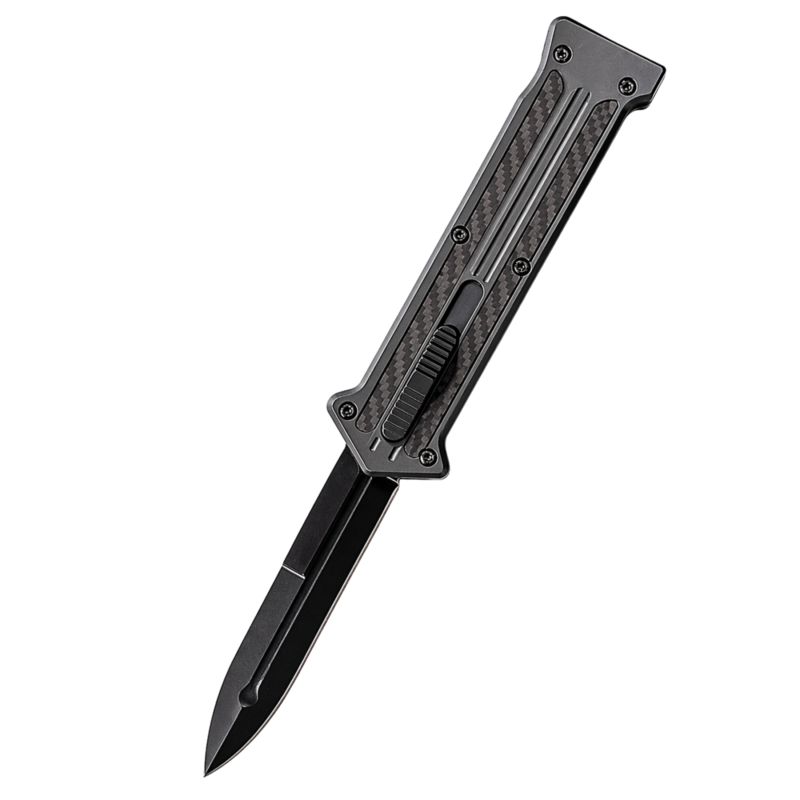
When a higher-priced OTF is genuinely more reliable, the extra cost usually shows up in areas that are easy to miss in a product photo.
- Tighter machining tolerances: The slider, chassis, blade tang, and internal track need to work together with minimal drag and minimal slop. Better tolerances often mean more consistent firing and retraction.
- Better spring consistency: OTF reliability depends heavily on spring quality and repeatability. Cheap springs may vary from unit to unit, weakening confidence in batch performance.
- Stronger quality control: Reliable OTFs are usually checked for deployment consistency, lock engagement, and obvious fit issues before packing.
- More stable internal finishes: Burrs, rough edges, or poorly finished channels can create friction and increase misfires over time.
- Better hardware and assembly: Screws that back out, poorly seated clips, and uneven body halves are not just cosmetic problems. They can affect alignment and user confidence.
In other words, a higher price can reflect better process control. That is the part of the price that tends to improve reliability. Decorative handle material, premium coating, or a branded box may raise cost without making the action more dependable.
For buyers comparing inventory, it helps to separate mechanical value from cosmetic value. Mechanical value is what reduces complaints and keeps the knife operating within normal expectations. Cosmetic value may help sell-through, but it does not necessarily reduce failures.
A practical comparison: expensive, mid-priced, and cheap OTF reliability
The most useful question is not “Is expensive better?” but “What kind of expensive?” Here is a wholesale-focused comparison.
- Cheap OTF: Often shows the widest variation between units. One sample may feel acceptable, while the next has weak deployment, gritty slider travel, blade play beyond expectation, or frequent off-track behavior. Returns tend to come from inconsistency more than from one dramatic defect.
- Mid-priced OTF: Often the best value zone when the supplier has stable manufacturing. These knives may not use premium finishes, but they can perform reliably enough for daily retail sales if tolerances and QC are solid.
- Expensive OTF: Usually more reliable when the higher cost reflects machining, spring quality, inspection, and assembly discipline. Less reliable when the price increase is mainly branding, collector styling, or upgraded scale materials.
A simple rule: pay more for process, not for polish. That is the quote many buyers learn after their first return-heavy batch.
For example, two single-edge OTF knives may look similar online: same blade length, same aluminum handle, same black finish. One costs 40% more. If the higher-priced model has individually checked deployment, cleaner internal tracks, better spring consistency, and fewer loose fasteners across a sample lot, that premium may be justified. If the only difference is a fancier coating and gift packaging, reliability may be unchanged.
Checklist: how to judge whether a pricier OTF is actually more reliable
Use this checklist before committing to a wholesale order or choosing a private-label platform.
- Test multiple units, not one hero sample. Reliability claims should survive sample variation. Ask how three to five units from the same batch perform, not just the best-picked knife.
- Cycle the action repeatedly. A dependable OTF should deploy and retract consistently under normal hand pressure. Watch for misfires, weak return, or a slider that becomes rough after repeated use.
- Check off-track recovery behavior. OTFs can fail to fully deploy if obstructed or if tolerances are poor. A good unit should reset in a straightforward way according to its design. Buyers should not treat any OTF as failure-proof.
- Inspect blade movement. Some blade play is normal in many OTF designs, but excessive rattle or inconsistent lockup across units can point to loose tolerances.
- Look at screw retention and body fit. Uneven handle halves, backing-out screws, or visible gaps can be early signs of assembly inconsistency.
- Ask what is tested before shipment. “Inspected” is vague. Better questions are: Is every knife fired? Are returns tracked by defect type? Are springs or sliders checked by batch?
- Separate finish upgrades from mechanism upgrades. Premium steel or handle color may help sales, but ask what was improved inside the knife.
- Review complaint patterns. The most useful reliability data is not marketing language; it is whether customers report misfires, loose hardware, or broken clips after normal use.
For buyers reviewing multiple models, browsing a broad OTF knife catalog is a good starting point, but reliability decisions should still be based on sample testing and supplier answers, not visuals alone.
Mistakes wholesale buyers and resellers make with OTF reliability
Several common buying mistakes lead to avoidable returns.
- Confusing premium appearance with premium mechanism. Stonewashed blades, glass breakers, and branded packaging do not prove a stable action.
- Ignoring unit-to-unit variation. OTF reliability is a batch question. A single smooth sample does not guarantee the next 200 units will match it.
- Overselling the knife as “zero-fail.” Any OTF mechanism has limits. Dirt, lint, weak springs, abuse, or obstruction can affect function. Careful product descriptions reduce customer misunderstanding.
- Skipping realistic user handling guidance. OTF knives should be operated with fingers clear of the blade path and used according to applicable law and intended cutting tasks. They are not pry tools, impact tools, or toys.
- Not planning for service questions. Even better OTFs may need cleaning, inspection, or occasional adjustment. Buyers should know how support will be handled before launch.
One more wholesale reality: the cheapest knife is often the most expensive after returns. If a low-cost OTF produces enough complaints, the real cost includes replacements, customer service time, marketplace penalties, and damage to trust.
How to buy for reliability without overpaying
The best buying strategy is usually to target the lowest price tier that still shows stable action, acceptable lockup, and consistent QC across samples. That often means choosing a well-made mid-tier OTF over a flashy but unproven premium-looking option.
Ask suppliers short, direct questions:
- What defects cause the most returns on this model?
- Has the spring or slider design changed recently?
- Are all units function-tested before packing?
- What level of blade movement is considered normal for this model?
- How are warranty or replacement issues handled for wholesale accounts?
If the answers are vague, the price premium may not be buying meaningful reliability. If the answers are specific and consistent, a higher cost may be justified. Buyers who need model guidance or support details can use the wholesale inquiry form to discuss batch expectations and account needs.
The bottom line is simple: expensive OTF knives are often more reliable because better makers spend more on machining, springs, assembly, and inspection—but the reliable part is the process, not the price tag. For resellers and serious shoppers, the smartest purchase is the knife with the best repeatable action and the clearest quality controls, not necessarily the highest sticker price.
Do expensive OTF knives never misfire?
No. Even higher-end OTF knives can misfire if they are obstructed, dirty, poorly maintained, or outside normal use conditions. Better models may reduce the chance of problems, but they do not eliminate mechanical limits.
Is blade play a sign of poor reliability in an OTF?
Not by itself. Some amount of blade movement is common in many OTF designs. The concern is excessive or inconsistent play, especially if it appears alongside weak deployment or poor lockup.
Should wholesalers pay extra for premium blade steel if reliability is the goal?
Only after the mechanism is proven. Better steel may improve edge retention, but it does not automatically improve deployment reliability. Mechanism quality should come first.
What is the best quick test before placing a larger OTF order?
Test several units from the same batch with repeated deployment and retraction, inspect hardware and body fit, and compare how consistent the action feels from knife to knife.