
Short answer
Learn how to measure a knife blade correctly, including blade length, cutting edge, and overall size. Practical tips for shoppers, resellers, and wholesale buye
In this article
- 01 What “blade length” usually means
- 02 How to measure a knife blade step by step
- 03 Blade length, cutting edge, and overall length are not the same
- 04 Measuring different knife styles
- 05 Folding knives
- 06 OTF knives
- 07 Fixed blades
- 08 Curved or specialty blades
- 09 Tools that make the job easier
- 10 Common mistakes to avoid
- 11 Why accurate measurement matters for shoppers and buyers
- 12 Quick reference for measuring a knife blade
- 13 FAQ
- 14 Do I measure the blade from the handle or from the guard?
- 15 Should I include the tip or point in the measurement?
- 16 How do I measure a curved blade?
- 17 Is blade length the same as legal length?
- 18 What is the best way for a reseller to list knife measurements?
The simplest way to measure a knife blade is from the point where the blade starts at the handle to the tip, following the blade’s straight line or curvature as closely as possible. For most buyers, the most important number is the blade length, but you may also need the cutting edge length, overall knife length, or closed length depending on the product and the rules in your area. If you are comparing inventory, listing products online, or checking a customer request, measuring the same way every time matters.
What “blade length” usually means
Blade length generally refers to the part of the knife that is sharpened or intended to cut, measured from the forward edge of the handle or bolster to the tip. On some knives, especially folding knives and many OTF models, the blade begins where it exits the handle or where the cutting portion becomes visible. On fixed blades, the measurement usually starts at the handle-to-blade junction. Different manufacturers may use slightly different methods, so it is smart to check how a specific product is described before comparing it to another one.
For retail and wholesale buyers, this matters because the number on the page should match what the customer expects when the knife arrives. A knife listed as a 3.5-inch blade should not be confused with a 3.5-inch cutting edge if the overall blade is actually longer.
How to measure a knife blade step by step
You do not need special tools. A ruler, tape measure, or caliper can work, but a rigid ruler is usually easiest for straight and slightly curved blades.
- Place the knife on a flat surface. Make sure the blade is fully open if it is a folding or OTF knife.
- Find the starting point. For most knives, measure from the point where the blade meets the handle or from the front of the handle scale if the blade begins there.
- Measure to the tip. Follow the blade in a straight line for straight blades. For curved blades, measure along the longest practical path from base to tip.
- Record the unit clearly. Use inches, millimeters, or both. Many wholesale listings include both so buyers can compare easily.
- Double-check the style of knife. A tanto, spear point, drop point, or recurved blade may be measured slightly differently by different brands, so consistency is more important than guessing.
If you are measuring multiple units for a store or warehouse, use the same method for every knife in the batch. That helps avoid return requests caused by inconsistent descriptions.
Blade length, cutting edge, and overall length are not the same
One of the most common mistakes is mixing up blade length with cutting edge length. The cutting edge is only the sharpened portion, while the blade length includes the entire blade from base to tip. The overall length is the full knife from end to end when open. On a folding knife, the closed length is measured with the blade folded into the handle.
For example, a knife may have a 4-inch blade length, a 3.75-inch cutting edge, and an 8.5-inch overall length. Those are all correct numbers, but they describe different things. If you sell knives online or through a retail counter, listing the wrong one can create confusion, especially for customers comparing products side by side.
Measuring different knife styles
Folding knives
Open the knife fully before measuring. Start where the blade exits the handle and measure to the tip. If the knife has a thumb stud or flipper tab, do not include those in the blade length. They are opening features, not part of the blade.
OTF knives
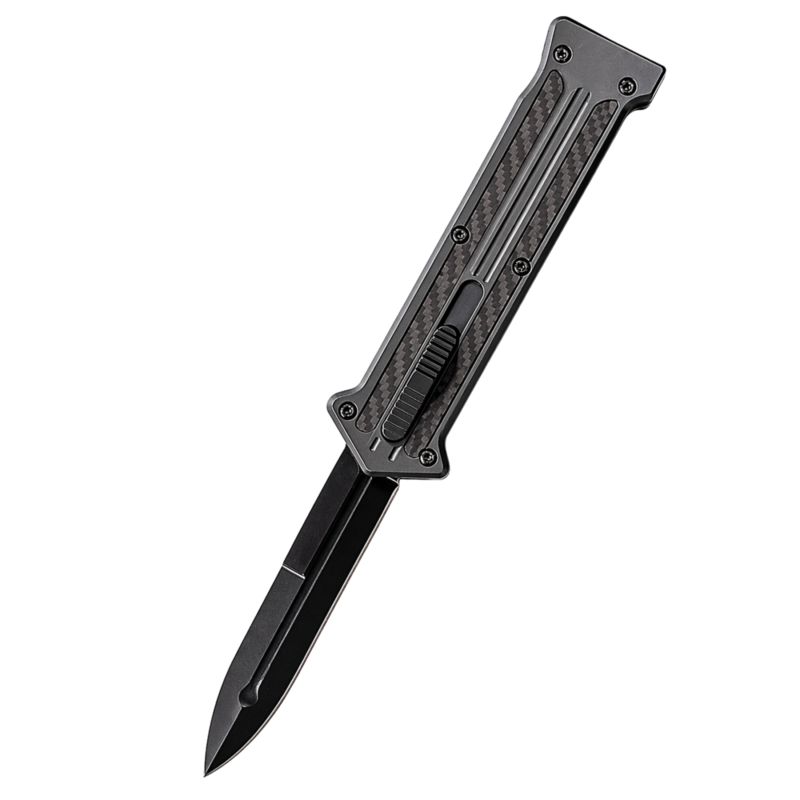
For out-the-front knives, measure the exposed blade from the front of the handle to the tip when fully deployed. Because OTF designs are popular with collectors and resellers, product descriptions should be especially clear. If you source inventory through an OTF and auto knife wholesale category, consistent measurements help buyers compare styles quickly and reduce questions before purchase.
Fixed blades
Measure from the point where the blade meets the handle or guard to the tip. On some fixed blades, the tang may extend through the handle, but that hidden metal is not usually included in the blade length unless the manufacturer specifically states otherwise.
Curved or specialty blades
For curved blades, use the longest practical line from base to tip or follow the curve carefully with a flexible measuring tool. The key is to stay consistent with the way the product is described. If you are unsure, note the method in your own records so the same item is measured the same way next time.
Tools that make the job easier
A simple steel ruler is enough for most jobs, but a few tools can make measuring cleaner and more repeatable:
- Rigid ruler: Best for straight blades and quick checks.
- Caliper: Helpful for precise measurements and smaller knives.
- Flexible tape measure: Useful for curved blades, though it is easier to misread if the knife shifts.
- Measurement log: Good for retailers and distributors who need consistent product records.
For wholesale buyers, a measurement log can be especially valuable when receiving mixed shipments or comparing product samples from different suppliers. A few minutes of careful checking can save time later when creating product pages or printing shelf tags.
Common mistakes to avoid
- Starting at the wrong point: Some buyers accidentally include part of the handle or exclude part of the blade base.
- Measuring a closed folding knife: Always open it fully before measuring the blade.
- Confusing edge length with blade length: These are not interchangeable.
- Using a soft tape on a curved blade without care: It can shift and give an inconsistent result.
- Assuming every brand measures the same way: Always check the product details when accuracy matters.
These mistakes are easy to make, especially when handling many products at once. That is why resellers and distributors often standardize one measuring method across their entire catalog.
Why accurate measurement matters for shoppers and buyers
Accurate blade measurement helps customers know what they are getting before they buy. It also helps store owners compare similar models, group products by size, and answer customer questions confidently. For online sellers, clear measurements reduce returns and make product listings easier to trust. For wholesale buyers, accurate sizing supports better purchasing decisions, especially when matching inventory to customer demand, display space, or pricing tiers.
If you are stocking a retail case or planning a new online category, it helps to pair accurate blade measurements with dependable product sourcing. Many buyers prefer to request pricing and availability in advance, especially when they are ordering in volume. If that is your situation, you can use the wholesale inquiry form to discuss quantities, product types, and current options.
Quick reference for measuring a knife blade
- Blade length: Base of the blade to the tip.
- Cutting edge: Only the sharpened portion.
- Overall length: Full knife from end to end when open.
- Closed length: Folding knife measured while closed.
- Best practice: Use the same method every time and note it clearly.
FAQ
Do I measure the blade from the handle or from the guard?
Usually from the point where the blade begins at the handle or guard area, depending on the knife style. The important part is to use the same reference point consistently and follow the way the product is described by the maker or seller.
Should I include the tip or point in the measurement?
Yes. Blade length normally includes the full blade to the tip. The tip is part of the blade, so it should be included.
How do I measure a curved blade?
Use a ruler or flexible measuring tool and follow the blade’s longest practical path from base to tip. If you are measuring for inventory records, keep the method consistent across all similar items.
Is blade length the same as legal length?
Not always. Local rules can vary by city, state, or country, so verify the regulations that apply to your location before relying on a measurement for compliance purposes.
What is the best way for a reseller to list knife measurements?
List the blade length, cutting edge if relevant, and overall length when available. Clear, consistent measurements help customers compare products and reduce confusion after purchase.
Knowing how to measure a knife blade is a small skill that pays off in better buying decisions, cleaner product listings, and fewer misunderstandings. Whether you are a shopper checking one knife or a wholesale buyer comparing a full shipment, a careful measurement method gives you the clearest picture of the knife in hand.