

How to Know What Angle to Sharpen Your Knife


Short answer
Learn how to choose the right knife sharpening angle based on blade type, steel, and use. Includes practical examples, mistakes to avoid, and FAQ.
In this article
- 01 What sharpening angle actually changes
- 02 The fastest way to choose the right angle
- 03 Check the knife’s original design before you change it
- 04 How blade steel affects sharpening angle
- 05 Match the angle to how the knife is used
- 06 For kitchen knives
- 07 For everyday carry and utility knives
- 08 For heavy-use or outdoor blades
- 09 Simple signs your angle is too shallow or too wide
- 10 Practical ways to check your angle at home
- 11 Mistakes that cause poor edge performance
- 12 When to stay conservative
- 13 FAQ
- 14 What is the best angle for most knives?
- 15 Should I sharpen both sides at the same angle?
- 16 Can I change a knife from a wide angle to a finer one?
- 17 How often should I sharpen?
- 18 Do expensive knives always use a smaller angle?
- 19 Bottom line
The easiest way to know what angle to sharpen your knife is to match the edge to the knife’s job: use a lower angle for fine slicing and a slightly wider angle for tougher cutting and better edge life. In practical terms, many kitchen and everyday knives sharpen well around 15 to 20 degrees per side, while heavier-use blades often do better closer to 20 to 25 degrees per side. If you are unsure, start with the manufacturer’s recommendation, then adjust based on how the knife performs and how often it needs touch-ups.
What sharpening angle actually changes
The sharpening angle is the shape of the edge where the two sides meet. A smaller angle creates a thinner, sharper-feeling edge that slices more easily. A larger angle creates a stronger edge that can handle more pressure and contact with harder materials. Neither is automatically better. The right angle depends on the blade steel, the grind, the knife’s size, and how it is used.
If you sharpen too shallow for a knife that sees hard use, the edge may roll or chip sooner. If you sharpen too wide on a knife meant for delicate slicing, it may feel dull even when it is technically sharp because it cannot bite cleanly into food or material.
The fastest way to choose the right angle
When people ask, “how do you know what angle to sharpen your knife,” the best answer is to begin with the knife’s intended purpose. Here is a simple way to think about it:
- 15 degrees per side: very fine slicing, softer cutting tasks, and knives where extreme sharpness matters more than ruggedness.
- 17 to 20 degrees per side: a versatile range for many kitchen knives, pocket knives, and general-purpose blades.
- 20 to 25 degrees per side: better for heavy-duty use, outdoor cutting, tougher materials, and edges that need more durability.
These are general ranges, not fixed rules. Some premium steels hold very acute edges well, while softer steels often benefit from a slightly wider angle. A knife with a thin, precise grind can also behave differently from a thicker, sturdier blade even if they are sharpened at the same angle.
Check the knife’s original design before you change it
The original edge geometry is often the best place to start. If the knife is new, look for the maker’s sharpening guidance in the product details, packaging, or brand website. If you are buying for a store, restaurant, or distribution channel, consistent edge specs matter because buyers want predictable performance and easy maintenance.
When the manufacturer does not provide a recommendation, inspect the blade’s use case and build. A thin slicing knife is usually designed for a finer edge than a work knife. A heavier blade with a reinforced spine usually performs better with a slightly more robust angle.
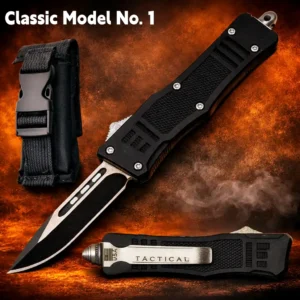
If you are sourcing knives for resale or wholesale, choosing models with clear blade specifications makes customer support easier. For buyers looking at broader inventory options, the OTF and auto knife wholesale category is a useful example of how blade style and intended use can influence edge maintenance expectations.
How blade steel affects sharpening angle
Steel type matters because different steels balance hardness, toughness, and wear resistance in different ways. Harder, more wear-resistant steels can often support a finer edge for longer, but they may take more skill and patience to sharpen. Softer steels are usually easier to sharpen but may need a slightly wider angle to stay stable during use.
As a general rule:
- Harder steels: can often handle narrower angles if the edge design supports it.
- Softer steels: may benefit from a wider angle to reduce edge rolling.
- Unknown steels: start conservatively and test performance before making the edge thinner.
If you are not sure what steel you have, do not guess aggressively. A knife can be sharpened more than once, but repairing a chipped or weakened edge takes more time than starting with a sensible angle.
Match the angle to how the knife is used
One of the clearest ways to decide is to think about the actual cutting task. A knife used mainly for food prep does not face the same stress as a knife used for packaging, field work, or daily utility tasks.
For kitchen knives
Chef’s knives, santokus, paring knives, and similar blades usually perform well in the 15 to 20 degree range per side. If the knife is used mostly for soft ingredients and precision slicing, a finer angle can feel excellent. If it sees more contact with cutting boards, bones, or dense foods, a slightly wider angle may last longer between sharpenings.
For everyday carry and utility knives
Many folding knives and utility blades do well around 17 to 25 degrees per side, depending on the steel and the work they do. If the knife is opening boxes, trimming materials, or handling repeated use, durability often matters as much as initial sharpness.
For heavy-use or outdoor blades
Thicker blades and hard-use knives usually benefit from a more durable edge. A wider angle can help the knife resist rolling and damage when it meets tougher materials. That does not mean it will feel less sharp in a bad way; it means the edge is built to stay usable longer under stress.
Simple signs your angle is too shallow or too wide
If you are learning how to know what angle to sharpen your knife, the knife itself will give you clues.
- Too shallow: edge chips, folds, or dulls quickly; the knife feels fragile; the edge may fail after only a short period of use.
- Too wide: the knife feels blunt or sticky during slicing; it needs more force than expected; food or material does not separate cleanly.
Another useful clue is consistency. If a knife sharpens easily but loses its edge very fast, the angle may be too fine for the job. If it stays durable but never feels truly sharp, the angle may be too wide, or the bevel may need refinement.
Practical ways to check your angle at home
You do not need professional equipment to get close to the right angle. A sharpening guide, angle guide block, or guided sharpener can help beginners stay consistent. Even without tools, you can estimate the angle by matching the existing bevel and keeping your stroke steady.
Here are a few practical habits that help:
- Follow the existing edge if it is in good shape. Matching the original bevel is often the safest starting point.
- Use light pressure. Heavy pressure can round the edge and make angle control harder.
- Check both sides evenly. Uneven sharpening can create a weak or off-center edge.
- Test on normal materials. A knife should perform well on the tasks it was made for, not just on a quick paper test.
If you are sharpening for a retail display, restaurant use, or resale inventory, consistency matters across all units. Buyers notice when one knife in a batch feels different from the next. That is one reason wholesale purchasers often prefer blades with repeatable geometry and straightforward maintenance.
Mistakes that cause poor edge performance
Many sharpening problems come from technique rather than the knife itself. Avoid these common mistakes:
- Changing angles too often: this can create a rounded or uneven edge.
- Starting too aggressive: removing too much metal shortens blade life.
- Ignoring the knife’s purpose: a fine edge is not ideal for every blade.
- Overlooking burr removal: a weak burr can make a knife seem sharp at first, then fail quickly.
- Sharpening damaged edges without inspection: chips or bends may need more careful repair before refining the angle.
For stores and distributors, educating customers on these basics can reduce returns and improve satisfaction. A knife that is matched to its use and maintained properly tends to earn better reviews and repeat business.
When to stay conservative
If you are working with an unfamiliar blade, a softer steel, or a knife that gets rough daily use, it is usually better to stay on the conservative side. A slightly wider angle may not look as dramatic on a sharpening stone, but it often delivers better real-world performance. You can always refine the edge later once you know how the knife behaves.
This is especially relevant for wholesale buyers who stock mixed knife categories. A catalog may include sleek everyday blades, rugged utility models, and specialty designs. Each one may call for a different maintenance approach, so it helps to choose products with clear specifications and stable quality. If you are planning a larger order or want help selecting inventory, the wholesale inquiry form is the best place to start.
FAQ
What is the best angle for most knives?
For many general-purpose knives, a range around 15 to 20 degrees per side is a good starting point. The best choice still depends on steel, blade shape, and how the knife is used.
Should I sharpen both sides at the same angle?
Yes, in most cases the two sides should be consistent so the edge stays centered and cuts evenly. Small variations can happen, but the goal is a balanced bevel.
Can I change a knife from a wide angle to a finer one?
Yes, but it takes time because you need to remove metal gradually. If the edge is built for durability, thinning it too much may reduce its lifespan.
How often should I sharpen?
That depends on use, steel, and maintenance. Many people touch up an edge before it becomes fully dull. Frequent light maintenance is usually easier than waiting too long.
Do expensive knives always use a smaller angle?
Not always. Some premium knives are designed for fine slicing, while others are built for strength. Price does not determine angle by itself; design and purpose do.
Bottom line
If you want to know what angle to sharpen your knife, start with the knife’s purpose, check the maker’s guidance when available, and choose a range that balances sharpness with durability. Fine slicing knives can use a narrower edge, while work knives usually need a bit more strength. A careful, consistent approach will give you better results than chasing the sharpest possible angle every time.