




How to Test an OTF Knife Supplier Before a Large Order

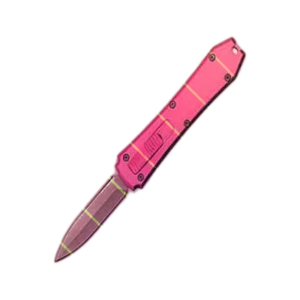
Test an OTF knife supplier by treating the first order like a controlled trial, not a trust exercise. Before you place a large order, confirm five things in sequence: sample quality, action consistency, packaging accuracy, lead-time reliability, and whether the quoted price still works after freight, defects, and reorder risk are added.
That approach matters more with OTF knives than with simpler folding knives because the mechanism adds failure points. What is known: every OTF program depends on spring tension, track fit, switch feel, and lockup consistency. What varies by supplier: how they control those details across batches, how they handle sample credits or defects, and whether their lead times stay stable once you move from trial units to carton quantities. What you should confirm: the supplier can deliver the same action, finish, labeling, and packing on repeat orders, not just on one polished sample.
If you are comparing models for a first trial, start with a focused group from a wholesale OTF knife catalog and narrow the test to one or two SKUs. A broad first order makes it harder to identify where quality or packing problems started.
Use a 4-step supplier test, in order
- Buy samples from the exact production line you may reorder from. Ask whether the sample is pulled from stock, hand-selected, or built separately. This changes the value of the sample. A hand-checked sample can hide batch inconsistency.
- Run a functional inspection on arrival. Test deployment, retraction, lockup, blade centering in the channel, switch resistance, finish quality, clip fit, and edge consistency.
- Verify the order conditions behind the sample. Confirm MOQ, carton count, lead time, packaging method, defect allowance, replacement policy, and whether sample cost is credited back on a production order. This changes because some factories subsidize samples but not mixed-SKU small runs.
- Place a small paid pilot order before the large buy. The pilot should be big enough to expose packing and consistency issues, but small enough that one bad batch does not damage your season.
A good sample is not enough. The real test is whether the supplier can repeat that result under normal production pressure.
What to inspect on the sample OTF knives
For OTF knives, function matters more than appearance alone. A supplier can send a knife with clean coating and acceptable packaging, yet still fail on action stability after repeated cycling.
- Deployment and retraction: Fire each sample multiple times. You are checking for misfires, partial lock, sluggish return, and changes in switch feel after repeated use.
- Switch resistance: The slider should feel deliberate, not gritty or loose. Too light can create safety concerns; too stiff can create customer complaints.
- Blade play and lockup: Some movement may exist in many OTF designs, but it should be consistent across samples. Confirm what the supplier considers acceptable.
- Edge and grind: Look for uneven bevels, overheated edge discoloration, burrs, and inconsistent sharpness from unit to unit.
- Handle fit and finish: Check screws, clip tension, glass breaker fit if present, coating uniformity, and gaps between scales or chassis parts.
- Packaging accuracy: Inspect box print, barcode placement, warning labels, model stickers, and inner protection. Retail problems often start here, not in the knife itself.
A practical rule: do not judge from one unit. Ask for at least three pieces of the same SKU if you are serious about a reorderable line. One attractive sample can be luck. Three units begin to show process control.
Also ask one direct question: Is this sample representative of mass production? If the answer is vague, assume you still need a pilot order to learn the truth.
The supplier questions that reveal reorder risk
The best supplier test is not only about the knife. It is about whether the supplier can support your next three orders without changing price, timing, or quality unexpectedly.
- MOQ: What is the minimum by SKU, by color, and by packaging version? A low MOQ on plain-box stock may not apply to branded packaging.
- Lead time: Ask for sample lead time, first production lead time, and repeat-order lead time separately. These are often different. This changes because stocked handles, blades, and packaging materials may not be replenished on the same cycle.
- QC method: Do they inspect every unit for firing function, or only a sample percentage from each batch? Confirm who signs off before shipment.
- Defect handling: If 4 units in a carton misfire on arrival, will they replace on the next order, issue parts credit, or require video proof? Confirm the process before payment.
- Packaging and carton logic: How many units per inner box and per master carton? Can they split cartons by color or SKU? This matters if you supply multiple stores and need clean receiving.
- Repeat-order stability: Ask whether the same hardware, spring spec, coating source, and packaging vendor will be used on the next order. This is where many reorder problems begin.
One useful comparison is this: a supplier with a slightly higher unit cost but stable repeat orders is often cheaper than a lower quote that creates returns, relabeling labor, and split shipments. For OTF knives, reorder risk is a cost category, not just an inconvenience.
Judge the quote by landed cost, not unit price
A large order should be approved only after you convert the quote into a landed-cost estimate. The knife price is only one line.
Include these cost checks:
- Sample spend: Are samples charged at retail-like pricing, discounted, or credited back later?
- Freight: Confirm carton dimensions, gross weight, and shipping method assumptions. A compact carton plan can change the real margin.
- Defect allowance: Add a reserve for replacement units, customer service time, and unsellable packaging damage.
- Labeling or repacking labor: If the supplier cannot apply your barcode or warning label correctly, the cheap quote may become expensive in your warehouse.
- Payment terms: Deposit structure affects risk. A full prepayment on an untested supplier deserves a smaller pilot order.
Example pattern, not a market fact: Supplier A quotes $26.40 per unit on 240 pieces with plain packaging. Supplier B quotes $27.10 on 240 pieces, but includes barcode labels, tighter carton counts, and a written replacement credit for verified firing defects. If Supplier A creates 6 damaged retail boxes, 5 action failures, and extra relabeling labor, the lower unit price may no longer be the lower landed cost.
This is the fresh angle most buyers miss: with OTF knives, the carton and QC plan can matter as much as the blade steel line on the quote sheet.
A practical pilot-order checklist
Before a large buy, use this pass-or-fail checklist on the supplier and the first small order:
- Sample units received: At least 3 of the same SKU inspected
- Function result: No repeated misfire pattern during your test cycle
- Finish result: Coating, screws, clip, and grind consistent across units
- Packaging result: Correct box, labels, inserts, and carton count confirmed
- MOQ clarity: Written by SKU and packaging version
- Lead time clarity: Written for sample, first order, and repeat order
- QC clarity: Written inspection method before shipment
- Defect policy: Written replacement or credit method with evidence requirements
- Sample policy: Written note on whether sample fees are credited later
- Pilot order size: Large enough to test consistency, small enough to limit risk
- Repeat-order question answered: Same materials and components confirmed if reorder is placed within your target window
If several of those points stay verbal, not written, you are not ready for a large order. Use the pilot stage to force clarity. If you need a clean way to collect pricing, MOQ, and packing details in one place, send the requirements through the OTF bulk inquiry form and compare replies side by side.
How many samples should I test before a large OTF order?
Three units of the same SKU is a practical minimum if you want to judge consistency, not just appearance. One unit can confirm design; multiple units begin to confirm process control.
Should I skip samples if the supplier has a good catalog and fast replies?
No. A clean catalog and quick communication do not prove firing consistency, packaging accuracy, or repeat-order stability. For OTF knives, mechanism performance has to be checked in hand.
What is the biggest mistake before placing a large order?
Approving a large quantity from one attractive sample and one low quote. The safer path is sample review, written terms, then a paid pilot order that tests QC and carton execution.
When is a supplier ready for a larger reorder?
After the pilot order arrives on time, matches the approved sample, lands with acceptable defect levels, and the supplier handles small issues clearly and in writing. That is the point where confidence is earned, not assumed.