




How to Evaluate an OTF Knife Factory: A Practical Buyer’s Field Guide

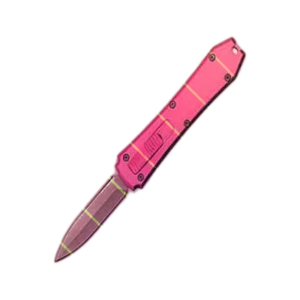
You evaluate an OTF knife factory by testing multiple units of the same SKU, not by judging one attractive sample. The practical method is simple: request 3-6 knives from one model, cycle each 50-100 times, log every misfire or partial lock, inspect assembly and finish variation, and verify whether packaging and carton labels match a written packing spec.
What is known is that OTF performance depends heavily on spring consistency, internal rail friction, lockup geometry, switch fit, and final assembly discipline. What varies by supplier is how tightly those variables are controlled from unit to unit and from batch to batch. What you should confirm is whether the factory can repeat the same action, finish, hardware, and packaging on your next order, not just on a hand-picked sample.
A practical evaluation protocol that works
If you only do one thing, do this:
- Request 3-6 units of the same SKU, same finish, same blade style.
- Cycle each knife 50-100 full open-close cycles.
- Log misfires, partial locks, failure to retract, switch drag, and screw movement.
- Inspect grind symmetry, coating or stonewash consistency, clip fit, glass-breaker fit if present, and screw seating.
- Check box print, SKU labels, carton marks, and quantity packing against a written spec.
This approach is useful for a store owner, importer, or product manager because OTF defects usually appear as variation within a small set, not as one dramatic failure. One sample can be tuned. Six samples tell you more about the factory.
If you are still narrowing candidates, review the wholesale OTF knife catalog and select a few realistic reorder models rather than asking for unrelated show samples.
What inspectors actually look for on an OTF knife
OTF inspection is not generic product QC. The mechanism creates its own failure pattern, and experienced inspectors focus on that pattern first.
Common OTF failure modes
- Spring inconsistency: one unit fires sharply, another feels weak or hesitant.
- Rail friction: blade travel feels gritty, slow, or uneven through the track.
- Partial lock: blade deploys but does not lock fully at the end of travel.
- Retraction hesitation: blade retracts late or needs extra thumb pressure.
- Switch drag: slider feels rough, overly stiff, or inconsistent across units.
- Lockup variance: noticeable difference in blade play from one sample to another.
- Screw loosening: body or clip screws back out after repeated cycling.
- Finish mismatch: black coating tone, stonewash texture, or logo placement differs within the same sample set.
Those are not minor details. They are the early signs of assembly drift, inconsistent lubrication, variable spring lots, or weak final inspection.
Visual and fit checks that matter
After cycling, inspect each sample under steady light. Look for uneven bevel width, off-center grind lines, exposed raw metal at coated edges, burrs around the switch channel, clip screws that sit proud, and gaps between handle scales or frame components. On packaged samples, check whether the knife can rub inside the box, whether the tip area is protected, and whether barcode labels are straight and readable.
Use a defect log, not memory
A short defect log makes the comparison objective. For each sample, record:
- SKU and finish
- Unit number
- Total cycle count
- Misfires
- Partial locks
- Retraction failures
- Switch feel notes
- Screw movement after cycling
- Finish defects
- Packaging or labeling errors
Example pass/fail threshold for sample review, not a market fact: if you test 5 knives for 80 cycles each, that is 400 deployment events and 400 retraction events. A reasonable screening standard is zero repeated failures on any one unit and no more than 1 total action failure across the full sample set. If one knife misfires 3 times while the others are clean, that unit is not an outlier you should ignore; it is evidence of process variation.
Why this changes: some factories action-test every knife after assembly, while others spot-check by batch or tune only sample pieces.
Score the factory with weighted criteria
A scorecard prevents price from dominating the decision too early. Here is a compact example:
| Criteria | Weight | Factory A | Factory B |
|---|---|---|---|
| Action reliability after cycling | 30% | 24/30 | 18/30 |
| Unit-to-unit consistency | 20% | 16/20 | 11/20 |
| Finish and assembly quality | 15% | 12/15 | 13/15 |
| Packaging and carton accuracy | 10% | 9/10 | 6/10 |
| QC process clarity | 10% | 8/10 | 5/10 |
| Repeat-order control | 10% | 8/10 | 4/10 |
| Lead time realism | 5% | 4/5 | 4/5 |
| Total | 100% | 81/100 | 61/100 |
In this example, Factory B had slightly nicer finish on two units but weaker mechanism consistency and poorer carton control. For an OTF program, that usually makes Factory A the safer choice because returns and receiving errors cost more than a small cosmetic edge.
Questions that reveal real factory discipline
Ask questions that force process detail:
- Is every knife action-tested before packing?
- Are springs and sliders standardized by SKU, or substituted when stock is tight?
- Do you keep an approved sample or photo file for repeat orders?
- How do you classify cosmetic defects versus mechanism defects?
- Are screws torque-checked or thread-locked during assembly?
- How is carton quantity verified before sealing?
Strong factories answer with specifics. Weak factories answer with reassuring but empty language like “all goods are inspected carefully.” On OTF knives, process detail matters more than polished sales wording.
Check packaging and carton logic before you compare unit price
Carton discipline is part of quality control. If the factory mixes finishes in one master carton, applies the wrong SKU label, or packs knives loosely enough to rub in transit, the savings on unit price disappear fast.
Ask for a simple packing spec that lists:
- units per inner box and master carton
- SKU or color split by carton
- barcode location and label size
- box artwork version
- protective sleeve, foam, or bag requirement
- master carton mark format
Then compare the delivered sample packaging against that spec. If a factory cannot match a basic packing sheet on samples, it is unlikely to improve under volume pressure.
Why this changes: some factories run stable standard packaging lines, while others assemble cartons manually at the end of production.
How to verify repeat-order consistency
The first order is only half the evaluation. The bigger risk is drift on the second order, when a spring source changes, a screw head changes, or a black coating becomes a different shade.
To reduce that risk, confirm these points before deposit:
- Approved reference: both sides keep one signed sample or a photo set with close-ups of finish, hardware, and packaging.
- SKU lock: the exact blade style, handle finish, clip type, and box version are written into the order.
- Component consistency: ask whether the same spring, switch, and screw set will be used on repeats.
- Batch traceability: request batch date or carton code marking if available.
Concise example, not a market fact: a retailer tests 4 samples of one tanto OTF. Factory M is $1.10 cheaper, but one sample develops switch drag by cycle 60 and the carton labels list only color, not SKU. Factory N costs more, but all 4 samples complete 75 cycles cleanly and the packing spec matches exactly. Factory N is the better factory even before the first reorder.
Mistakes buyers make when evaluating an OTF factory
- Approving one polished sample instead of a same-SKU sample set.
- Checking cosmetics but not logging action failures.
- Ignoring switch feel variance because every unit still “works.”
- Assuming MOQ or lead time says anything about mechanism quality by itself.
- Failing to document approved packaging and hardware details for reorder control.
Minimum acceptable factory standard
This is the short checklist a buyer can quote internally:
- Provide 3-6 same-SKU samples for comparison.
- Each sample completes 50-100 open-close cycles with no repeated action failure.
- Sample set shows no major switch drag or lockup variance.
- Grind, coating, screws, clip fit, and logo placement are consistent across units.
- Packaging protects the knife and matches a written packing spec.
- Factory can explain how every unit is checked before packing.
- Factory can keep an approved sample or photo record for repeat orders.
FAQ
What is an acceptable misfire rate when testing samples?
For screening a factory, keep the standard strict. On a 3-6 unit sample set cycled 50-100 times each, you should expect no repeated failures on any unit. A single isolated failure may be reviewable; repeated failures are a reject signal.
What should I do if samples vary a lot?
Treat variation as the finding, not as bad luck. Ask the factory to explain whether the difference came from spring lots, assembly tuning, lubrication, or substituted hardware. If the explanation is vague, move on.
How do I verify repeat-order consistency?
Lock the approved sample, hardware details, finish photos, and packaging spec into the order record. On the next order, compare incoming goods against that reference before full release.
Should I visit the factory?
If the order value justifies it, yes. A visit can confirm whether assembly, action testing, screw installation, and packing are done in a controlled flow or improvised at the end.
What should I send in my first inquiry?
Send the exact SKU, finish, blade style, target packaging, sample quantity, and your test expectations. If you need structured replies, use the OTF bulk inquiry form.