




How to Compare OTF Knife Suppliers: A Wholesale Buyer Scorecard

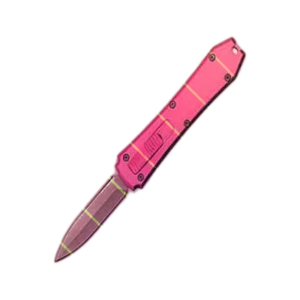
The fastest way to compare OTF knife suppliers is to score each one on repeat-order reliability at landed cost, not on unit price alone. In practice, compare suppliers on six points: supplier type, action reliability, batch consistency, MOQ and lead-time terms, packaging accuracy, and total landed cost after defects, delays, and rework.
If you need a simple decision standard, use this: the best supplier is the one most likely to ship the same OTF knife, packed the same way, on time, across multiple orders. That frame keeps the comparison focused on wholesale outcomes instead of first-sample impressions.
A 5-step process to compare OTF knife suppliers
- Identify the supplier type: factory, wholesaler, trader, or distributor. This affects customization, MOQ, and who owns quality issues.
- Use one scorecard for all quotes: compare every supplier against the same criteria instead of letting each one define the conversation.
- Test OTF-specific reliability: review multiple samples and check misfires, switch feel, lockup consistency, finish matching, and packaging accuracy.
- Request evidence in writing: sample policy, QC method, specification sheet, packaging details, and lead-time breakdown.
- Calculate landed cost: include freight, packaging errors, defect risk, delays, and relabeling or repacking work.
This process works whether you are sourcing stocked models from a wholesale OTF knife catalog or comparing custom and semi-custom production offers.
Use this supplier scorecard
Score each supplier from 1 to 5 on every factor, then multiply by the weight. The weights below are buyer heuristics, not universal industry standards, but they are practical for wholesale decisions where returns and reorder drift matter more than a small opening price difference.
| Factor | Weight | What to compare | Good sign | Warning sign |
|---|---|---|---|---|
| Action reliability | 25% | Misfires, switch feel, lockup consistency, reset behavior | Supplier explains how function is checked and can discuss failure handling by batch | Only says “good quality” or “tested” with no method |
| Batch consistency | 20% | How closely later orders match the approved sample | Uses a saved spec, approved sample file, or lot records | Later batches may vary in finish, hardware, or action feel |
| MOQ and lead time | 15% | MOQ by model, color, logo, and packaging version; stock vs made-to-order timing | Terms are clear and stable in writing | MOQ or lead time changes after sample approval |
| Packaging accuracy | 15% | Box print, barcode, inserts, pouch, accessory count, carton labels | Packing list and carton spec are confirmed before production | Missing accessories, mixed cartons, or label mismatch |
| Communication accuracy | 10% | How clearly the supplier answers spec and issue questions | Replies with photos, dimensions, timelines, and revisions tracked | Vague answers or ignored change requests |
| Landed cost | 15% | Unit price plus freight, duty, defects, delays, and rework | Quote aligns with shipping method and packaging reality | Low unit price but weak packaging or unstable delivery |
How to use it: if a supplier scores well on price but poorly on reliability and packaging, do not treat that quote as competitive. In OTF wholesale, a small defect rate or packaging error can erase the apparent savings very quickly.
Start with supplier type before you compare price
Many buyers skip this step, but supplier type changes the whole risk profile.
- Factory: usually best for private label, packaging changes, hardware changes, and repeat production under one spec. MOQs may be higher, but process control is often clearer.
- Wholesaler: useful for mixed-model orders, faster shipment, and lower customization needs.
- Trader: can be helpful if they manage sourcing well, but quality ownership needs to be clarified early.
- Distributor: useful for domestic stock access and smaller replenishment orders, usually with less flexibility on branding and price.
If your order depends on custom packaging, logo work, or repeatability across several batches, favor a factory or a wholesaler that can document factory control. If your priority is mixed styles with faster availability, compare stocked options first and then ask whether those exact models are held in inventory or produced after order confirmation.
Inspect these OTF-specific failure points
A generic knife inspection is not enough. OTF knives have mechanical issues that show up differently from fixed blades or manual folders, so your sample review should focus on the action as much as the finish.
- Misfire behavior: use a repeated open-close test on more than one sample. A common buyer heuristic is to cycle each sample dozens of times to see whether deployment and retraction stay consistent. Failure example: one knife works at first, then begins to stop short of full deployment.
- Lockup consistency: some OTF designs have normal movement, but the key is consistency across pieces. Failure example: one sample has acceptable play while another from the same lot feels loose or rattles noticeably.
- Switch feel and spring response: the actuator should feel deliberate, not gritty, sharp, or uneven. Failure example: the switch binds halfway or needs much more thumb force on one piece than the others.
- Finish and hardware matching: compare coating tone, handle color, grind symmetry, and screw finish across multiple samples. Failure example: black handles vary in shade or hardware colors are mixed within the same batch.
- Packaging accuracy: in wholesale, wrong packaging is a product defect. Failure example: the knife is correct, but the barcode, pouch, insert, or box art is wrong, creating relabeling or returns.
The key point is simple: a strong sample proves the design, but several consistent samples give you a better read on the supplier.
Ask for evidence, not just assurances
To compare suppliers fairly, request the same evidence set from each one. This gives you a cleaner side-by-side review and exposes who actually controls production.
- Sample policy: sample price, whether it is credited back on bulk order, and whether the sample comes from stock or current production.
- QC explanation: how function is checked, what cosmetic points are inspected, and how defects are handled before shipment.
- Specification sheet: blade length, handle material, steel claim, finish, hardware color, and included accessories.
- Packaging specification: box version, insert, barcode placement, pouch or tool inclusion, carton count, and carton labels.
- Lead-time breakdown: stock availability, production time, packaging time, and shipment handoff timing.
- Repeat-order evidence: photos, lot records, or examples showing the same model has been produced consistently before.
If a supplier cannot define sample policy, lead time, and packaging details in writing, that is usually enough reason to downgrade them in the scorecard.
Worked example: why the cheapest quote can lose
Here is a simple comparison between two hypothetical suppliers for the same 1,000-piece OTF order.
Supplier A quotes $18.20 per unit with a shorter lead time, confirms packaging contents in writing, and provides multiple sample photos plus a clear QC explanation. Supplier B quotes $17.10 per unit, but gives a broad lead-time range, sends one showcase sample, and does not lock accessory count or carton labeling.
At first glance, Supplier B saves $1.10 per unit, or $1,100 on the order. But after review, the buyer estimates three likely extra costs with B: repacking and relabeling because of packaging errors, more customer service time from inconsistent action, and a delayed launch because the shipment timing is less certain. Even a modest defect or packaging issue can consume several hundred dollars in labor and replacement cost, and a delayed delivery can cost more than the unit-price savings if the order was tied to a launch window.
In scorecard terms, Supplier B wins on opening price but loses on action reliability, packaging accuracy, and lead-time confidence. That makes Supplier A the better wholesale choice even though the quote is higher.
Common comparison mistakes
- Comparing only unit price: this hides freight, defects, delay risk, and repacking cost.
- Approving one hand-picked sample: always compare multiple pieces when possible.
- Ignoring packaging details: missing tools, wrong labels, and mixed cartons create wholesale headaches fast.
- Not freezing the approved spec: if finish, clip style, box insert, or barcode version is not documented, reorders can drift.
- Assuming stock and made-to-order lead times are the same: they often are not.
Quick decision checklist
Choose the supplier that can answer yes to most of these questions:
- Did they define MOQ by model, finish, and packaging version?
- Did they explain how OTF function is checked before shipment?
- Did they provide more than one sample or clear lot evidence?
- Did they confirm packaging contents and carton labeling in writing?
- Did they separate stock timing from production timing?
- Did they show how repeat orders are kept consistent?
- Is the landed cost still competitive after likely defect and delay risk?
If you need to standardize quote collection, send the same model list, packaging requirements, and delivery window through one OTF bulk inquiry form so every supplier is pricing the same brief.
FAQ
What is the most important factor when comparing OTF knife suppliers?
The most important factor is repeat-order reliability at landed cost. A slightly higher quote is often the better buy if the supplier is more consistent on action, packaging, and delivery.
How many samples should I review?
More than one. A practical buyer approach is to review several pieces of the same model so you can compare action feel, lockup, finish, and packaging consistency instead of relying on one showcase sample.
Should I choose lower MOQ or better reorder stability?
Usually better reorder stability. Low MOQ helps with first-order risk, but unstable repeat quality creates more long-term cost through returns, complaints, and inconsistent presentation.
What evidence should a supplier provide?
Ask for a sample policy, QC explanation, specification sheet, packaging spec, lead-time breakdown, and some proof that the same model can be repeated consistently.