

How Do I Maintain an OTF Auto Knife?


Short answer
Maintain an OTF auto knife by removing lint first, using only a tiny amount of maker-approved lubricant if needed, wiping off any excess, drying it after moistu
Key Takeaways
- Knife rules can vary by state, city, blade style, opening mechanism, carry method, and intended use.
- Do not treat a product nickname as a legal category; check the actual features and local rule.
- Retailers should keep legal or safety language factual and avoid promising that one item is allowed everywhere.
Terms Used Here
- OTF
- Out-the-front; a knife design where the blade moves forward from the front of the handle.
In this article
- 01 Fast answer: what should I do first?
- 02 The maintenance checklist that works for most OTF knives
- 03 How often should you clean an OTF auto knife?
- 04 Step-by-step: how to clean and lubricate an OTF knife safely
- 05 1. Confirm the model and maker guidance
- 06 2. Start with exterior cleaning
- 07 3. Inspect the problem areas closely
- 08 4. Remove loose debris dry
- 09 5. Spot-clean only where needed
- 10 6. Lubricate minimally
- 11 7. Cycle and evaluate
- 12 8. Stop if performance does not improve
- 13 What lubricant should you use on an OTF knife?
- 14 Common OTF symptoms and what they usually mean
- 15 Lint at the opening
- 16 Wet residue near the slider
- 17 Heavy or gummy slider feel
- 18 Action improves after cleaning, then gets worse again quickly
- 19 Orange dots or roughness near the blade base
- 20 Misfires that continue after proper cleaning
- 21 Mistakes that shorten OTF reliability
- 22 When should you stop maintenance and send the knife for service?
- 23 Buyer and owner cues: which OTF knives usually need more frequent cleaning?
- 24 Short FAQ
- 25 Can I use WD-40 on my OTF knife?
- 26 Should I oil my OTF every week?
- 27 Why does my OTF misfire after pocket carry?
- 28 Is disassembly normal maintenance?
- 29 What is the biggest maintenance mistake?
Maintain an OTF auto knife by keeping the opening and slider area clean, using only a very small amount of manufacturer-approved lubricant when the action actually feels dry, wiping off any visible excess, and avoiding disassembly unless your exact model instructions allow it.
For most owners, the right routine is simple: clean first, lubricate second, and treat repeated misfires after proper cleaning as a service issue rather than a signal to add more oil.
Fast answer: what should I do first?
| What you notice | What it usually means | Best first action |
|---|---|---|
| Lint around the blade opening | Normal pocket carry buildup | Wipe and clean dry before doing anything else |
| Slider feels slightly rough but still works | Debris or mild dryness | Clean first, then use minimal approved lubricant only if still needed |
| Wet shine near the opening or switch | Too much lubricant | Remove excess and do not add more |
| Gray or black paste-like residue | Oil mixed with lint and wear particles | Clean it out before cycling repeatedly |
| Repeated misfires after cleaning | Likely internal wear, damage, or a service-level problem | Stop troubleshooting and send for service |
| Orange spots or staining near the blade base | Possible corrosion from moisture or sweat | Dry immediately and inspect carefully |
The maintenance checklist that works for most OTF knives
If you want one practical checklist to follow, use this:
- Check your exact model instructions before using oil, air, or cleaner.
- Wipe the blade and handle exterior with a microfiber cloth.
- Inspect the blade opening and slider track area for lint, dust, tape residue, or wet oil.
- Remove loose debris with a dry swab, cloth edge, or short approved air burst.
- Only if the action still feels dry, add one small drop of maker-approved lubricant or the specified dry-film product.
- Cycle the knife a few times.
- Wipe away any visible excess so the knife is not left shiny or wet.
- If it still misfires, stop and use the manufacturer service path.
This checklist is more useful than a fixed schedule because OTF knives react more to carry conditions than to time alone.
How often should you clean an OTF auto knife?
Frequency depends on where and how you carry it. An OTF clipped into clean office clothing collects different debris than one used around cardboard dust, tape adhesive, sawdust, or sweat.
| Carry or use condition | Exterior wipe-down | Inspect opening and slider | Lubricate if needed |
|---|---|---|---|
| Light occasional carry | Weekly | Every 2 to 4 weeks | Only if action feels dry after cleaning |
| Daily pocket carry | Every few days | Weekly | Sparingly, only when needed |
| Frequent cutting of cardboard, tape, rope, or dusty materials | After use | After each dirty task | Only after cleaning |
| Rain, sweat, humidity, or coastal air exposure | Same day | Same day | Only after drying and inspecting |
A good rule is condition over calendar. If the knife is clean, dry, and still firing crisply, do not oil it just because a week passed.
Step-by-step: how to clean and lubricate an OTF knife safely
1. Confirm the model and maker guidance
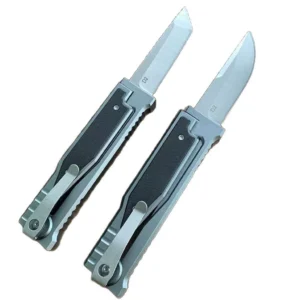
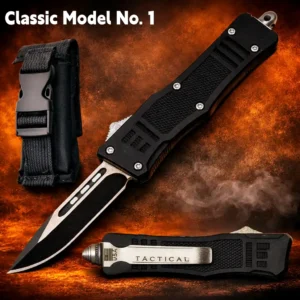
Not all OTF knives want the same treatment. Some brands prefer a dry-film product. Others allow a very light oil in tiny amounts. Many do not want the owner to open the handle at all. If you are identifying the style or format of a knife before checking model-specific instructions, this OTF knife catalog can help with visual matching, but maintenance decisions should still follow the manufacturer for the exact knife.
2. Start with exterior cleaning
Use a microfiber cloth to remove fingerprints, sweat, and grime from the blade, handle, and slider. This prevents outside dirt from being pushed toward the opening during the rest of the process.
3. Inspect the problem areas closely
The most useful inspection points are the blade opening and the slider area. Look for lint tufts, sticky residue, wet oil, dark buildup, or rust-colored specks near the blade base.
4. Remove loose debris dry
Use a dry lint-free swab or cloth edge. If the maker allows compressed air, keep it controlled and brief. The goal is to lift debris out, not blast it deeper into the mechanism.
5. Spot-clean only where needed
If you see tape adhesive or grime near the exposed blade base, use only a mild cleaner approved for that blade finish and handle material. Avoid soaking the knife.
6. Lubricate minimally
If the knife still feels dry after cleaning and your maker allows lubrication, apply only a tiny amount. In many cases, one small drop is enough. If the instructions call for a dry-film product, use that instead of oil.
7. Cycle and evaluate
Fire and retract the knife a few times to distribute the product. Then wipe off any visible excess. The exterior should end dry to the touch, not slick.
8. Stop if performance does not improve
If the action remains inconsistent, the blade fails to lock reliably, or the slider still feels abnormal, routine maintenance has probably reached its limit.
What lubricant should you use on an OTF knife?
The short answer is: only what the maker approves for that model. OTF owners often cause problems by assuming any knife oil, spray, or household lubricant is close enough. It usually is not.
- Best choice: the exact lubricant type recommended by the manufacturer.
- Usually acceptable only if specified: a very light knife oil in a tiny amount.
- Often preferred by some makers: a dry-film, low-residue product.
- Avoid: grease, thick oils, food oils, and general household sprays as routine maintenance products.
Why this matters: wet lubricants can trap lint and turn pocket debris into a gummy paste. That slows OTF action faster than a dry mechanism with light wear ever would.
Common OTF symptoms and what they usually mean
Lint at the opening
This is normal for pocket carry. Clean dry first. Do not assume it needs oil.
Wet residue near the slider
This usually points to over-lubrication. Remove excess before dirt collects in it.
Heavy or gummy slider feel
Most often caused by grime, lint, or too much oil in the wrong place.
Action improves after cleaning, then gets worse again quickly
This is a classic sign of excess lubricant attracting debris during carry.
Orange dots or roughness near the blade base
That suggests early corrosion, especially if the knife was exposed to sweat, rain, or salt air.
Misfires that continue after proper cleaning
This points to an internal issue, not a routine maintenance problem.
Mistakes that shorten OTF reliability
- Flooding the mechanism with oil: the most common owner-caused problem.
- Using grease in the track: usually too thick for fast, repeatable OTF action.
- Using random spray products: many leave residue or interfere with finishes.
- Blasting high-pressure air too close: can move debris deeper inside.
- Keeping the knife in a damp pocket or bag: encourages corrosion.
- Repeatedly firing a dirty knife: spreads grit through the mechanism.
- Disassembling without exact instructions: spring-loaded parts are easy to misassemble.
The best habit is boring but effective: wipe, inspect, clean dry, add minimal approved lubricant only if needed, and stop early if the knife still acts up.
When should you stop maintenance and send the knife for service?
Routine care is meant for lint, dirt, light dryness, and moisture cleanup. It is not meant to fix damaged springs, worn internal parts, stripped screws, or lockup issues.
- The knife still misfires after proper cleaning
- The blade does not lock open or closed consistently
- You can see corrosion inside the opening
- The slider feels unusually stiff, loose, or irregular when clean
- You hear new rattling or feel internal play
- Hardware is damaged or will not stay secure
- Your maker specifically says user service is limited
If you need help identifying a purchased model or locating a support path, use the after-sales inquiry page for that purpose, but follow the manufacturer service instructions for actual repair decisions.
Buyer and owner cues: which OTF knives usually need more frequent cleaning?
If you are comparing OTF models or planning inventory, some real-world cues matter more than generic marketing claims. Knives that are carried loose in lint-heavy pockets, used in packaging work, or exposed to sweat and humidity usually need more frequent attention. Models with deep handle texturing, aggressive pocket carry use, or frequent cardboard cutting tend to collect more debris around the opening and switch area. By contrast, lightly carried knives used for occasional clean cuts often need little more than wiping and inspection.
For owners, this means maintenance should match the environment. For buyers, it means asking practical questions: Will this knife live in jeans every day? Will it cut tape and boxes? Will it be carried in humid conditions? Those details predict maintenance needs better than broad claims about mechanism type.
Short FAQ
Can I use WD-40 on my OTF knife?
Not as routine lubricant. Use only the product type approved for your exact model.
Should I oil my OTF every week?
No. Lubricate by condition, not by habit.
Why does my OTF misfire after pocket carry?
Usually because lint, dust, or excess oil has collected around the opening or slider area.
Is disassembly normal maintenance?
No. For most OTF knives, routine care is external cleaning plus minimal approved lubrication only.
What is the biggest maintenance mistake?
Using too much lubricant and turning normal lint into sticky residue.