
Short answer
Yes, you can replace some OTF screws if the new screw exactly matches the original in size, thread, length, and head style. Exterior body and clip screws are us
Key Takeaways
- The opening mechanism affects lockup, maintenance, safety expectations, and buyer preference.
- Single-action, double-action, side-opening, and manual folders solve different user problems.
- For dealers, mechanism clarity helps reduce returns caused by mismatched expectations.
Terms Used Here
- OTF
- Out-the-front; a knife design where the blade moves forward from the front of the handle.
In this article
- 01 Which OTF screws are usually safe to replace?
- 02 How to find and verify the right replacement screw
- 03 Why exact matching matters more on an OTF than on many other knives
- 04 Is threadlocker safe on OTF screws?
- 05 Quick decision checklist
- 06 Common mistakes to avoid
- 07 FAQ
- 08 Can I use a screw from another OTF knife?
- 09 Are OTF screws usually Torx?
- 10 Can a wrong screw really cause misfire?
- 11 What if I lost the original screw?
- 12 Should I open the knife just to replace one exterior screw?
Yes, you can replace some OTF screws, but only if the replacement is an exact match for size, thread, length, and head style. On an OTF knife, exterior body screws and many pocket clip screws are usually the safest to replace; screws near the switch path, internal frame, or action components are much higher risk and are usually better left to maker service.
The reason is simple: OTF knives have a narrow internal channel and tighter handle tolerances than many side-opening folders. A screw that is only slightly too long, slightly different in thread, or shaped differently under the head can create drag, uneven handle compression, stripped threads, or inconsistent firing.
Which OTF screws are usually safe to replace?
In most cases, the lower-risk replacements are exterior screws that do not directly control the action. That usually includes:
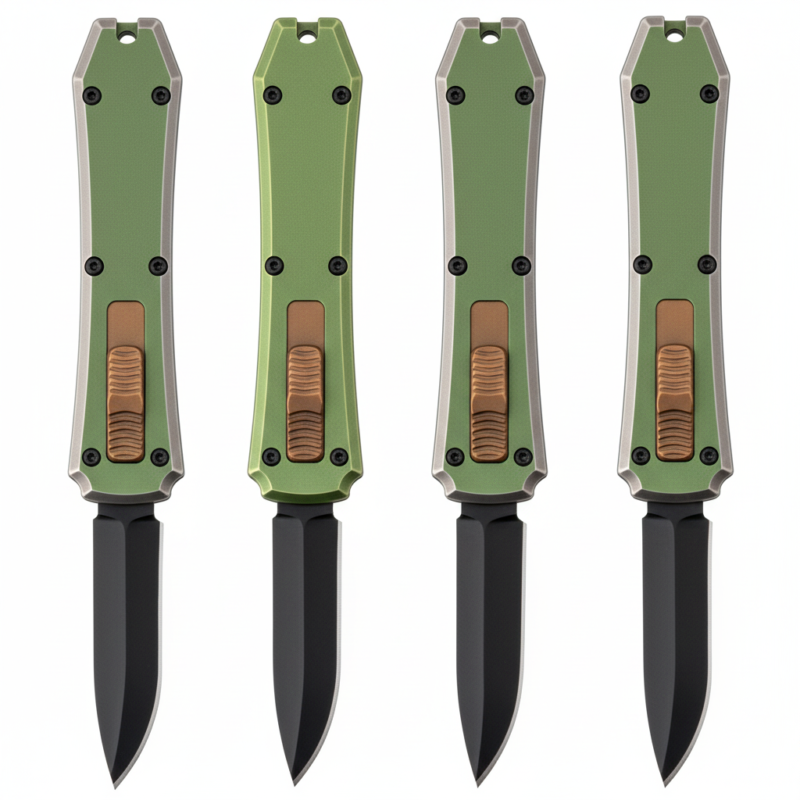
- Handle body screws that clamp the two outer handle halves together
- Pocket clip screws if the clip mount is intact and the threads are not stripped
- Cosmetic exterior screws that do not retain the switch, glass breaker assembly, or internal carriage path
Higher-risk screws include:
- Switch-area screws that retain or compress the slider track
- Screws that pass close to the blade channel or internal chassis
- Glass breaker or end-cap hardware on models where that part also captures internal structure
- Any screw you cannot identify confidently
A few concrete examples make the difference clearer:
- On many common double-action OTF designs, the clip screws are short and shallow, while the main body screws are longer. Swapping those by mistake can put a longer screw into a location where it protrudes toward the internal carriage.
- Some OTFs use standard Torx body screws but a different head diameter or shoulder style for the switch plate. Two screws may share the same driver size and still not be interchangeable.
- Certain brands and private-label models use proprietary triangle, stepped Torx, or custom spanner-style hardware on visible exterior points. That is a sign to avoid generic substitutes unless the maker or seller confirms the exact part.
If your knife worked normally before one exterior screw went missing, and the hole is not damaged, replacement is often reasonable. If the knife already had a dragging switch, random misfires, or uneven handle seams, the screw may not be the real problem.
How to find and verify the right replacement screw
The safest approach is to identify the replacement from the original screw first, then confirm against maker information if available.
- Use the original screw as the master reference.
Compare overall length, thread diameter, thread pitch, head width, head shape, and whether the underside is flat, rounded, or countersunk. - Check the exact screw location.
Do not assume another screw from the same knife is identical. Many OTF knives use similar-looking screws in different lengths depending on position. - Look for maker specs, packaging notes, or model diagrams.
Some manufacturers list hardware type, driver size, or parts compatibility in manuals, exploded diagrams, or support replies. - Ask the original seller or maker for confirmation if you are unsure.
If you need model-specific help identifying hardware, use the after-sales inquiry page and provide photos of the screw location and the original screw if you still have it. - Do not order by appearance alone.
A screw that “looks like it fits” is not enough on an OTF. The thread may start and still damage the handle threads.
If you no longer have the original screw, the next best evidence is the exact model name, close-up photos of the empty hole and surrounding hardware, and a measurement from a matching screw on the opposite side only if you know that position uses a duplicate screw.
Why exact matching matters more on an OTF than on many other knives
OTF knives are unusually sensitive to small hardware differences because the action runs inside a compact, enclosed handle. The screw does more than hold parts together. Depending on location, it can also affect handle compression, rail alignment, switch movement, or end-cap stability.
Three OTF-specific limits matter most:
- Length tolerance: a screw that is even slightly too long can project into the internal channel and rub the carriage or spring path.
- Head profile: a button head, flat head, or countersunk head spreads force differently. The wrong head can sit proud, pull unevenly, or fail to seat flush.
- Thread fit: many OTF handles use aluminum or similar softer materials for at least part of the frame or scale structure. A near-match thread can cross-thread easily and permanently loosen that mounting point.
That is why users sometimes describe a wrong replacement screw as causing a “weak spring” feel when the spring is not actually the issue. The real problem may be internal drag from a screw that is too long or uneven clamping from the wrong head style.
Is threadlocker safe on OTF screws?
Sometimes, but only in small amounts and only on the right exterior screw. A mild removable threadlocker can be appropriate for some body or clip screws if the maker allows it and the screw is confirmed correct. It is a bad idea to flood the hole, use permanent threadlocker, or apply it to an uncertain switch-area screw.
Keep these limits in mind:
- Use removable, low-strength threadlocker only if needed
- Apply a tiny amount to the threads, not the whole screw
- Keep it away from the switch path and any opening where liquid can wick inside
- Do not use threadlocker to compensate for stripped threads or the wrong screw size
If the screw loosens repeatedly, that usually means one of three things: the thread fit is wrong, the threads are already worn, or the screw is in a location subject to repeated vibration and needs the correct factory spec rather than a generic replacement.
Quick decision checklist
- Usually safe to replace: one missing exterior body screw or a clip screw on an otherwise normal-working knife
- Stop and verify first: you do not have the original screw, the knife uses proprietary hardware, or the screw location is near the switch or end cap
- Choose service instead: stripped threads, handle separation, switch drag, blade misfire, or any screw that seems to affect the firing path
- After installation, test carefully: the screw should seat flush, the handle seam should stay even, and the knife should deploy and retract with the same feel as before
Common mistakes to avoid
The biggest mistake is treating all visible OTF screws as interchangeable. They often are not. Even within one model, clip screws, body screws, and end screws may differ in length or shoulder shape.
Another common mistake is over-tightening. On an OTF, more torque does not mean a better repair. Excessive tightening can distort the handle slightly, change switch feel, or damage the female threads.
A third mistake is replacing the screw and ignoring new symptoms. If the knife suddenly feels gritty, slower, louder, or less consistent after the swap, remove that screw and re-check the match before cycling the knife more.
FAQ
Can I use a screw from another OTF knife?
Only if it matches exactly in thread, length, head style, and seating. Similar-looking OTF screws are often not interchangeable.
Are OTF screws usually Torx?
Many are, but not all. Some brands use proprietary Torx-like patterns, triangle hardware, or custom security screws. Driver size alone does not confirm compatibility.
Can a wrong screw really cause misfire?
Yes. On some OTFs, a screw that is too long or seated incorrectly can create internal drag or uneven handle compression, which may interfere with deployment or retraction.
What if I lost the original screw?
Start with the exact model identification, clear photos, and the screw location. Then confirm with the maker or seller before buying a replacement. If you are comparing models or hardware layouts, the OTF knife catalog can help you identify visible screw patterns, but it should not replace part confirmation.
Should I open the knife just to replace one exterior screw?
Usually no. If the screw is truly an exterior like-for-like replacement and the knife otherwise works normally, exterior replacement and careful post-installation testing are the safer first step.
Bottom line: yes, you can replace some OTF screws, but only when the replacement is an exact match and the screw is a low-risk exterior fastener. If the screw is proprietary, near the switch, tied to the internal frame, or followed by action problems, stop and verify the part or use service rather than guessing.