

Can I Buy Spare Parts for OTF Knives?


Short answer
Yes, but mostly for external hardware and only sometimes for internal parts. Learn which OTF knife spare parts are commonly sold, where to find them, and when f
Key Takeaways
- The opening mechanism affects lockup, maintenance, safety expectations, and buyer preference.
- Single-action, double-action, side-opening, and manual folders solve different user problems.
- For dealers, mechanism clarity helps reduce returns caused by mismatched expectations.
Terms Used Here
- OTF
- Out-the-front; a knife design where the blade moves forward from the front of the handle.
- Automatic knife
- A knife that opens by a spring-driven mechanism after the user activates a button, switch, or slider.
In this article
- 01 What spare parts for OTF knives are usually available?
- 02 Where OTF spare parts usually come from
- 03 1. Manufacturer service or parts department
- 04 2. Authorized dealers
- 05 3. Aftermarket parts sellers
- 06 4. Donor knives
- 07 5. Factory repair instead of parts sales
- 08 How to confirm whether a part will fit your OTF knife
- 09 OEM parts, aftermarket parts, donor parts, and service: what is the difference?
- 10 When should you buy the part yourself, and when should you use factory service?
- 11 Buying the part yourself usually makes sense when:
- 12 Factory service is usually the better choice when:
- 13 Common mistakes buyers make when ordering OTF parts
- 14 Quick checklist before you buy an OTF spare part
- 15 FAQ
- 16 Can I buy a replacement spring for an OTF knife?
- 17 Can I buy a replacement blade for an OTF knife?
- 18 Are OTF knife screws and clips easier to find than internal parts?
- 19 Are aftermarket OTF parts reliable?
- 20 What if my OTF knife is discontinued?
- 21 Bottom line
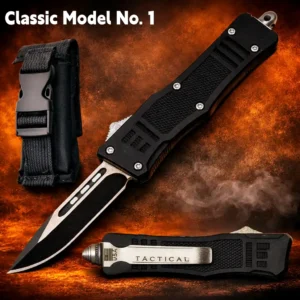
Yes, but mostly for external hardware and only sometimes for internal parts. With OTF knives, parts availability is limited because the blade, spring, carrier, and lock components work as one system inside a closed handle. That means clips and screws are often replaceable, while blades, springs, and internal lock parts are much harder to source correctly.
If you are asking this as a buyer, the shortest useful answer is: start by looking for OEM or authorized replacement hardware, and treat internal mechanism parts as model-specific service items unless the maker clearly sells them.
What spare parts for OTF knives are usually available?
Availability varies by brand, model, and whether the maker supports repairs. For many OTF models, the easiest parts to buy are external hardware. Internal parts are less predictable and may only be available through factory service, donor knives, or specialized aftermarket sellers.
| Part type | Typical availability | Fit risk | Best channel |
|---|---|---|---|
| Pocket clips and clip screws | Common for many current models | Low to medium | Manufacturer, authorized dealer, aftermarket hardware seller |
| Handle screws / body hardware | Common if the model has known screw sizes | Medium | Manufacturer, authorized dealer, parts seller |
| Glass breaker / pommel hardware | Often available on models with threaded end hardware | Low to medium | Manufacturer or aftermarket seller |
| External switch or slider button | Sometimes available | Medium to high | Manufacturer, donor knife, select aftermarket seller |
| Springs | Sometimes available, usually only for supported models | High | Manufacturer service, authorized repair, exact-match parts seller |
| Replacement blade | Uncommon | Very high | Factory service or donor knife only |
| Carrier, sear, lock bar, internal firing parts | Rarely sold retail | Very high | Factory repair or donor parts from the same model and revision |
A good rule for OTF knives is simple: external hardware is often buyable; mechanism-critical parts are often controlled, restricted, or service-only.
Where OTF spare parts usually come from
1. Manufacturer service or parts department
This is usually the best first stop for current-production knives. Makers that actively support service are the most likely to offer matching screws, clips, springs, or switch components. In many cases they will not sell every internal part directly, but they may offer a repair program instead. That is common for automatic knives because lockup and safe deployment depend on exact fit.
2. Authorized dealers
Some authorized sellers stock replacement clips, hardware packs, or model-specific accessories. This is most useful for visible parts rather than firing components. If the dealer can confirm the exact model and production version, that is a much better sign than a generic listing with only a photo.
3. Aftermarket parts sellers
Aftermarket sources can be useful for screws, clips, and cosmetic hardware. They are less reliable for springs, blades, and lock parts unless they provide exact dimensions and a clear fit list. For OTF knives, a part that is “close enough” in appearance can still fail because of spring hook shape, blade tang geometry, or slider footprint.
4. Donor knives
For discontinued models, donor knives are often the only realistic source of original parts. This is common when a knife is out of production and the maker no longer keeps hardware on hand. Donor parts can work well if they come from the same model, same size, and same revision. The downside is wear: used internal parts may already have fatigue or track wear.
5. Factory repair instead of parts sales
Some makers prefer not to sell springs, blades, or lock components by themselves. Instead, they ask owners to send the knife in for service. For OTFs, that is not just policy; it often reflects how sensitive the mechanism is to exact assembly and safe lockup.
If you are still choosing among OTF knife models, long-term parts support is worth checking before you buy. A model with common clip hardware and active factory service is easier to keep running than one with no documented parts path.
How to confirm whether a part will fit your OTF knife
With OTF knives, visual similarity is not enough. Two knives can share the same overall shape but use different spring lengths, blade travel, switch geometry, or screw specs. Before you order, confirm these points:
- Exact model name: not just the brand, but the specific model.
- Size class: mini, standard, and large versions often use different internals.
- Production revision or generation: even small running changes can affect fit.
- Blade style: dagger, tanto, and drop point versions may not always share the same tuning.
- Handle material or chassis type: aluminum, zinc alloy, steel, and titanium builds may use different screw lengths or inserts.
Here are four OTF-specific signs a part may not fit:
- The spring listing gives only length, not wire diameter or hook style. OTF springs are not universal.
- The blade listing does not show tang or interface details. Blade shape alone does not confirm compatibility.
- The seller cannot identify the production revision. Batch changes are common enough to matter.
- The switch or slider looks right but the mounting footprint is not specified. External controls can vary even within similar handles.
If the part is anything more important than a clip or screw, ask for measurements or a confirmed fit statement before ordering.
OEM parts, aftermarket parts, donor parts, and service: what is the difference?
OEM parts are original manufacturer parts made for that model. These are usually the safest choice when available.
Aftermarket parts are made by a third party. They may work well for clips or screws, but internal compatibility should never be assumed.
Donor parts come from another knife, usually used or damaged. They can be the only option for discontinued models, but condition matters.
Factory service means you do not buy the part separately; the maker installs or fits it during repair. For springs, blades, carriers, and lock parts, this is often the best route.
When should you buy the part yourself, and when should you use factory service?
Buying the part yourself usually makes sense when:
- The part is external, like a clip, screw, or glass breaker.
- The maker or seller clearly lists your exact model.
- The knife is current production and well supported.
- The replacement does not affect lockup or firing timing.
Factory service is usually the better choice when:
- The knife has a broken or weak spring and no exact OEM spring listing is available.
- You need a replacement blade.
- The knife misfires, fails to lock, or retracts inconsistently.
- You suspect wear on the carrier, sear, track, or lock surfaces.
- The model is high-value and you do not want to risk trial-and-error fitting.
That last point matters. On an OTF, a blade swap or internal rebuild is not like changing scales on a manual folder. The blade is part of the mechanism, and a near-match can still produce weak deployment, drag, or unsafe lockup.
Common mistakes buyers make when ordering OTF parts
- Assuming OTF springs are universal. They are not. Length alone is not enough.
- Buying by photo only. Similar-looking handles often hide different internals.
- Treating blade replacement as cosmetic. On an OTF, blade weight and tang geometry affect function.
- Mixing donor parts from different factories. Even close copies can have different tracks, lock faces, or screw specs.
- Ignoring seller language. “Fits most” is a warning sign for mechanism parts.
Quick checklist before you buy an OTF spare part
- Identify the exact brand, model, size, and blade style.
- Check whether the knife has a known revision or generation change.
- Decide whether the part is external hardware or mechanism-critical.
- Ask whether the part is OEM, aftermarket, or pulled from a donor knife.
- Get measurements for screws, springs, sliders, or blade interfaces when relevant.
- Confirm return terms before opening small hardware packs.
- If the part affects lockup, deployment, or retraction, consider factory service first.
FAQ
Can I buy a replacement spring for an OTF knife?
Sometimes. Springs are available for some supported models, but they are highly model-specific and often better handled through factory service.
Can I buy a replacement blade for an OTF knife?
Sometimes, but it is much less common than buying clips or screws. In many cases, blade replacement is handled as a factory repair.
Are OTF knife screws and clips easier to find than internal parts?
Yes. For many models, external hardware is the most realistic type of spare part to buy.
Are aftermarket OTF parts reliable?
They can be for external hardware. For springs, blades, and lock parts, reliability depends on exact dimensions and confirmed model fit.
What if my OTF knife is discontinued?
Your best options are manufacturer leftover stock, authorized service, or donor parts from the same model and revision.
Bottom line
Yes, you can buy spare parts for some OTF knives, but the realistic market is mostly clips, screws, breakers, and other external hardware. Internal parts such as springs, blades, carriers, and lock components are available only sometimes, usually for specific supported models or through repair channels. If the part affects firing or lockup, the safest path is exact OEM fit or factory service rather than guesswork.