

What Handle Finish Lasts Longest on OTF Knives?


Short answer
Hard-anodized aluminum usually lasts longest on most OTF knife handles, while stonewashed titanium often looks better for longer because it hides wear. Compare
Key Takeaways
- Knife rules can vary by state, city, blade style, opening mechanism, carry method, and intended use.
- Do not treat a product nickname as a legal category; check the actual features and local rule.
- Retailers should keep legal or safety language factual and avoid promising that one item is allowed everywhere.
Terms Used Here
- OTF
- Out-the-front; a knife design where the blade moves forward from the front of the handle.
- Automatic knife
- A knife that opens by a spring-driven mechanism after the user activates a button, switch, or slider.
In this article
- 01 Quick comparison: which OTF handle finish lasts longest?
- 02 Why hard-anodized aluminum is usually the longest-lasting answer
- 03 When stonewashed titanium is the better answer
- 04 Why coated aluminum often ages faster
- 05 Where steel handles fit in
- 06 What actually determines finish life
- 07 Concrete examples of how OTF finishes fail
- 08 Best choice by use case
- 09 For most users
- 10 For the best-looking aging
- 11 For color and style first
- 12 For a heavy-duty feel over cosmetic neatness
- 13 Short FAQ
- 14 Does black finish last longer than silver on an OTF knife?
- 15 Do textured handles keep their finish longer?
- 16 Can I judge finish durability by material alone?
- 17 Where can I compare current OTF styles?
Hard-anodized aluminum usually lasts the longest on most OTF knife handles.
The main caveat is that stonewashed titanium often looks better for longer because it hides scratches and rub marks more effectively than darker, higher-contrast finishes.
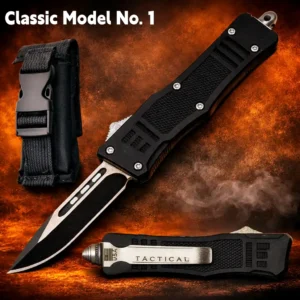
For most users asking this exact question, the practical answer is simple: on aluminum-handled OTF knives carried normally in a pocket, a good Type III-style hard-anodized finish usually gives the best overall finish life. That changes when your priority is cosmetic aging rather than raw wear resistance, because stonewashed titanium often disguises use better around the clip side, switch cutout, and handle edges. On OTFs, that distinction matters more than on many other knives because the handle sees constant thumb contact on the firing switch, repeated pocket draw friction, and grit trapped under the clip.
Quick comparison: which OTF handle finish lasts longest?
| Finish | Wear resistance | Corrosion resistance | How it ages visibly | Common OTF failure points |
|---|---|---|---|---|
| Hard-anodized aluminum | Usually the best overall for daily pocket carry | Very good | Resists wear well, but edge breakthrough can show bright silver contrast | Clip-side rub, switch-track polishing, corner impacts, screw-seat wear |
| Stonewashed titanium | Good, but usually chosen more for hiding wear than preventing it | Excellent | Often looks better for longer because scratches blend into the texture | Thread galling on poor builds, clip trails, edge scuffs, screw-head marking |
| Coated aluminum | Depends heavily on prep and coating quality; often below hard anodizing | Usually good if intact | Can look great at first, but chips and rub spots are more obvious | Switch-ramp polish, edge chipping, clip landing-zone wear, mouth-end abrasion |
| Bead-blasted or satin steel | Structurally durable, but finish shows marks fairly quickly | Good to very good, depending on steel | Shows snail trails, fingerprints, and rub lines early | Clip-side scuffing, pocket seam scratches, screw-ring marking, drop scars |
Why hard-anodized aluminum is usually the longest-lasting answer
Hard anodizing is usually the best answer because it is not just a color layer sitting on top of the handle. On aluminum OTFs, the anodized layer becomes part of the surface, so ordinary pocket abrasion often takes longer to make it look worn than with painted or sprayed finishes.
That matters on an OTF because the chassis gets handled constantly during deployment and retraction. The firing switch area sees repetitive thumb drag. The clip side rubs against pocket fabric and whatever fine grit ends up in that pocket. The handle edges hit seams, desks, car interiors, and sometimes concrete. A good hard-anodized frame usually tolerates those conditions better than basic coatings.
In normal carry, hard-anodized aluminum usually holds up best in these OTF-specific zones:
- the broad flat face riding against pocket fabric
- the switch cutout where skin oils and friction build up
- the clip-side panel where grit gets trapped under the clip
- the chamfered edges that contact pocket seams during draw
Its weak point is contrast. Once wear breaks through on a black or dark-anodized handle, the exposed aluminum can show as a bright line on corners or near the clip screw. So the finish may still be durable in a technical sense while looking worn sooner than a lighter, textured surface.
Best for: most everyday-carry OTFs where low weight, solid corrosion resistance, and long finish life matter most.
Not ideal for: users who care more about hiding scratches than resisting them.
When stonewashed titanium is the better answer
If you mean “which finish keeps the knife looking good longest,” stonewashed titanium often beats hard-anodized aluminum. This is the main tradeoff that changes the recommendation: hard anodizing usually resists wear better, while stonewashed titanium usually hides wear better.
On an OTF handle, visible aging tends to appear first in a few predictable places: around the switch opening, along the clip-side edge, near the body screws, and on the corners that hit hard surfaces during pocket draw or accidental drops. A stonewashed titanium surface already has visual texture, so new scratches, rub marks, and light scuffs often blend in instead of standing out.
That does not mean titanium is magically scratch-proof. It means the finish is more forgiving. A stonewashed titanium OTF carried beside a flashlight or key fob may still collect marks, but they often disappear into the existing gray texture. A black aluminum OTF in the same pocket may resist wear well for a while, then suddenly show obvious bright edge lines once the finish is breached.
Stonewashed titanium also tends to age gracefully around the clip trail. On some OTFs, the clip-side panel slowly develops a polished path from fabric and grit. On a stonewashed surface, that path is often less dramatic than on a coated or dark-anodized handle.
Best for: premium OTFs, hard users, and anyone who values graceful cosmetic aging.
Not ideal for: buyers who want the lightest handle or the most cost-efficient long-life finish.
Why coated aluminum often ages faster
Coated aluminum can look excellent, especially in colors and special editions, but it usually depends more on process quality than finish name alone. Surface prep, blasting, degreasing, cure control, and edge coverage all matter. A well-applied coating can perform well; a weak one can wear quickly in exactly the places OTF users touch most.
Common OTF failure modes include:
- polishing on the switch ramp from repeated thumb pressure
- chips on exposed corners after contact with metal furniture or concrete
- wear under the clip where pocket grit acts like fine abrasive
- thin coverage around screw seats and handle mouth edges
This is why two “coated aluminum” OTFs can age very differently. One may stay presentable for a long time, while another shows edge chipping within weeks. The coating category alone does not tell you enough.
Best for: color variety, visual customization, and styles where appearance out of the box matters most.
Not ideal for: users whose top priority is the longest-lasting cosmetic finish.
Where steel handles fit in
Bead-blasted or satin steel handles are durable in a structural sense, but the finish itself usually does not win this comparison. Steel can take abuse, yet the surface often shows snail trails, fingerprints, and rub lines earlier than hard-anodized aluminum. On OTFs, that is especially noticeable because the clip side and edges are always in contact with fabric, hardware, and pocket debris.
Steel also adds weight, which can change how the knife moves in the pocket and how hard it hits if dropped. That does not automatically make it worse, but it means “lasts longest” depends on whether you mean the metal survives abuse or the finish stays clean-looking.
Best for: heavy-feeling OTFs and users who care more about solidity than surface appearance.
Not ideal for: anyone specifically chasing the longest-lasting visible finish.
What actually determines finish life
Finish life depends on more than the finish name. It usually comes down to process quality, surface prep, edge coverage, and carry conditions. A properly machined and hard-anodized aluminum handle with clean chamfers and consistent treatment will often outlast a poorly coated handle, even if the coating sounds more premium on paper. Likewise, a good stonewash on titanium can age better than a smoother finish because it masks fresh wear. Pocket carry conditions matter too: sand, lint, sweat, frequent clip-on carry, and repeated contact with the switch all accelerate visible aging on OTFs.
Before purchase, inspect the actual sample around the switch cutout, clip landing zone, corners, and screw seats, because those are usually the first places an OTF finish reveals weak prep or thin coverage.
Concrete examples of how OTF finishes fail
These are the kinds of real-world patterns that usually separate finishes more clearly than marketing names:
- Switch-track rub: repeated firing can create a shiny patch around the actuator path, especially on softer coatings.
- Clip-side abrasion: pocket grit trapped under the clip slowly cuts a visible trail into the handle face.
- Screw-seat wear: frequent disassembly or over-tightening can mark the finish around body screws faster than the rest of the handle.
- Edge breakthrough: dark finishes often look fine until a corner takes one hard hit and exposes bright base metal underneath.
Those points are more useful than generic “scratch resistance” claims because they reflect how OTFs are actually carried and used.
Best choice by use case
For most users
Choose hard-anodized aluminum. It usually offers the longest-lasting finish on a typical OTF in normal pocket carry.
For the best-looking aging
Choose stonewashed titanium. It often does the best job of hiding clip trails, edge scuffs, and handling marks over time.
For color and style first
Choose coated aluminum, but expect finish life to depend heavily on build quality and prep.
For a heavy-duty feel over cosmetic neatness
Choose bead-blasted or satin steel, knowing the surface will often show wear sooner even if the handle remains physically robust.
Short FAQ
Does black finish last longer than silver on an OTF knife?
Not necessarily. Black hard anodizing can be very durable, but wear usually shows more clearly once edges break through. Silver or gray finishes often look better longer because the contrast is lower.
Do textured handles keep their finish longer?
Sometimes they hide wear better, but sharp texture peaks can polish down first. Texture helps grip on an OTF, yet it does not guarantee the longest cosmetic life.
Can I judge finish durability by material alone?
No. Aluminum with good hard anodizing can outlast a poorly coated premium-looking handle. Titanium with a good stonewash can look fresher longer than a tougher but high-contrast finish.
Where can I compare current OTF styles?
You can browse OTF knife models to compare handle materials and finish types. If you need exact material or finish-process details for a specific model, use the material and MOQ inquiry page.