
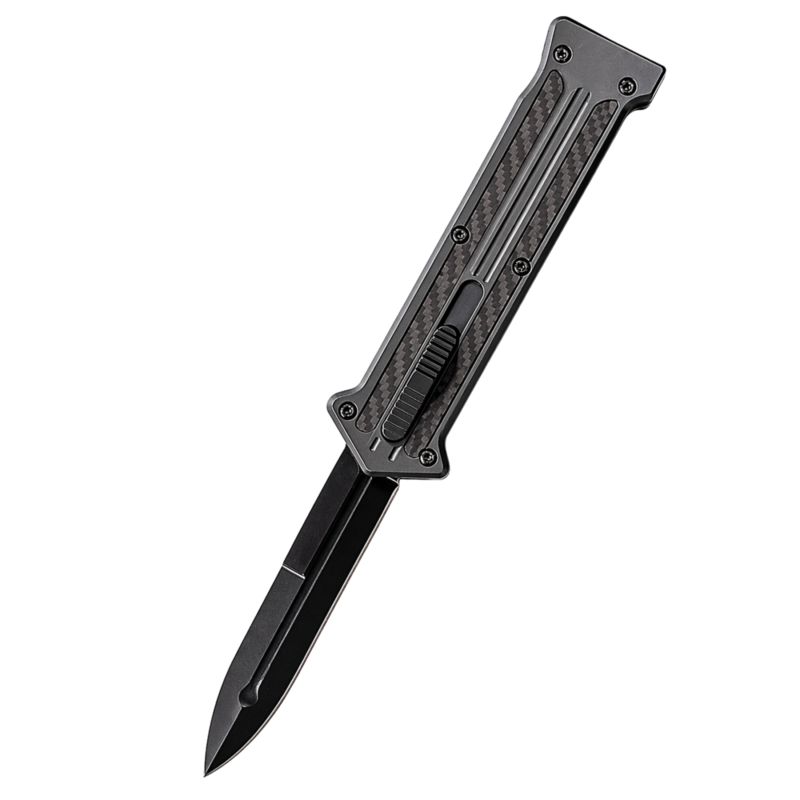
Short answer
A neutral, source-based explanation of whether automatic OTF knives are allowed on Walmart Marketplace, including the exact Walmart policy line, what it likely
Key Takeaways
- Knife rules can vary by state, city, blade style, opening mechanism, carry method, and intended use.
- Do not treat a product nickname as a legal category; check the actual features and local rule.
- Retailers should keep legal or safety language factual and avoid promising that one item is allowed everywhere.
Terms Used Here
- OTF
- Out-the-front; a knife design where the blade moves forward from the front of the handle.
- Automatic knife
- A knife that opens by a spring-driven mechanism after the user activates a button, switch, or slider.
In this article
- 01 Source
- 02 Why this likely applies to automatic OTF knives
- 03 What the source does not say
- 04 Legality versus Walmart Marketplace policy
- 05 Practical checklist for sellers
- 06 Common seller mistakes
- 07 What this means in practice
- 08 Brief FAQ
- 09 Does Walmart’s public policy page explicitly name OTF knives?
- 10 Are all OTF knives clearly banned by the source?
- 11 If a non-automatic OTF knife is legal in my state, can I list it on Walmart?
- 12 What should a seller do before listing any OTF-style knife on Walmart?
- 13 Practical takeaway
Short answer: Automatic OTF knives are likely not allowed on Walmart Marketplace because Walmart’s published prohibited-products policy lists “Switchblade knives”. Walmart’s published line does not clearly address every non-automatic OTF variant, so sellers should not assume those are allowed without written clarification from Walmart.
Source
Controlling source: Walmart Marketplace, Prohibited Products Policy, https://marketplace.walmart.com/prohibited-products-policy/, accessed May 4, 2026.
Relevant line: “Switchblade knives”
That is the clearest published Walmart Marketplace policy language directly relevant to this question. Before making any interpretation, the safest starting point is simply this: Walmart says switchblade knives are prohibited on its Marketplace.
Why this likely applies to automatic OTF knives
Many OTF knives in actual retail and wholesale use are automatic out-the-front knives. In other words, the blade deploys from the front of the handle through a button or slider rather than being opened manually. That automatic action is why automatic OTF knives are commonly grouped with switchblades in policy and compliance contexts.
Because Walmart’s published line prohibits switchblade knives, the cautious reading is that an automatic OTF knife is very likely not acceptable for Walmart Marketplace listing. This is not because Walmart’s public policy page names “OTF” specifically. It does not. It is because automatic OTF knives are the OTF format most closely aligned with the prohibited switchblade category.
For sellers, that distinction matters. If your SKU is an automatic OTF, the policy risk is high enough that you should treat Walmart Marketplace as a do-not-list channel unless Walmart gives you newer written guidance saying otherwise.
What the source does not say
This is where overclaiming becomes risky. Walmart’s quoted line says “Switchblade knives”. It does not publicly spell out every knife mechanism or every product that might be considered similar.
Specifically, the quoted line does not expressly mention:
- Manual OTF knives
- Non-automatic sliding-blade designs
- Single-action versus double-action OTF variants
- Assisted-opening knives that are not switchblades
So the careful answer is not “all OTF knives are banned.” The more supportable answer is narrower: automatic OTF knives are likely prohibited because Walmart prohibits switchblade knives, while non-automatic OTF variants are not clearly addressed in the quoted public line.
If you sell a knife that uses the OTF format but is not automatic, the public policy line alone is not enough to confirm approval. That is exactly the kind of edge case where a seller should seek written clarification through Walmart Marketplace support or category compliance channels before listing.
Legality versus Walmart Marketplace policy
Do not confuse platform policy with knife law. A knife can be legal to own, ship, import, or sell in a particular state and still be prohibited by Walmart Marketplace. Walmart is setting a marketplace rule for its platform, not issuing a statement about general legality.
That distinction matters because many sellers make the same mistake: they confirm that a knife is lawful in their jurisdiction, then assume it is also acceptable on every online marketplace. That is not how platform compliance works. Walmart can prohibit a product category even where state law would allow it.
So if your question is, “Can I legally possess or distribute this knife?” that is a different question from, “Will Walmart Marketplace allow me to list it?” This page addresses the second question only.
Practical checklist for sellers
If you are deciding whether a knife belongs on Walmart Marketplace, this quick checklist is more useful than broad assumptions:
- Check the mechanism first. If the blade deploys automatically by button or slider, treat it as high-risk under Walmart’s switchblade prohibition.
- Read your own product data. If your packaging, supplier sheet, or listing copy uses terms like automatic, auto, or switchblade, that increases the chance the item falls inside the prohibited category.
- Do not rely on “OTF” alone. OTF describes blade direction, not always the exact mechanism. The policy issue is strongest when the OTF knife is automatic.
- Do not assume silence means permission. If Walmart’s public page does not clearly cover your non-automatic variant, get written clarification before listing.
- Keep evidence. Save the policy page date, URL, and any written response from Walmart support in case a listing decision is questioned later.
Common seller mistakes
Most compliance problems here come from avoidable assumptions rather than complicated legal analysis.
- Overgeneralizing from the word “OTF.” Not every OTF-labeled product is described the same way in policy terms. The strongest conclusion applies to automatic OTF knives, not automatically to every possible variant.
- Renaming the product to sound safer. Changing a title to “tactical tool” or “collector knife” does not change the mechanism. Walmart review decisions are more likely to turn on what the product is than on softer wording.
- Using state legality as a listing test. A lawful product can still be barred by Walmart Marketplace policy.
- Buying inventory before checking channel fit. For resellers, this is the expensive mistake. If Walmart is an important channel, mechanism review should happen before listing prep, not after inventory arrives.
What this means in practice
Here is the most defensible way to apply Walmart’s published policy:
- Automatic OTF knife: Likely not allowed on Walmart Marketplace because Walmart prohibits switchblade knives.
- Non-automatic OTF variant: Not clearly addressed by the quoted public line, so do not assume approval without written clarification.
- Unclear or mixed product data: Pause the listing until the mechanism is confirmed and Walmart guidance is documented.
That approach is conservative, but it matches the available evidence better than a blanket claim that every OTF knife is prohibited. It is also easier to defend if your team needs a clean compliance rule.
Brief FAQ
Does Walmart’s public policy page explicitly name OTF knives?
No. The quoted public line is “Switchblade knives”. The connection to automatic OTF knives is an interpretation based on mechanism, not an exact “OTF” mention on the page.
Are all OTF knives clearly banned by the source?
No. The source supports the strongest conclusion for automatic OTF knives. It does not clearly answer every non-automatic OTF design.
If a non-automatic OTF knife is legal in my state, can I list it on Walmart?
Not necessarily. State legality and Walmart Marketplace policy are separate. If Walmart’s public policy does not clearly cover your variant, you should get written clarification before listing.
What should a seller do before listing any OTF-style knife on Walmart?
Confirm the exact mechanism, review Walmart’s current prohibited-products policy, and seek written clarification if the item is not plainly covered by the published language.
Practical takeaway
If you need a one-sentence working rule, use this one: automatic OTF knives are likely not allowed on Walmart Marketplace because Walmart prohibits switchblade knives, while non-automatic OTF variants should be treated as unresolved until Walmart confirms them in writing.
For businesses that sell across multiple channels, this is mainly a channel-screening issue. Keep Walmart-bound inventory separate from higher-risk knife mechanisms, and document policy checks before you invest in listings or packaging. If you need to review product types for other sales channels after resolving platform compliance questions, you can browse the OTF knife catalog. For business-only sourcing questions unrelated to Walmart policy interpretation, the wholesale inquiry form is available below the informational content.