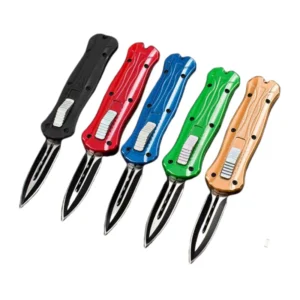


Can a Pocket Knife Go in a Checked Bag? What Travelers and Buyers Should Know

Short answer
Learn whether a pocket knife can go in a checked bag, what TSA-style airline rules usually allow, common packing mistakes, and what retailers and wholesale buye
Key Takeaways
- Separate carry-on rules, checked-bag rules, airline policy, and destination law before making a decision.
- Use current official guidance for travel questions; product descriptions alone are not enough.
- For resale, clear customer notes reduce confusion around travel, carry, and storage.
Terms Used Here
- Pocket knife
- A compact knife intended for pocket carry, often with a folding blade.
- Folding knife
- A knife with a blade that pivots into the handle for storage.
- Fixed blade
- A knife with a blade that does not fold or retract into the handle.
- EDC
- Everyday carry; gear intended for regular daily tasks.
- Carry-on
- Items carried into an aircraft cabin rather than placed in checked baggage.
In this article
- 01 Can a pocket knife go in a checked bag?
- 02 Why pocket knives are treated differently in checked luggage
- 03 How to pack a pocket knife in checked luggage
- 04 What kinds of pocket knives travelers ask about most
- 05 Common mistakes to avoid before you travel
- 06 What wholesale buyers should look for in travel-conscious knife inventory
- 07 How to choose a pocket knife that fits your needs
- 08 Useful buyer criteria
- 09 What to do if you are unsure about the rules
- 10 Practical FAQ
- 11 Can I put a pocket knife in my carry-on if it is small?
- 12 Does the knife need to be locked shut in checked baggage?
- 13 Are all pocket knives allowed in checked bags?
- 14 What if I am traveling internationally?
- 15 Should retailers mention travel rules on product pages?
- 16 Bottom line for travelers and buyers
If you are flying, a pocket knife can usually go in a checked bag, but it should not go in your carry-on. That said, the final answer depends on the airline, the country you are traveling through, and any local laws at your departure or destination. Before packing one, it is smart to verify the current rules for your route and make sure the knife is stored securely so it cannot move around or damage other items.
Can a pocket knife go in a checked bag?
In most cases, yes. Small folding knives, including many pocket knives, are generally permitted in checked luggage when they are packed properly. The main concern is that the knife must be inaccessible during the flight and protected so it does not injure baggage handlers or damage your belongings. This is why checked baggage is usually the place for a pocket knife, while carry-on bags are not.
Keep in mind that “usually allowed” does not mean “allowed everywhere.” Some countries, airports, and airlines have stricter rules than others. Certain knife styles, blade lengths, or locking mechanisms may face additional restrictions. If you are traveling internationally, always check the rules for both your departure and arrival locations.
Why pocket knives are treated differently in checked luggage
Air travel rules focus on safety and access. A pocket knife in a checked bag is sealed away during the flight, which reduces the risk of it being used onboard. In a carry-on, even a small folding knife is considered a security concern because it is immediately accessible in the cabin. That is the main reason most travelers are told to keep knives out of hand luggage.
For buyers and sellers, this distinction matters because customers often ask whether a knife is “travel friendly.” The real answer is not just about blade size or style. It is about how the knife is carried, where it is stored, and whether it complies with the rules of the trip.
How to pack a pocket knife in checked luggage
When a pocket knife is going in a checked bag, the goal is to keep it secure and prevent accidental opening or damage. A good packing method makes a difference, especially for resellers and wholesale buyers who may handle knives in quantity.
- Close and lock the blade before packing, if the knife has a locking mechanism.
- Use a sheath, pouch, or protective wrap so the blade is covered.
- Place it in a hard-sided case or a well-padded compartment to reduce shifting.
- Keep it away from loose items such as chargers, tools, or toiletries that could press on the knife.
- Do not bury it loosely in clothing where it can move around during transit.
If the knife is especially valuable, consider placing it in a dedicated storage case inside the checked bag. This is a practical choice for collectors, retail customers, and distributors shipping product samples or display stock for trade events. Good packaging helps preserve the item and reduces the chance of baggage inspection issues.
What kinds of pocket knives travelers ask about most
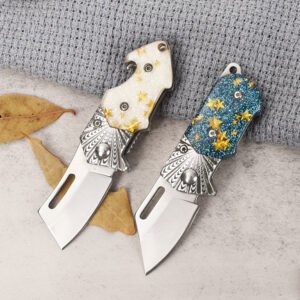
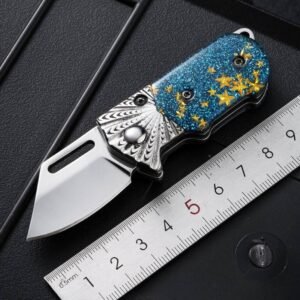
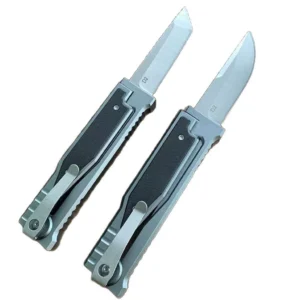
Not every folding knife is treated the same way by travelers. Some common examples include basic slip-joint pocket knives, locking folders, assisted-opening knives, compact EDC tools, and multi-function knives with small blades. In many situations, a standard folding pocket knife is easier to pack than a larger fixed blade, but the exact rules still depend on the carrier and destination.
Retail shoppers often want a compact knife for camping, fishing, work, or travel after arrival. Wholesale buyers and store owners, on the other hand, may want to stock models that are easy to explain to customers: simple folding designs, protective packaging, and clear product specs such as blade length, open length, closed length, and locking type. Those details help customers make informed choices before they fly.
Common mistakes to avoid before you travel
Many travel problems happen because a knife was packed casually or because the traveler assumed all rules were the same everywhere. A few simple mistakes can lead to delays, confiscation, or unnecessary stress.
- Putting the knife in a carry-on instead of a checked bag.
- Leaving the blade exposed or only partially closed.
- Forgetting about local laws at your destination or connection point.
- Packing a restricted style without checking whether it is allowed where you are going.
- Assuming a case of knives can be checked without review when traveling with multiple items for business or display.
Another common mistake is forgetting that security rules can change. A knife that was acceptable on one trip may be handled differently later. That is why it is always best to verify current airline and airport guidance before you leave.
What wholesale buyers should look for in travel-conscious knife inventory
If you sell knives to customers who travel, choosing the right inventory can reduce returns and questions. Buyers often look for folding knives that are compact, durable, and easy to store safely. Clear product descriptions matter too, especially for online listings and retail displays.
For wholesale sourcing, practical features often matter as much as appearance. Consider whether the knife has a secure closed position, a protective finish, a pocket clip, and packaging that protects the blade during shipping. Models with straightforward specs are easier for store staff to explain to customers who want a knife for outdoor use after arrival rather than for carrying through security.
If you are building a folding knife assortment, you can review options in our folding knife wholesale category. A well-balanced selection helps serve travelers, everyday users, and resale customers who want dependable products with clear utility.
How to choose a pocket knife that fits your needs
When deciding what to buy, think beyond the travel question. The best pocket knife for one customer may not be the best for another. A retail shopper may want something lightweight and easy to maintain, while a distributor may care more about consistent build quality and steady demand.
Useful buyer criteria
- Blade size: Smaller blades are often more convenient for everyday carry and storage, though rules still vary by location.
- Locking style: Locking folders can provide added security in use, but they may be subject to different regulations in some places.
- Handle material: Choose a durable grip that resists wear and holds up during travel or outdoor use.
- Weight and profile: A slim knife is easier to pack, display, and carry responsibly.
- Packaging: Retail-ready packaging helps stores and resellers present the product clearly and safely.
For B2B buyers, these details also affect customer satisfaction. A knife that is easy to understand, easy to store, and easy to transport responsibly tends to create fewer support issues than a product with unclear features or poor packaging.
What to do if you are unsure about the rules
If you are uncertain whether your pocket knife can go in a checked bag, treat that uncertainty seriously. Check your airline’s baggage policy, review the security guidance for your departure airport, and verify any rules for your destination. If you are crossing borders, remember that local laws can differ even when the airline allows the item in checked baggage.
When in doubt, consider leaving the knife at home or shipping it separately in compliance with applicable laws and carrier policies. That may be the simplest choice for frequent travelers, trade show attendees, or store buyers transporting samples.
Practical FAQ
Can I put a pocket knife in my carry-on if it is small?
Usually no. Even small folding knives are commonly prohibited in carry-on bags. Checked luggage is generally the appropriate place, but always verify current rules.
Does the knife need to be locked shut in checked baggage?
It is best if the knife is fully closed and secured. If it has a lock, make sure it cannot open during transit. Protective wrapping or a sheath is also recommended.
Are all pocket knives allowed in checked bags?
Not necessarily. Some knife types may face restrictions depending on the airline, airport, or country. Check the rules for your route before packing.
What if I am traveling internationally?
International trips require extra caution because laws and security policies can differ by country. Always verify the rules for both departure and arrival locations, and for any connection airports.
Should retailers mention travel rules on product pages?
Yes, it is helpful to provide general guidance. Clear product descriptions and responsible-use notes can reduce confusion and help customers make informed buying decisions.
Bottom line for travelers and buyers
A pocket knife can usually go in a checked bag, but it should stay out of carry-on luggage and be packed securely. The safest approach is to confirm the current airline and local rules, protect the blade during transit, and avoid assuming every destination follows the same policy. For shoppers, that means planning ahead. For retailers and wholesale buyers, it means stocking folding knives that are clearly described, well packaged, and easy for customers to understand and store responsibly.