

Can Heat Affect an OTF Knife? What It Changes and When to Worry


Short answer
Yes, heat can affect an OTF knife. Learn what heat changes in the spring, lubricant, button channel, lockup, and handle materials, plus the warning signs that m
Key Takeaways
- Knife rules can vary by state, city, blade style, opening mechanism, carry method, and intended use.
- Do not treat a product nickname as a legal category; check the actual features and local rule.
- Retailers should keep legal or safety language factual and avoid promising that one item is allowed everywhere.
Terms Used Here
- OTF
- Out-the-front; a knife design where the blade moves forward from the front of the handle.
- Automatic knife
- A knife that opens by a spring-driven mechanism after the user activates a button, switch, or slider.
In this article
- 01 Normal / maybe / stop-use triage
- 02 What heat can affect in an OTF knife
- 03 1. Lubricant
- 04 2. Spring behavior
- 05 3. Button channel and debris sensitivity
- 06 4. Lockup and sear surfaces
- 07 5. Handle materials, inlays, and threadlocker
- 08 How to tell heat from other common causes
- 09 Normal behavior vs warning signs
- 10 What to do first
- 11 What not to do
- 12 When to contact the maker
- 13 FAQ
- 14 Can leaving an OTF knife in a hot car damage it?
- 15 Does heat weaken an OTF spring immediately?
- 16 Why does the firing button feel sticky after heat?
- 17 Should I flush the inside with oil or solvent?
- 18 What is the short answer?
Yes, heat can affect an OTF knife. Normal warmth from pocket carry, a warm room, or brief sun exposure usually is not a problem, but leaving an OTF in a hot car, on a dashboard, or in direct sun for hours can change how the spring, lubricant, button channel, and lock parts behave.
Early rule of thumb: mild warmth with normal firing is usually fine; repeated misfires, a sticky firing button, failure to lock open or closed, or new drag after the knife returns to room temperature are warning signs. Exact thresholds, lubrication rules, and service steps vary by maker, so follow the model’s manual and warranty terms first.
Normal / maybe / stop-use triage
- Normal: The handle feels warm after pocket carry or short sun exposure, and the knife still deploys and retracts cleanly. The action may feel slightly quicker when warm or slightly slower after cooling, but there are no failures.
- Maybe: After sitting in a hot car or direct sun for hours, the button feels tacky, oil appears around the seams, or the action slows down once or twice. Let it return to room temperature, inspect the exterior, and retest.
- Stop-use: The blade repeatedly stops short, does not lock open or closed, the button binds and does not return normally, new scraping sounds appear, or symptoms continue after cooling. Treat that as a mechanical problem, not just a temperature quirk.
What heat can affect in an OTF knife
Heat usually does not hurt the blade steel first. In real use, it more often affects the parts that make a double-action OTF fire and lock: the drive spring or springs, firing button, button channel, blade rails, sear or latch surfaces, and the lubricant the maker expects you to use sparingly.
1. Lubricant
This is the most common heat-related change. As temperature rises, oil thins and grease can migrate. In an OTF, that matters because excess lubricant can move into the button channel, onto the blade rails, or onto lock surfaces. Common symptoms are a gummy button, inconsistent deployment speed, or oil weeping from the blade opening or handle seams after the knife sat in a hot vehicle.
This is why many OTF makers and manuals repeat the same guidance: use only light lubrication, use very little of it, and do not flood the mechanism. Too much lube can create the exact symptoms owners blame on heat.
2. Spring behavior
An OTF spring is designed to work across normal ambient conditions. Ordinary summer carry is not the same as damaging heat. The more realistic concern is prolonged exposure to hot-car temperatures or repeated heat cycles that expose a spring already near the edge of failure. Heat alone does not usually “ruin” a healthy spring in one afternoon, but it can make a weak spring show itself through sluggish deployment, uneven force, or repeated failure to complete travel.
That is also why persistent symptoms after cooling matter more than temporary sluggishness while the knife is still hot.
3. Button channel and debris sensitivity
OTF knives rely on a narrow path for the firing button and internal carrier. Heat can make migrated oil and fine pocket debris feel tackier, especially around the button track. If the button becomes sticky before the blade starts misfiring, the issue is often lubricant migration or contamination rather than a broken spring.
4. Lockup and sear surfaces
OTF lockup depends on timing between the blade, drive system, and lock parts. Slight thermal expansion in the handle and chassis is normally small, but OTF mechanisms operate with tighter clearances than a basic manual folder. If a knife already has lint in the track, excess oil, or borderline tolerances, heat can push it from “works fine” to “hangs up occasionally.”
That does not mean heat changed the steel hardness or permanently warped the knife. More often, it means a mechanism that was already sensitive now shows it.
5. Handle materials, inlays, and threadlocker
On some models, aluminum handles, polymer buttons, inlays, adhesives, and threadlocker can react to prolonged high heat. A hot dashboard is a more useful real-world example than the vague phrase “high heat.” If a knife develops a loose-feeling button, visible scale shift, lifted inlay, or screws that seem to move after repeated heat exposure, that points to a material or assembly issue that should be checked by the maker.
How to tell heat from other common causes
Heat gets blamed often, but the real cause is sometimes lint, over-lubrication, or an existing mechanical problem. These observable signs help separate them:
- The problem starts after a specific heat event. If the knife acted up only after sitting in a hot car or direct sun for hours, heat-related lube migration or tolerance sensitivity is plausible.
- The button feel changes first. A tacky or slow-returning button points more toward lubricant or debris in the button channel than a failed spring.
- Oil appears where it normally does not. Fresh oil around the button, blade slot, or seams after heat exposure usually means excess lubricant has moved.
- The knife misfires in every condition. If failures happen hot, cool, clean, and indoors, it is less likely to be a simple heat effect and more likely a spring, lock, or assembly issue.
- The symptoms disappear at room temperature. Temporary symptoms that go away after cooling often point to heat affecting lubricant behavior. Symptoms that remain after cooling are the bigger warning sign.
Normal behavior vs warning signs
For OTF knives, the useful distinction is not “warm or not warm.” It is whether the mechanism returns to normal once the knife is back at room temperature.
- Usually normal: warm handle, slightly faster or slower action, no lock failures, no persistent button drag, no new scraping.
- Needs closer attention: sticky button only when hot, visible oil weeping, one or two weak cycles after dashboard exposure, then normal operation after cooling.
- Not normal: repeated partial deployment, failure to retract fully, blade not locking, button binding, new side drag marks, buzzing or scraping sounds, or any symptom that repeats after cooling.
What to do first
Most manufacturers that support OTF automatics give similar baseline guidance: let the knife return to room temperature, keep lubrication light, do not force repeated cycles when it is malfunctioning, and do not disassemble unless the maker specifically allows it. On many OTF models, disassembly can void warranty coverage or create unsafe reassembly.
- Let it cool naturally indoors. Do not use water, ice, a freezer, or compressed refrigerant. Rapid cooling can introduce moisture and does not fix the root cause.
- Inspect the exterior only. Look at the blade opening, button area, and handle seams for lint, sticky residue, or excess oil. Check visually for lifted scales, shifted inlays, or obviously loose screws.
- Wipe away external oil. If oil has seeped out, remove it from the outside. Do not assume slow action means the knife needs more lubricant.
- Retest at room temperature. Cycle the knife a few times and note whether deployment and retraction are both clean. A one-sided problem can help identify where drag is occurring.
- Follow the maker’s manual for cleaning or lube. If the manual allows a specific exterior cleaning or a tiny amount of a certain lubricant, use only that method. Exact tolerances and lube preferences vary by model.
What not to do
- Do not keep firing a knife that is misfiring. Forced cycling can increase wear on lock and drive surfaces.
- Do not add more oil just because it feels slow. In OTFs, excess lube commonly makes heat-related symptoms worse.
- Do not bake, torch, or “heat treat” the knife. Household heat is not a repair method.
- Do not open the knife unless the maker explicitly permits it. Many OTF manuals warn against user disassembly because springs and internal parts are under tension, and incorrect reassembly can affect safety and warranty status.
When to contact the maker
Contact the manufacturer or authorized service provider if the knife still shows mechanical symptoms after it has cooled to room temperature and after a basic exterior inspection. That is the practical line between a temporary heat effect and a service issue.
Reach out if you notice any of the following:
- repeated failure to deploy or retract fully
- blade not locking open or closed
- button binding or failing to spring back normally
- new scraping, buzzing, or drag marks on the blade
- visible handle distortion, shifted inlays, or loosening parts after heat exposure
- symptoms that began after a hot-car or dashboard event and do not go away after cooling
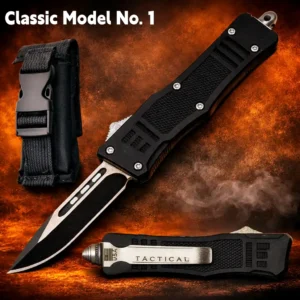
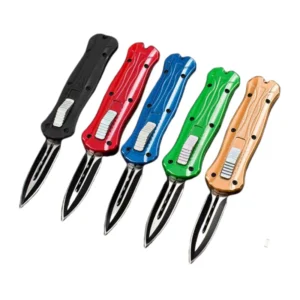
If you need model-specific manufacturer handling or warranty guidance, use the maker’s manual first. If you are identifying a replacement or comparing OTF configurations, the OTF knife catalog can help you compare button layouts, handle materials, and chassis styles, but it is not a substitute for the service instructions for your exact knife.
FAQ
Can leaving an OTF knife in a hot car damage it?
It can. The most common result is temporary sluggish action, a sticky button, or migrated oil. The bigger concern is persistent misfires or lock problems after the knife cools down.
Does heat weaken an OTF spring immediately?
Usually not from normal carry or summer weather. Prolonged hot-car exposure is a more realistic concern, especially if the spring was already weak or the knife was already close to malfunctioning.
Why does the firing button feel sticky after heat?
Most often because lubricant thinned and moved into the button channel, sometimes mixed with lint or residue. In OTF knives, even a small amount of migrated oil can noticeably change button feel.
Should I flush the inside with oil or solvent?
Not unless the maker specifically says to. Many OTF manuals favor minimal lubrication and caution against unauthorized disassembly or aggressive flushing.
What is the short answer?
Yes, heat can affect an OTF knife, especially after hours in a hot car or direct sun. Mild warmth is usually normal; repeated misfires, sticky button travel, or changed lockup after cooling are not.